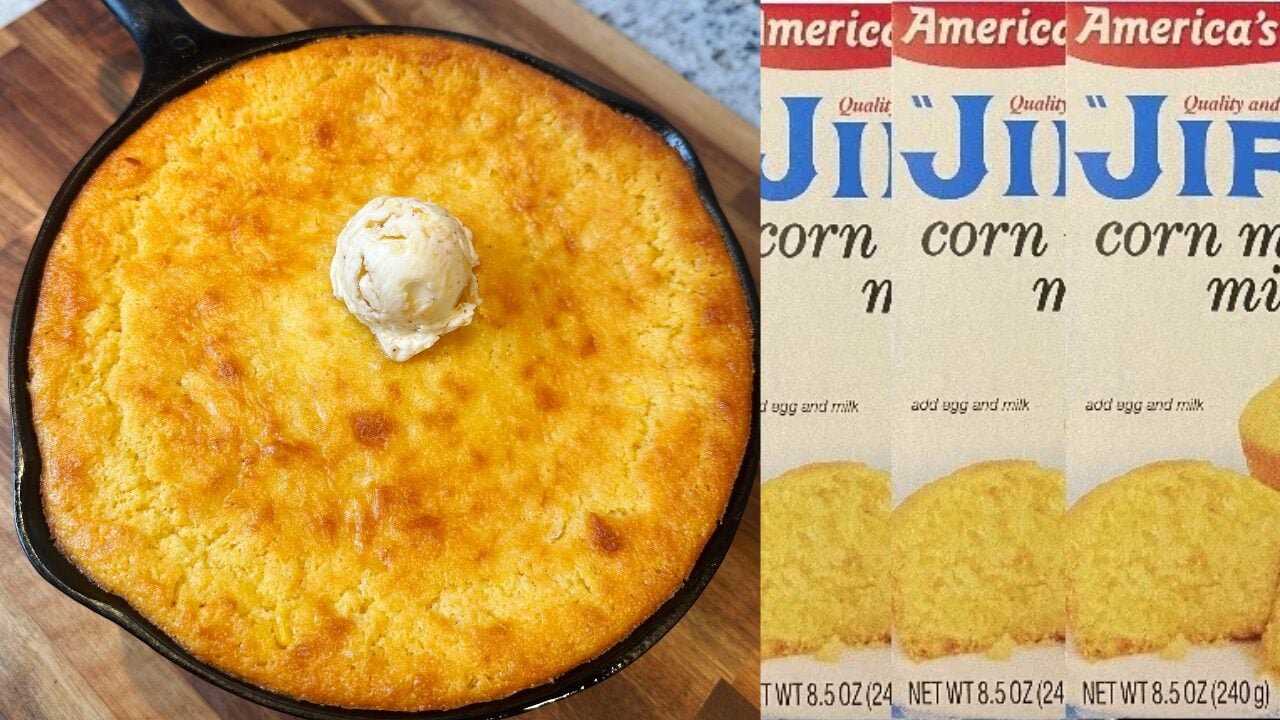
There is one side dish that disappears from the Thanksgiving table faster than the turkey, and it comes from a little blue box. Jiffy corn casserole, which I’m calling the Jiffy “Corn Bowl,” is part corn pudding, part cornbread, and entirely spoonable. It has a crisp golden top and a creamy, cake-like center, and it takes about ten minutes to put together.
I made it this week and gave it a 9.2 out of 10. It looks like a modern shortcut, but it sits at the end of a very long line of American corn dishes. Here is the story.
Corn Before the Pudding
Corn was cultivated by Indigenous peoples across the Americas long before Europeans arrived, and it was the Wampanoag who helped the Plymouth colonists grow it. English settlers took that corn and adapted a dish from home. In England, a quick porridge called hasty pudding was made with wheat. In America, settlers used cornmeal, milk, and molasses instead, and called the result Indian pudding, a name that refers to the corn, not to a Native recipe. It is related to Native corn porridges but is an English dish reinvented with New World ingredients.
Next week
I cook these before I write them. Some of it never makes the post.
The failures, the source documents, the version that actually tasted good. That part goes out by email, and next week’s is already on the stove.
 Written and cooked by Donnie
The first printed recipes appear in Amelia Simmons’s American Cookery (1796), widely considered the first American cookbook. She gives three versions of “a nice Indian pudding,” including one boiled for 12 hours.
The Southern Branch: Corn Pudding and Spoonbread
Mary Randolph’s The Virginia House-Wife (1824) includes Indian pudding recipes and a “batter bread” that is often cited as the first spoon bread, although it used more flour than cornmeal and was baked in small tins. Over time, creamy baked corn dishes became staples of Southern tables, especially in Appalachia. Fannie Farmer’s “Corn à la Southern” (1896) and Edna Lewis’s corn pudding (1976) are two milestones in that story. Corn pudding is also a common Thanksgiving dish. Indian pudding was a New England tradition for centuries, and it started appearing on Thanksgiving tables in other regions in the second half of the 19th century, when anything colonial was in fashion.
Enter Jiffy
In 1930, Mabel White Holmes of Chelsea, Michigan, created one of the first prepared baking mixes sold to the public, “just add milk,” and launched it in the middle of the Great Depression. The company’s origin story says she was inspired by a boy whose packed lunch was a sorry-looking biscuit. That is company lore, and the details vary by telling, so I will leave it as a legend and a nice one.
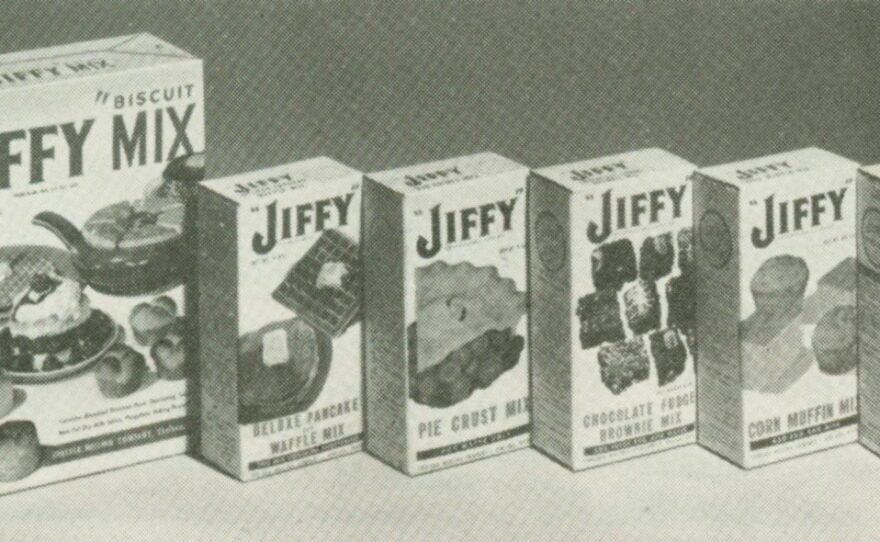
The corn muffin mix arrived in 1950 and became the company’s best seller, reportedly built on word of mouth rather than traditional advertising. From there, the corn casserole is a mid-century shortcut version of the old corn pudding: canned corn, sour cream, eggs, and a box of mix, stirred together and baked. It has the soul of the old Southern dish with a lot less work.
My Rating
The outside bakes up crisp and golden, and the inside stays creamy and cake-like, somewhere between a corn pudding and a spoonbread. The cream-style corn and sour cream keep it moist, the butter makes it rich, and the little bit of sugar I added tips it toward a sweet, pudding-like side. It is easy, it feeds a crowd, and it goes with everything on the Thanksgiving table.
Rating: 9.2 / 10
The Recipe: The Jiffy “Corn Bowl”
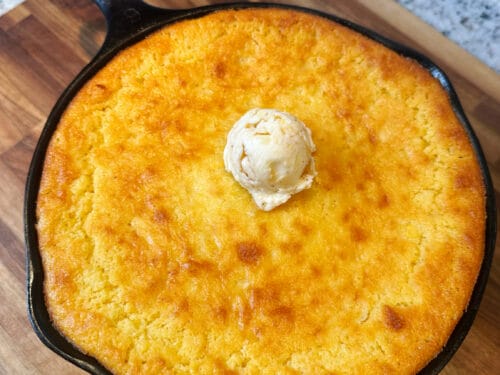
The Jiffy “Corn Bowl”

Don’t lose this one.
I’ll email it to you so it’s waiting when you’re ready to cook.
Ingredients
Instructions
Notes
- Stir until just blended. Once the muffin mix goes in, mix only until the dry streaks disappear. Overmixing develops gluten and makes the casserole dense instead of creamy and cake-like.
- Drain the whole kernel corn well, but keep the cream-style corn as it is. The cream-style corn is meant to be wet, since it keeps the center soft. The whole kernels should be drained, so they do not add extra liquid and leave the middle soggy or underbaked.
- Judge doneness by the center, and let it rest. It is ready when the top is golden and the center is just set, with only a slight wobble. Let it stand about 10 minutes out of the oven so it firms up and scoops cleanly. For a bigger crowd, doubling for a 9×13 works, but check it at the 40-minute mark since a thicker pan may need a few extra minutes.