
There are dishes that taste good. There are dishes that taste extraordinary. And then there are dishes where the first bite produces a specific silence, the kind that happens when something is so much better than you expected that your brain needs a moment to catch up.
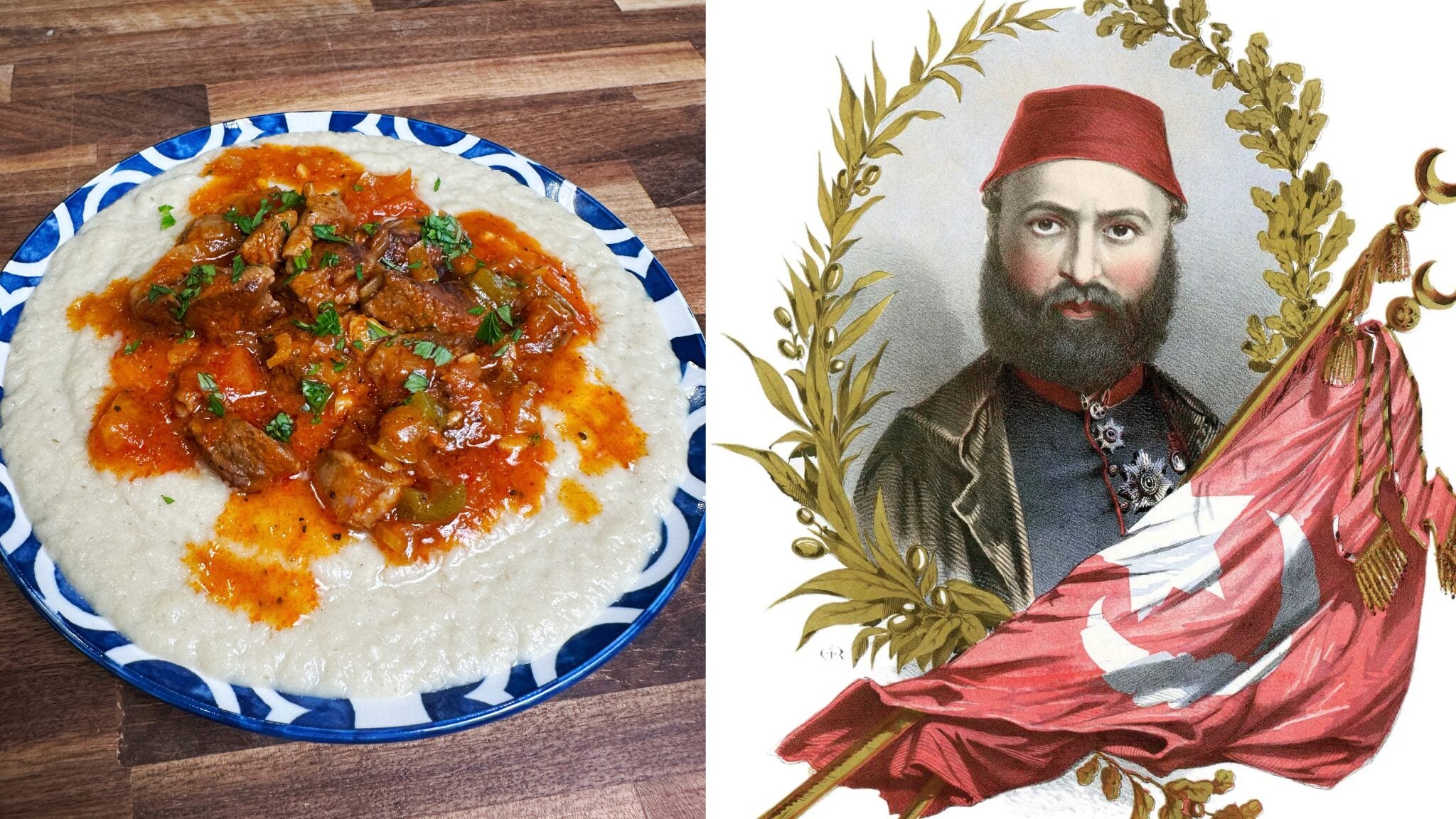
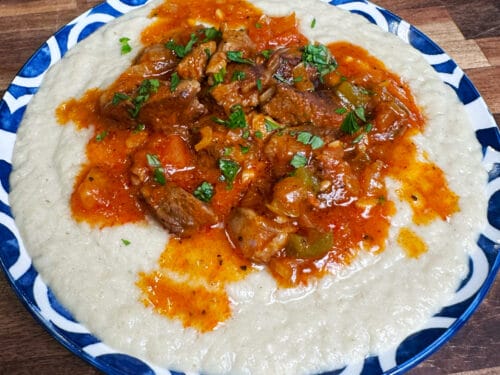
Hünkar Beğendi is that dish. A slow-braised lamb stew, deeply spiced and rich from tomato and pepper, spooned over a creamy, smoky eggplant purée that has been enriched into something between a béchamel and a cloud. The contrast between the concentrated intensity of the lamb stew and the silky, yielding eggplant base is one of the more perfectly calibrated flavour and texture combinations in the entire Ottoman culinary tradition.
The name translates directly from Turkish as the sultan liked it. He was not wrong. I rated it 9.3 out of 10 and I will be making it again before this week in Seville is finished. Here is the full story.
The Name: A Dish That Told You Everything
Next week
I cook these before I write them. Some of it never makes the post.
The failures, the source documents, the version that actually tasted good. That part goes out by email, and next week’s is already on the stove.
 Written and cooked by Donnie
Before getting into the competing stories behind Hünkar Beğendi, the name itself deserves a moment. In Ottoman Turkish, hünkar means sovereign or sultan, the ruler of one of the largest and most powerful empires in the history of the world. Beğendi means he liked it, or he approved. The full name, the sultan liked it, is not a modest description. It is a declaration. This dish was named not for its ingredients, not for its technique, not for its region of origin, but for the emotional response it produced in the most powerful person who tasted it.
That naming tradition tells you something specific about the culture of the Ottoman palace kitchen, the Matbah-ı Amire, which employed hundreds of cooks specialising in specific categories of preparation. Bread bakers, pastry makers, pickle specialists, helva makers, yogurt masters. The imperial kitchen was an institution of enormous sophistication, and the dishes that emerged from it carried the full weight of that institutional pride. When the palace kitchen named a dish the sultan liked, they were not being casual about the achievement.
The Stories: Two Legends, One Honest Assessment
The history of Hünkar Beğendi is one of the more genuinely interesting exercises in food history honesty because the most authoritative academic source on Ottoman cuisine, Marianna Yerasimos, author of 500 Years of Ottoman Cuisine, the most rigorously researched book on the subject, could not confirm either of the two principal origin stories. There are no written sources confirming when this dish was first served in the Ottoman palaces. That admission is important and this channel is going to be honest about it while telling you both stories, because both stories are compelling and both tell you something true about the world that produced this dish.
The Sultan Murad IV Story
The older of the two traditions places the creation of Hünkar Beğendi during the reign of Sultan Murad IV, who ruled the Ottoman Empire from 1623 to 1640. In this version the dish was first prepared in the Topkapı Palace kitchens for the sultan, who enjoyed it enough to name it after his own approval. Murad IV was a historically documented figure of considerable intensity. Contemporary accounts describe him patrolling the streets of Istanbul in disguise at night specifically to catch people violating his prohibitions, which included a ban on coffee, tobacco and alcohol that he enforced with documented brutality. He is not remembered primarily as a gourmand, which is perhaps why food historians approach the Murad IV attribution with some caution.
The larger problem with the Murad IV story is an ingredient problem. The modern version of Hünkar Beğendi contains tomatoes, and tomatoes did not arrive in widespread culinary use in the Ottoman Empire until considerably later than the 1620s. If a 17th century version of Hünkar Beğendi existed it would have looked and tasted significantly different from what is made today, which makes the attribution a matter of naming a dish rather than creating the one we know.
The Empress Eugénie Story
The second origin tradition, considered more plausible by most culinary historians who have examined the question, places the creation of Hünkar Beğendi in 1869 at the Beylerbeyi Palace in Istanbul, during the visit of Empress Eugénie of France, wife of Napoleon III.
The context of this story is genuinely extraordinary and worth explaining properly. In 1867, Sultan Abdülaziz became the first Ottoman sultan to make an official state visit to Western Europe, traveling to Paris, London, Vienna, Brussels and other European capitals as part of a deliberate diplomatic modernisation effort. Napoleon III and Empress Eugénie received him in Paris and the encounter between Ottoman and French imperial culture at the height of both powers’ influence was one of the more significant diplomatic moments of the 19th century.
Two years later, Empress Eugénie traveled to Egypt for the opening of the Suez Canal, which had been built by a French company in Egyptian territory under Ottoman suzerainty. On her way she stopped in Istanbul and was received at the Beylerbeyi Palace by Sultan Abdülaziz. The palace, built between 1861 and 1865 on the Asian shore of the Bosphorus, was the most modern of the Ottoman imperial residences and the one used specifically for entertaining European royalty.
Empress Eugénie brought her own French chef to Istanbul. During the preparations for the imperial feast, that French chef was working in the palace kitchen alongside Ottoman cooks. The French cook was preparing béchamel sauce, the classic French base of butter, flour and milk. An Ottoman cook was simultaneously charring and preparing eggplant purée, the smoky, yielding preparation that was already established in Turkish cooking. The idea that emerged from their working together, combining the structure and richness of béchamel with the smoky depth of eggplant purée and using the result as a bed for the braised lamb that was the centrepiece of the feast, produced something that so delighted Sultan Abdülaziz that he gave it the name Hünkar Beğendi. The Sultan liked it.
Empress Eugénie apparently liked it too. The legend holds that she asked the sultan if her chef could have the recipe. The Ottoman cook was, by every account of the story, reluctant to share it. Whether he did or not, the dish stayed in Istanbul and the Empress went on to Egypt. Both the Sultan and the Empress had difficult years ahead of them. Abdülaziz was deposed by his ministers in 1876 and died in disputed circumstances shortly after. Eugénie was exiled with her husband when Napoleon III was overthrown in 1870. The dinner at Beylerbeyi Palace was one of the last great moments of both their reigns.
The Empress Eugénie story is more plausible than the Murad IV story for one specific reason: the béchamel base. The technique of enriching a vegetable purée with a roux of butter and flour is a distinctly French culinary contribution and its presence in a dish otherwise entirely rooted in Ottoman tradition strongly suggests the kind of cross-cultural kitchen encounter that the 1869 story describes. An Ottoman cook working alongside a French chef and combining techniques from both traditions is a more convincing explanation for the specific character of Hünkar Beğendi than the dish having been invented fully formed in the 17th century.
The Ottoman Kitchen: The World That Produced This Dish
Understanding Hünkar Beğendi fully requires understanding the Ottoman palace kitchen tradition from which it emerged, because the Matbah-ı Amire was unlike any other institutional kitchen in the world.
The Topkapı Palace kitchens fed not only the sultan and his household but the entire palace population, which numbered in the thousands. They operated continuously, producing food across multiple shifts, and the variety of regional traditions represented among the kitchen staff reflected the extraordinary geographic range of the Ottoman Empire. Cooks from Anatolia, from the Arab provinces, from the Balkans and from the Caucasus all worked in these kitchens and the dishes that resulted from their interactions represented one of the great multicultural culinary traditions in history.
Eggplant, patlıcan in Turkish, was one of the foundational ingredients of Ottoman cooking and appears in dozens of documented palace dishes. The technique of charring eggplant directly over flame or hot coals, which gives the flesh a specific smoky quality that no other cooking method replicates, is one of the most characteristic techniques in Turkish cooking and the one that defines the purée base of Hünkar Beğendi. Without the char, the eggplant produces a mild, slightly sweet purée. With the char, it produces something with a depth and complexity that the French béchamel technique, when combined with it, amplifies rather than masks.
Lamb was the prestige meat of the Ottoman kitchen, preferred over beef for its flavour and its cultural significance within the Islamic culinary tradition. The braised lamb stew that tops the eggplant purée in Hünkar Beğendi, cooked long and slow with tomatoes, peppers, onion and garlic until deeply reduced and concentrated, represents the Ottoman kitchen at its most confident: simple ingredients, patient technique, extraordinary result.
How Hünkar Beğendi Became a Modern Icon
The trajectory from palace dish to restaurant standard to home kitchen staple is the story of how Ottoman culinary culture survived the dissolution of the empire it came from.
When the Ottoman Empire ended in 1922 and the Turkish Republic was established, the palace kitchen tradition did not simply disappear. The cooks who had trained in the Topkapı and Beylerbeyi kitchens and their descendants carried their knowledge into the restaurants, hotels and homes of the new republic. Hünkar Beğendi, along with a handful of other palace dishes, became part of the repertoire of traditional Turkish restaurants, particularly in Istanbul, where it was served as a centrepiece of formal Turkish dining.
The dish’s specific combination of the French béchamel technique with the Ottoman eggplant and lamb tradition made it particularly interesting to food writers and culinary historians examining the exchange between European and Ottoman food cultures in the 19th century. It is one of the clearest single examples of that exchange in a still-living dish. Every time someone makes Hünkar Beğendi they are recreating, whether they know it or not, the specific moment when a French chef and an Ottoman cook worked alongside each other in a palace kitchen above the Bosphorus and produced something that neither tradition had made before.
Today, the word beğendi has in Turkish cooking expanded beyond its original dish. Chicken beğendi, meatball beğendi, even seafood beğendi use the same creamy eggplant purée base with different proteins on top, a testament to how completely the purée has been absorbed into the broader Turkish culinary vocabulary. The name has become a technique as much as a dish.
My Rating
The eggplant purée is the revelation of this dish. The charring of the eggplant before the flesh is scraped out and worked into the roux produces a specific smokiness that penetrates the entire purée, a deep, slightly woody, mineral quality that sits underneath the richness of the butter, flour, and cream and gives it a complexity that no amount of additional seasoning could replicate. It does not taste like smoke in an obvious way. It tastes like something that has been through fire and come out better for it.
The texture of the finished purée, smooth and yielding, is the precise foil for the lamb stew that goes on top. The stew has concentrated in its long simmer into something intensely savoury, with the tomato and pepper having broken down completely into the sauce and the lamb having given everything it has to the liquid around it. It is rich and thick and deeply flavoured. The purée receives all of that intensity and moderates it, providing a softness and a creaminess that prevents the stew from being overwhelming.
The chilli flakes in the stew are the detail that ties everything together. They do not make the dish hot in any aggressive sense. They provide a warmth that arrives after the main flavours have landed, a gentle heat that lingers pleasantly and makes you want another bite.
Rating: 9.3 / 10
The Recipe: Hünkar Beğendi (Sultan’s Delight)
Hünkar Beğendi (Sultan’s Delight)

Don’t lose this one.
I’ll email it to you so it’s waiting when you’re ready to cook.
Ingredients
Instructions
Notes
- The charring of the eggplant is completely non-negotiable. The dish without the char is a completely different thing, missing the smoky depth that defines the purée and that contrasts with the richness of the béchamel. If you do not have a gas hob, place the eggplants under the highest possible heat of your oven grill on a foil-lined tray and turn frequently. It will take longer than over a direct flame but will produce adequate char if you persist.
- The cheese is the second most important flavour element in the purée. Kashkaval, the traditional aged sheep’s milk cheese of the Ottoman and Balkan tradition, has a specific tangy, slightly sharp flavour that enriches the purée differently from other cheeses. It is available at Turkish, Middle Eastern and Eastern European food shops. If unavailable, a mild mature cheddar works as a substitute though the flavour profile will shift slightly toward the familiar.
- The lamb stew benefits from being made ahead and reheated. Like most braised preparations, the flavour deepens significantly overnight as the sauce continues to develop. If you have time, make the stew a day ahead and refrigerate it, then make the purée fresh just before serving.

Love it