This is the Holiest Dessert I Have Ever Eaten.
After a month in Poland on the Eats History Project, I thought I understood the country’s relationship with its food. The pierogi. The bigos. The żurek. The obwarzanek on every street corner. I had eaten my way through Kraków’s milk bars, attended the pierogi festival, cooked with the babcias of the Koła Gospodyń Wiejskich, and descended 135 metres into the Wieliczka salt mine. I thought I had a reasonable grasp of what Polish food culture meant to Polish people.
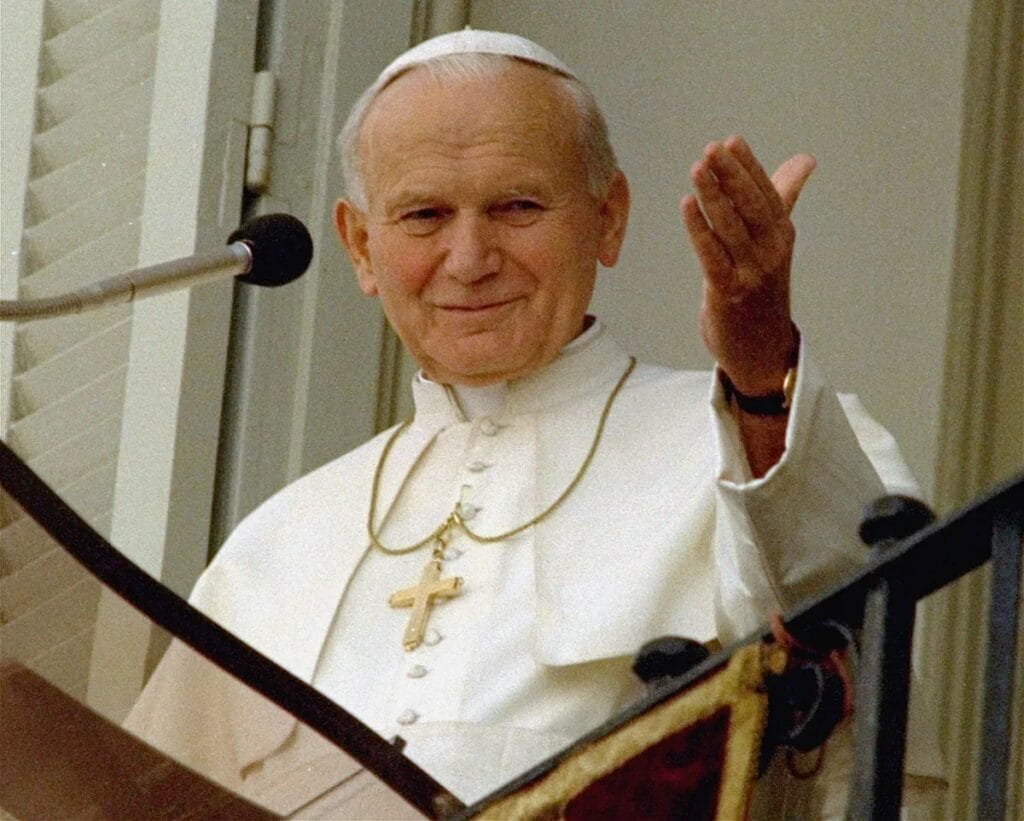
Then I had my first kremówka at Cukiernia Wadowice in Kraków and understood that I had not fully appreciated what a dessert (and the Pope who ate it) could mean to a nation.
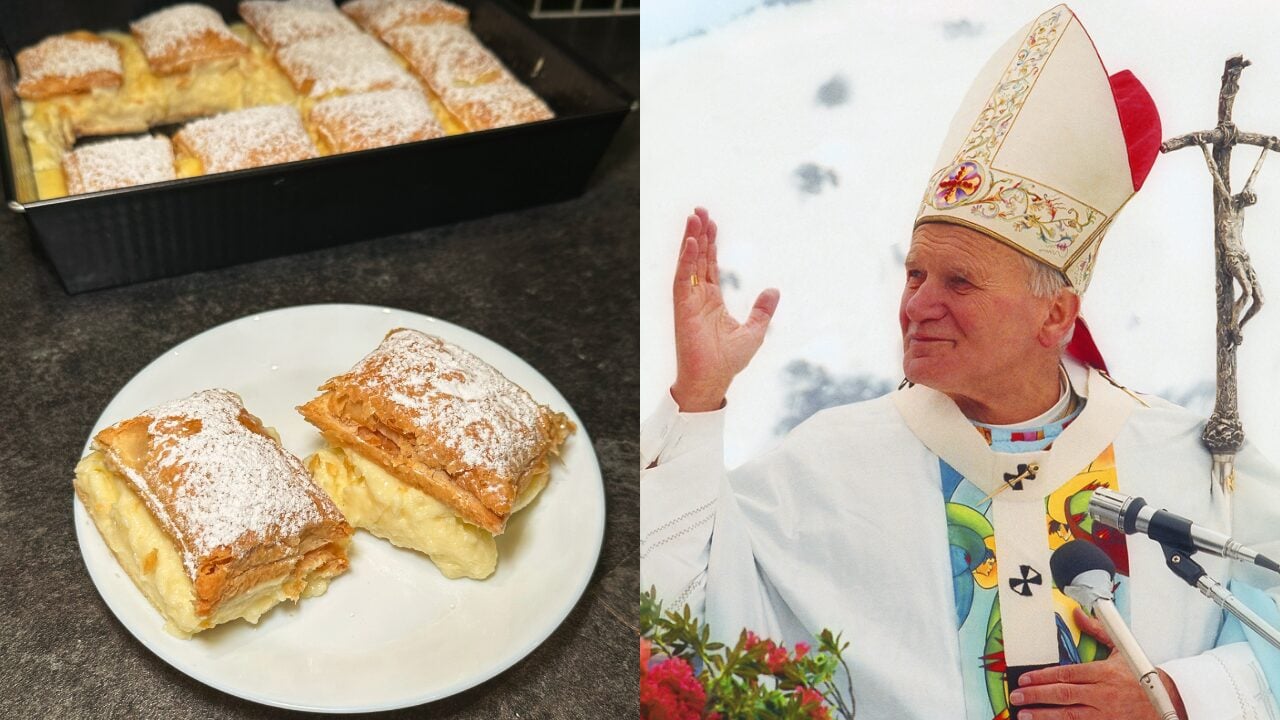
The kremówka, or kremówka papieska as it is known across Poland today, is a deceptively simple thing. Two layers of baked puff pastry enclosing a thick, smooth, cold vanilla cream, the whole construction dusted generously with powdered sugar and cut into squares for serving. It is light without being insubstantial. It is sweet without being cloying. It is elegant without requiring any technical complexity beyond what a good home baker can achieve. And it is, for reasons that have as much to do with history and national identity as with flavour, one of the most emotionally significant foods in the entire Polish culinary tradition.
Next week
I cook these before I write them. Some of it never makes the post.
The failures, the source documents, the version that actually tasted good. That part goes out by email, and next week’s is already on the stove.
 Written and cooked by Donnie
After visiting Cukiernia Wadowice and eating what I can confirm is an extraordinary version of the real thing, I went back to my Kraków Airbnb and made my own with the tools available to me: pre-bought puff pastry, vanilla pudding powder and a bowl I could whisk by hand. Yes, every professional Polish baker reading this is cringing. I know. But for a vagabond version of this legendary dessert- it still turned out delicious.
The Austrian Origins: How Habsburg Rule Created a Polish Icon
The kremówka did not begin as a Polish dessert; its origin lies in the broader culinary history of Central Europe and specifically in the period of Polish history that Poles call the Partitions, the 123-year period from 1795 to 1918 when the Polish state ceased to exist, and its territory was divided between Russia, Prussia, and Austria.
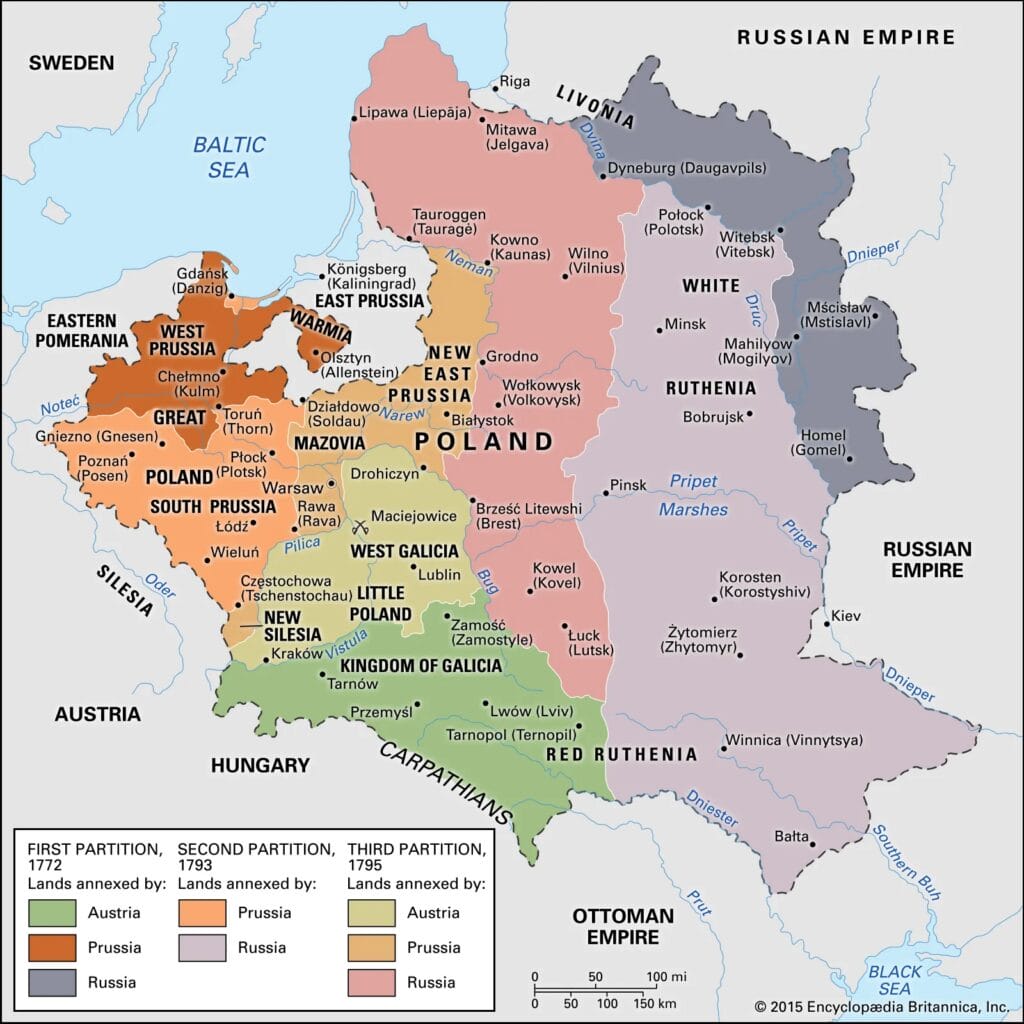
The southern region of Poland, known as Galicia, fell under the control of the Austro-Hungarian Habsburg Empire. Vienna’s influence on Galician culture was enormous and deeply ambivalent. Austrian rule brought bureaucracy, oppression of Polish national aspirations, and restrictions on political life, but it also brought Vienna’s extraordinary café culture, its tradition of sophisticated confectionery, and its world-famous pastry techniques.
The Cremeschnitte, or cream slice in English, was a defining product of Viennese confectionery culture. A thick, cold vanilla custard filling sandwiched between two layers of crisp, flaky puff pastry, dusted with powdered sugar or finished with fondant icing. Polish bakers in cities like Kraków and Rzeszów adopted this preparation enthusiastically, adapting it with regional modifications including the addition of a whipped cream layer alongside the custard and a preference for the plainer powdered sugar finish over the Viennese fondant. The Polish version became known as kremówka, a name derived directly from krem, cream, and took its place as a beloved afternoon treat in the coffee houses and confectionery shops of Galician cities.
The kremówka was, for most of its early history, a sophisticated middle-class indulgence. It required ingredients and technique beyond what most rural Polish kitchens could easily produce. The puff pastry in particular, with its dozens of buttered layers requiring both skill and time, placed the kremówka in the category of special occasion food for most Polish families. You bought it from a confectioner rather than made it at home. Which is precisely why, in a small town on the edge of the Carpathian foothills in the 1930s, a particular confectionery shop became so significant in the memory of a particular young man…
Karol Hagenhuber and the Shop on the Square
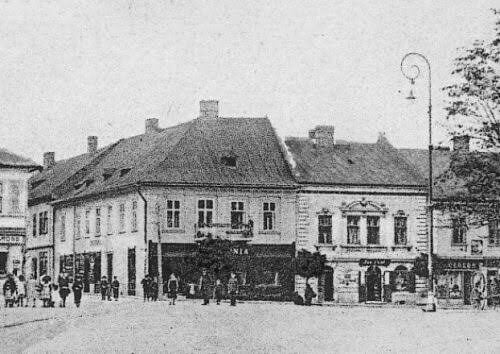
The building at what is now John Paul II Square number 15 in Wadowice, at the corner of Adam Mickiewicz Street, has a specific and documented place in the history of the kremówka and in the history of the 20th century Catholic Church.
In the early 20th century, the building housed a confectionery established by Józef Lisko, a member of Wadowice’s well-regarded family of confectioners. After Lisko’s death, his widow Władysława rented the premises in 1936 to a confectioner from Vienna named Karol Hagenhuber. Hagenhuber brought with him a recipe for cream cake acquired from Vienna’s greatest pastry chefs, and the kremówki he produced at his corner shop in Wadowice’s market square became the dessert of choice for the town’s refined clientele: officers, teachers, officials and the students of the local secondary school.
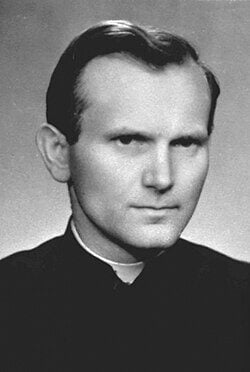
Among those students, in the late 1930s, before the war changed everything, was a young man named Karol Józef Wojtyła. He would later become Pope John Paul II, the most beloved Polish figure of the 20th century and one of the most significant figures in the history of the Catholic Church. But in 1938, the year he completed his matura, his secondary school graduation examinations, he was simply a clever young man from a modest Wadowice family who pooled his money with his classmates to celebrate at Hagenhuber’s shop on the corner of the square.
The Pope’s 18 Kremówki and the Birth of a National Legend
June 16, 1999. Pope John Paul II returned to Wadowice on an official papal visit, the last visit to his hometown he would make before his death in 2005. He was 79 years old, visibly frail, but speaking with characteristic warmth and humour to a crowd of 10,000 people gathered in the town square where he had grown up.
Standing in that square, looking at the building that had once housed Hagenhuber’s confectionery, he began to reminisce about his youth. And then he said the words that changed the kremówka from a beloved regional pastry into a national institution. The exact quoted words, documented in Polish media and in the official papal visit records, are these: “And there was a cake shop. After the matura, we went for kremówkas. That we somehow survived all those kremówkas.”
The crowd burst into laughter. The accounts document that the future Pope managed to eat eighteen kremówki that day with his classmates, and that he did not win the bet about who could eat the most, which makes the story better rather than worse. The admission that the man who would become one of the most spiritually significant figures of the 20th century had tried and failed to win a cream cake eating contest as a teenager is exactly the kind of human detail that makes a historical figure feel genuinely real.
The reaction was immediate and overwhelming. Within 24 hours, the story was on every front page in Poland. Within a week, bakeries across the entire country were producing kremówki as fast as they could and renaming them kremówka papieska, the Papal Cream Cake. Signs reading the Pope’s favourite appeared in shop windows from Gdańsk to the Tatra Mountains. Pilgrims and tourists flooded into Wadowice specifically to eat kremówki in the square where the Pope had stood. For millions of Poles in the post-communist 1990s, a period of significant economic and social transformation, buying a slice of kremówka was an affordable, immediate, delicious way to feel a personal connection to a man who represented the best of what Polish identity could mean.
One important accuracy note that is worth addressing directly: some accounts of the kremówka story suggested that the original Hagenhuber kremówki contained alcohol, which contributed to their legendary status. This has been explicitly denied by Karol Hagenhuber’s son, who confirmed that his father’s cakes were traditional, non-alcoholic kremówki made with all natural ingredients using a recipe that, unfortunately, died with him. The alcohol version that subsequently became popular across Poland was a commercial invention capitalising on the papal association, not the original preparation. The kremówka the Pope remembered and ate in the square in 1999 was the traditional, straightforward, thoroughly excellent vanilla cream cake.
Cukiernia Wadowice and the Real Thing
Before attempting the home version, I did my research properly. Cukiernia Wadowice in Kraków is the place in the city that takes the kremówka most seriously, and eating a slice there gave me the baseline against which I can honestly evaluate everything that followed.
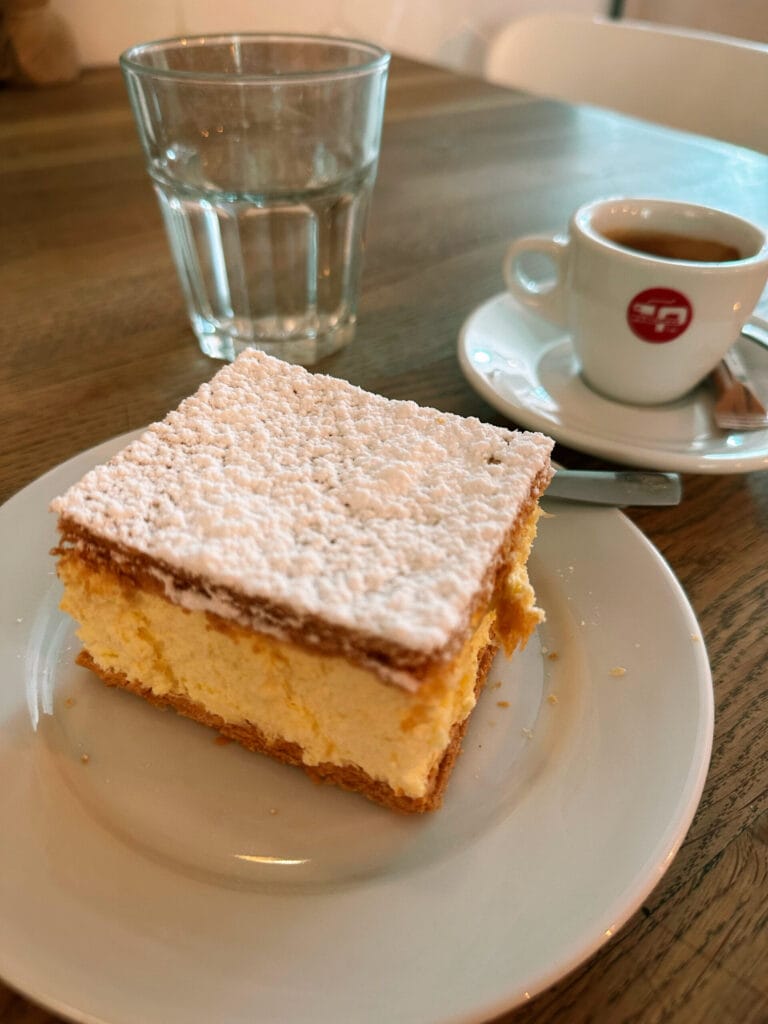
The Cukiernia Wadowice kremówka is exactly what the Pope was remembering. The puff pastry layers are genuinely flaky, shattering into crumbs and fragments the moment you apply any pressure with a fork, which is both the correct behaviour and the reason eating a kremówka neatly is essentially impossible. The cream is cold, thick, smooth, and unmistakably vanilla in a way that vanilla pudding powder can approximate but not fully replicate. The powdered sugar on top is generous and immediately adheres to everything it touches. It is, after a month of eating Polish food, one of the top three things I have eaten in this country.
Now I understand completely why the Pope ate eighteen.
The Home Version: An Honest Confession
Back at my Airbnb, I faced a specific set of constraints. No stand mixer for whipping the buttercream. No access to a proper Polish kitchen with the equipment that a from-scratch kremówka requires. And a genuine desire to see if the lazy version that Polish home cooks and babcias actually use when they need a kremówka fix without the equipment could produce something worth eating.
The honest answer is yes, with a caveat. The vanilla pudding powder method, which I have been told is the common household shortcut across Poland despite what professional bakers might say, produces a cream that is thicker and slightly more instant-pudding in character than the classical crème pâtissière filling of the Hagenhuber original. The pre-bought puff pastry is a genuine time-saver that produces perfectly acceptable flaky layers without any of the technical difficulty of homemade rough puff. The result is a homemade kremówka that is recognisably the same dessert, that tastes genuinely good, and that I rated 9.1 out of 10 on a very honest scale.
If you are ever in Poland, get the real thing. If you want to make something delicious at home tonight without owning a stand mixer, make this version. Both things can be true simultaneously. Smacznego!
Rating: 9.1 / 10
The Recipe: Kremówka Papieska (The Lazy Home Version)
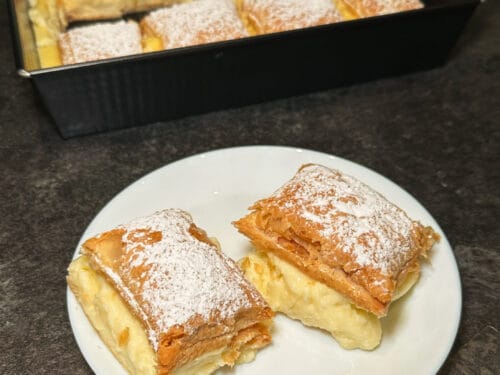
Kremówka Papieska (The Lazy Home Version)

Don’t lose this one.
I’ll email it to you so it’s waiting when you’re ready to cook.
Ingredients
Instructions
Notes
- The key to kremówka that does not collapse when cut is patience with the chilling step. Four hours is the minimum. Overnight is the correct choice if you are making this for any occasion that matters. The cream must be fully set and cold before you attempt to portion it.
- The pre-scored top pastry technique is not optional if you want clean portions. Puff pastry that is not pre-scored will shatter unpredictably when cut, sending cream in all directions and producing portions that look dramatically different from the neat squares served in Polish confectioneries. Score before baking, every time.
- The all-butter puff pastry specification matters. Vegetable fat puff pastry produces adequate flaky layers but lacks the flavour depth and the characteristic buttery richness that makes kremówka taste like something worth eating rather than simply something that holds the cream filling. The butter is the point.