Ask a table of Americans what they cannot skip at Thanksgiving, and macaroni and cheese will come up before the cranberry sauce does. For a dish most of us think of as a childhood staple, it has a surprisingly deep history. It stretches from medieval Italian and English manuscripts to the table of a president, and from Southern cookbooks to the blue box.
For this recipe I combined two real historical sources: Mary Randolph’s 1824 layered, baked macaroni, and Fannie Farmer’s 1912 “Macaroni, Virginia Style.” I then gave it a modern upgrade with four cheeses and a crispy saltine topping. It is a 9.3 out of 10, and here is the story behind it.
Medieval Beginnings: Pasta and Cheese in the 1300s
Next week
I cook these before I write them. Some of it never makes the post.
The failures, the source documents, the version that actually tasted good. That part goes out by email, and next week’s is already on the stove.
 Written and cooked by Donnie
The idea of pasta and cheese together is very old. The earliest recognizable recipe is generally credited to the Liber de Coquina, an early 14th-century Latin cookbook linked to the Neapolitan court. Its recipe, de lasanis, calls for thin squares of pasta layered with grated cheese.
England has its own claim. The Forme of Cury, compiled around 1390 by the master cooks of King Richard II, has a recipe called makerouns. It tells you to make a thin sheet of dough, cut it into pieces, boil them well, then take grated cheese and put it with butter above and below, as with losyns (lasagne-style layers). Which one is “first” depends on how you define the dish, but both are clearly ancestors of what we eat today. These were not elbow macaroni. In the medieval and early modern period, “macaroni” could mean a wide range of pasta shapes.
The 18th Century: A Sauce Joins the Party
By the 1700s, the dish had moved toward something we would recognize. Elizabeth Raffald’s The Experienced English Housekeeper (1769) is often cited as the forerunner of the American version, with macaroni in a béchamel-style cream sauce, finished with Parmesan and baked. That sauce-based approach is the line that leads straight to the dish on our Thanksgiving tables.
Jefferson, James Hemings, and the Legend
This is the part of the story that gets repeated the most, and corrected the least. Jefferson did encounter pasta in Europe. He sketched a macaroni press and made notes on it, had a macaroni mould bought for him, and later imported macaroni and Parmesan. In 1802, at a dinner at the White House, he served “a pie called macaroni.” We know about it because the Massachusetts congressman and Reverend Manasseh Cutler wrote about it in his journal, and he was not impressed.
Now the legend versus the record. Monticello’s own position is clear: Jefferson did not invent macaroni and cheese, and he was not the first to introduce macaroni to America. Its appearance on the White House menu was seen as a novelty. He and his table may have helped make it fashionable among the elite, but that is a long way from inventing it.
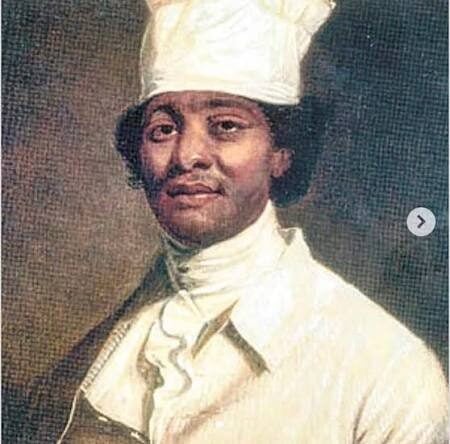
Jefferson’s enslaved chef, James Hemings, belongs in this story, but carefully. Hemings was born into slavery in 1765 and trained in French cooking during Jefferson’s years in France. Jefferson offered him his freedom in exchange for training others, and freed him in 1796. Hemings died in 1801, so he could not have cooked the 1802 White House meal. Some writers credit him with the macaroni pie, but Monticello says that he did not invent the dish. His influence on the way American elites ate is real and important. His authorship of the recipe is not documented.
Mary Randolph, 1824: The Recipe That Spread the Dish
The recipe that put baked macaroni and cheese into American kitchens appeared in The Virginia House-Wife (1824) by Mary Randolph, a relative of the Jefferson family and one of the most influential cookbook authors of the 19th century. Her instruction reads:
“Boil as much macaroni as will fill your dish, in milk and water, till quite tender; drain it on a sieve, sprinkle a little salt over it, put a layer in your dish, then cheese and butter as in the polenta, and bake it in the same manner.”
It is short and simple: one cheese, butter, and a bake, with no sauce. The recipe also appears alongside similar macaroni dishes in other pre-Civil War Southern cookbooks, according to food historian Adrian Miller.
From Recipe to Classic: Farmer, Kraft, and the Southern Table
In 1912, Fannie Farmer published “Macaroni, Virginia Style” in her book A New Book of Cookery. It layers cooked macaroni in a buttered dish, dots each layer with butter, dusts it with mustard and grated cheese, pours white sauce over the top, covers it with buttered bread crumbs, and bakes it until the crumbs are brown. That is the structure of the modern American casserole.
In 1937, Kraft introduced its boxed Macaroni and Cheese Dinner, a cheap way to stretch family meals during the Great Depression, and it became a convenience food for the country.
The Southern table tells a different and deeper story. Adrian Miller, author of Soul Food, found that macaroni and cheese was already in Black communities’ emergency food baskets in Harlem in 1930, seven years before Kraft. In the Black Southern tradition, baked macaroni and cheese became a celebration dish for Sunday dinners and holidays, served as a side, and a dish you had better get right. Miller notes that although the dish has clear European roots, Black cooks shaped the form we know. As for Thanksgiving, it was not widely celebrated by Black families during slavery. It was embraced by some after Reconstruction, and macaroni and cheese became a holiday fixture along with it.
Why I Combined Randolph and Farmer
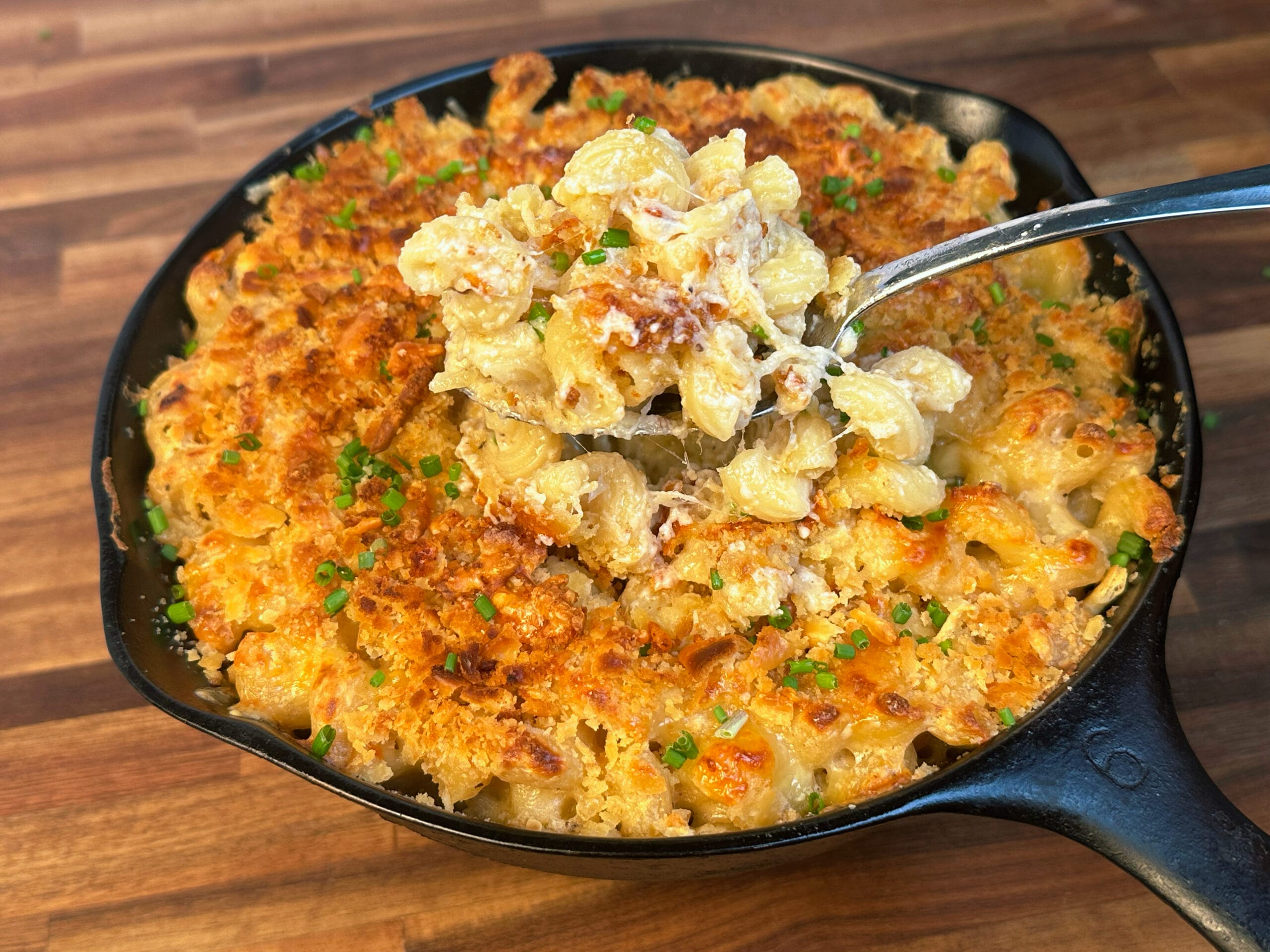
I wanted both ends of the story on one plate. From Randolph, I took the layering of pasta, cheese, and butter. From Farmer, I took the white sauce, the dusting of mustard, and the buttered crumb topping. Then I gave it my own modern upgrade: a roux-based sauce, four cheeses (sharp cheddar, Gruyère, mozzarella, and Parmesan), and a crunchy topping of crushed saltines.
My Rating
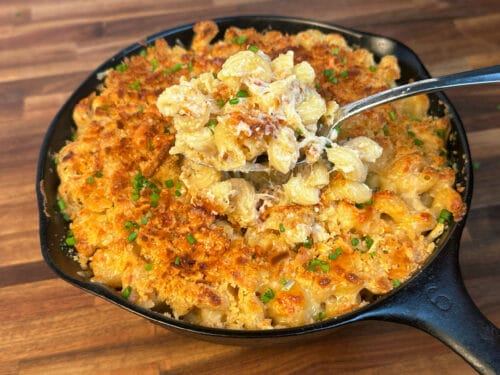
The macaroni in that roux-based cheese sauce is insanely good all by itself. But the layers of shredded Gruyère, cheddar, mozzarella, and Parmesan take it somewhere else, and the crispy saltine crunch on top gives it something to bite against. I garnished mine with chives for a little freshness.
Rating: 9.3 / 10
Want more recipes like this for your holiday table?
Get my free Eats History Thanksgiving Menu, with 17 classic Thanksgiving recipes from history. [Beehiiv sign-up form embed]
The Recipe: Virginia-Style Baked Macaroni & Cheese
Virginia-Style Baked Macaroni & Cheese

Don’t lose this one.
I’ll email it to you so it’s waiting when you’re ready to cook.
Ingredients
Instructions
Notes
- Shred your own cheese. Pre-shredded bags are coated with anti-caking starch, which keeps the cheese from melting smoothly and can make the sauce grainy. Grating the cheddar, Gruyère, and mozzarella from blocks takes a few extra minutes and makes a noticeably creamier sauce.
- Undercook the pasta and use a big enough dish. The macaroni keeps absorbing sauce in the oven, so boil it 2 minutes short of done and don’t rinse it. One pound of pasta with the cheese layers and sauce is a lot for a 9×13 dish, so set it on a rimmed baking sheet to catch drips, or use a deeper 3-quart dish.
- Let it rest, and make ahead if you need to. Give the finished dish 10 minutes before serving so the sauce sets and the layers cut cleanly. For Thanksgiving, you can assemble it up to a day ahead without the topping, refrigerate it, then add the buttered crumbs just before baking and give it an extra 10 to 15 minutes in the oven.