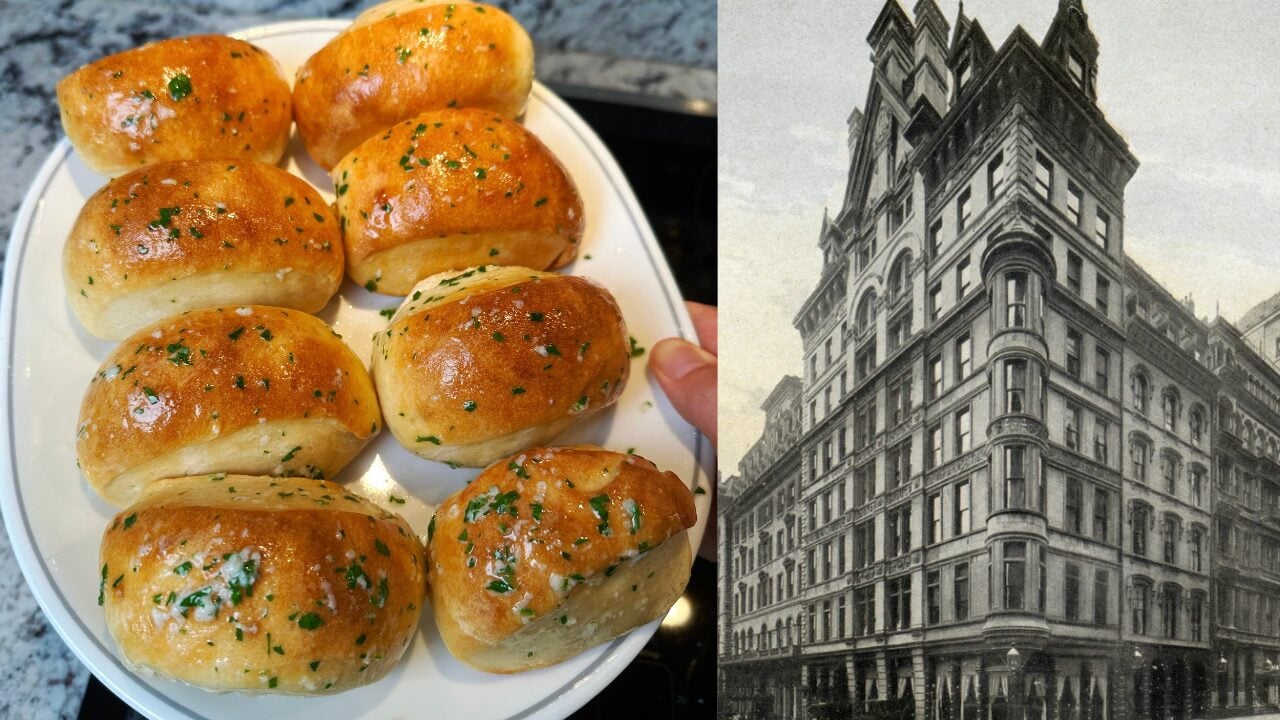
Some dinner rolls are forgettable. Parker House rolls are the opposite: soft, buttery, slightly sweet, with a thin golden shell and a distinctive fold, like a little pocketbook or folded oval. They come from a Boston hotel, they have a good legend, and they belong on a Thanksgiving table.
I made them this week using Fannie Farmer’s 1896 recipe and topped them with garlic butter. Here is where they came from, what is legend and what is record, and how to make them.
A Boston Hotel and Its Roll
The Parker House hotel was founded by Harvey D. Parker and opened in Boston on October 8, 1855, at the corner of School and Tremont Streets. Parker had come to Boston in the 1830s and built a name in the hospitality business, and his hotel became a gathering place for writers, politicians, and travelers. Today it is the Omni Parker House, and its historian describes it as the longest continuously operating hotel in the United States. The hotel also claims Boston cream pie, among other firsts.
Next week
I cook these before I write them. Some of it never makes the post.
The failures, the source documents, the version that actually tasted good. That part goes out by email, and next week’s is already on the stove.
 Written and cooked by Donnie
The roll that carries its name is milk-based, buttery, and softly sweet, with a crease down the middle so the dough can be folded over and seals into a pocketbook shape. It was a different kind of bread from the crusty loaves of the time: tender, rich, and made for the dinner table.
The Legend of the Angry Baker
Here is the story the hotel tells. In the 1870s, a German baker named Ward, working under the hotel’s chef John Bonello, lost his temper in the kitchen. The versions vary. In some he argued with a guest, in others with a colleague. Furious, he threw unfinished rolls of dough into the oven. When they came out, they had dented, folded shapes that turned out to be light and puffy inside and crisp and buttery outside. The guests loved them, and the Parker House roll was born.
It is a fun story, but the record does not support it. The hotel’s own historian, Susan Wilson, has said that none of the stories about why the roll is folded can be verified. And the date does not quite hold up either. The hotel dates the roll to the 1870s, but printed recipes for “Parker House rolls” appear in newspapers from the same period and reportedly even earlier, including an 1872 recipe in Maryland’s Cecil Whig and an April 1874 recipe in the New Hampshire Sentinel. I’ll leave the baker as a legend.
Fannie Farmer and the Roll’s Trip Into American Kitchens
When the rolls became popular, cooks and cookbooks tried to reverse-engineer them, because the hotel kept its recipe in-house. According to the hotel’s lore, it only released the recipe officially after First Lady Eleanor Roosevelt asked for it. The name was never trademarked, which is why Parker House rolls are now baked everywhere.
The version I used comes from Fannie Farmer’s Boston Cooking-School Cook Book (1896), where it is short and clear. Scald milk, add butter, sugar, and salt, then add dissolved yeast and flour. Roll the dough out, cut it into rounds, and then, in her words, “dip the handle of a case knife in flour, and with it make a crease through the middle of each piece.” Brush one half with melted butter, fold, and press the edges together. It is a roll with a one-sentence trick, which is probably why it spread so widely.
My Rating
These rolls are exactly what a dinner roll should be: soft and pillowy inside, with a thin crisp shell and a gentle sweetness from the sugar and milk. The fold makes them pull apart in layers, which is half the fun. I brushed mine with garlic butter, which gives them a savory edge that goes especially well with a heavy Thanksgiving plate, though they are excellent plain with butter.
Rating: 8.1 / 10
The Recipe: Parker House Rolls
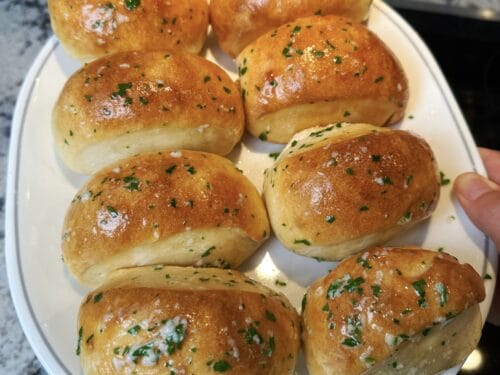
Parker House Rolls

Don’t lose this one.
I’ll email it to you so it’s waiting when you’re ready to cook.
Ingredients
Instructions
Notes
- Cool the milk before the yeast goes in. Scalding the milk is traditional, but it has to cool to lukewarm (about 110°F) before you add the yeast. Hot milk will kill it, and the dough will never rise properly. If you don’t have a thermometer, it should feel comfortably warm on your wrist, not hot.
- Keep the dough soft. Add the second batch of flour gradually and stop when the dough is smooth and slightly tacky. Too much flour is the most common reason these rolls turn out dense instead of pillowy. Since “about 5½ cups” varies with humidity and the brand of flour, go by feel, not just the measurement.
- Crease deeply, fold, and press the edges. Use the back of a floured knife handle to make a firm crease, almost to the bottom of the dough, so the roll folds cleanly. Brush only half with butter, since the butter keeps the layers from sticking together and gives the rolls their pull-apart quality, then press the edges to seal. If you want to prep ahead, you can shape the rolls, cover them, and refrigerate for several hours, then let them come to room temperature and finish rising before baking. I have not tested that timing, so treat it as a starting point.