Last December I was in Naxos, the largest of the Cycladic islands, in the off-season when the tourist crowds have gone and the island belongs again to the people who actually live there. The kafeneions were full of locals. The bakeries were running on their winter schedules. And at a small café near the port, I ordered something I had seen on menus across Greece but had never properly sat down with.
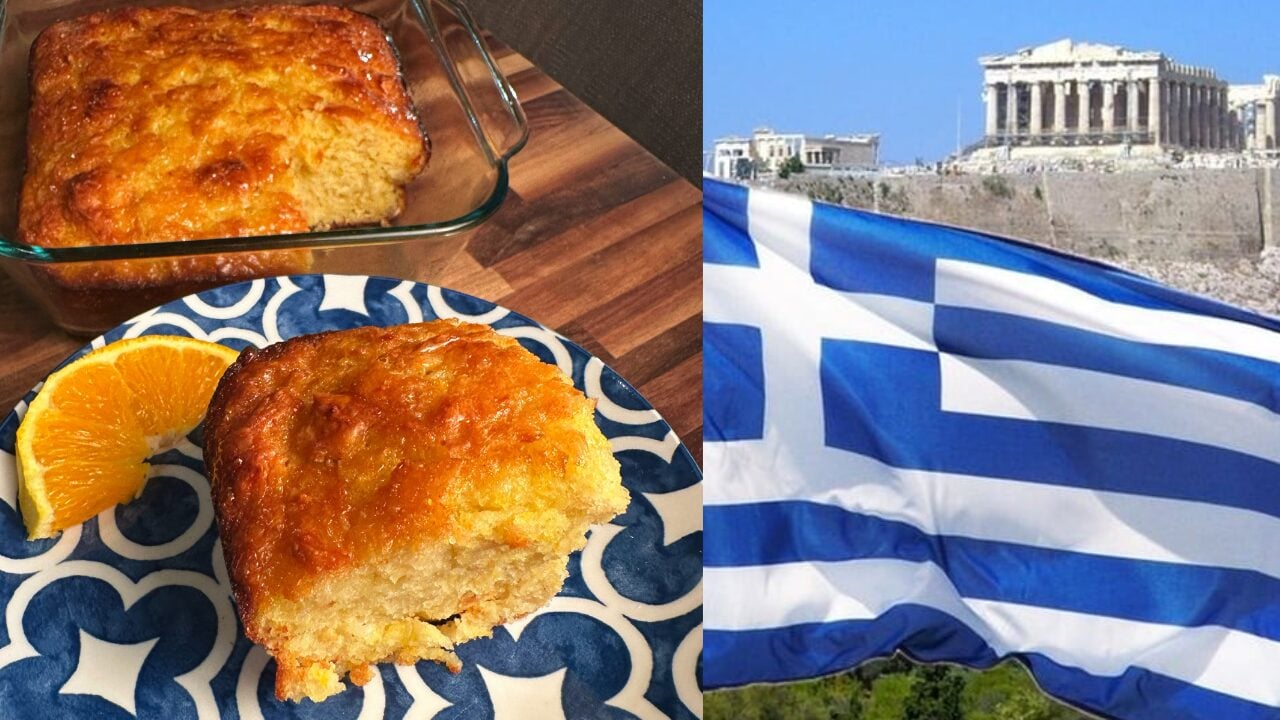
Portokalopita. Greece’s orange cake. A square of something golden and syrup-drenched that arrived cold, with a small fork, beside a freddo espresso I had not asked for but immediately understood was the correct accompaniment.
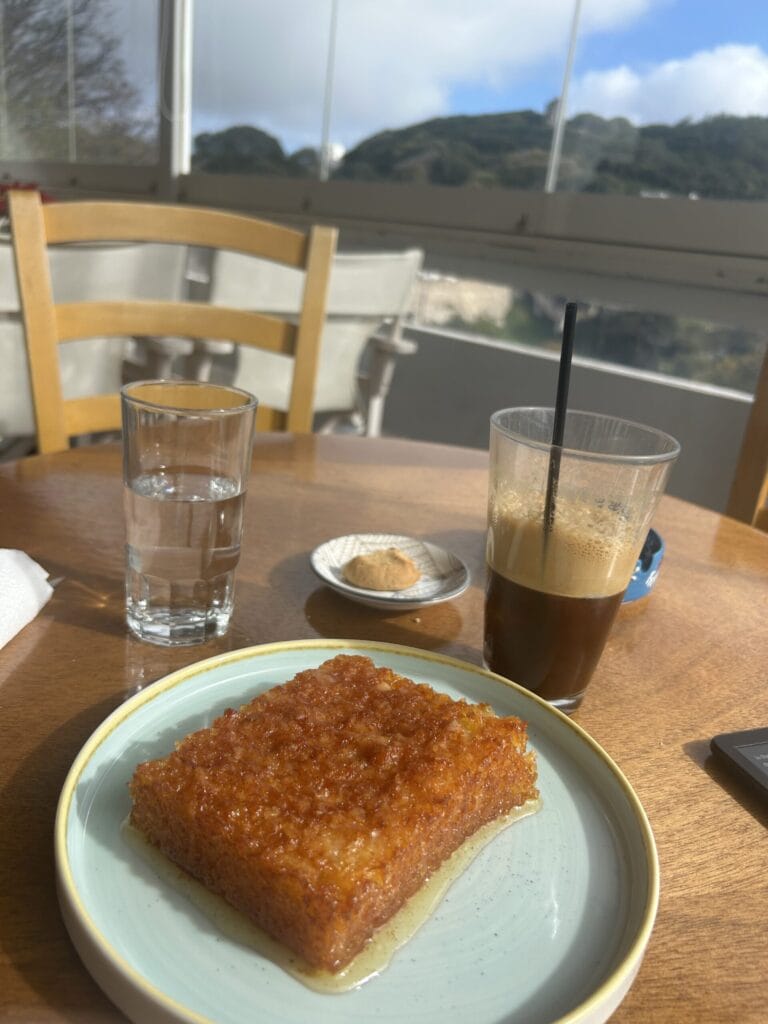
The texture is unlike any other cake in the world. The flavour is intensely orange, not orange-flavoured in the way that a British orange drizzle cake is orange-flavoured, but genuinely, deeply, almost aggressively citrus in a way that is simultaneously sweet and bright and completely addictive. The phyllo dough that replaces conventional flour gives it a specific quality, slightly crisp at the edges, tender in the syrup-soaked middle, pulling apart in a way that no wheat-flour batter can produce.
I knew immediately that I had to make it. Here is the full story and the full recipe.
Next week
I cook these before I write them. Some of it never makes the post.
The failures, the source documents, the version that actually tasted good. That part goes out by email, and next week’s is already on the stove.
 Written and cooked by Donnie
The Orange Arrives in Greece: A Byzantine Beginning
To understand portokalopita you have to understand the orange in Greek culinary history, because the orange is not a native Mediterranean fruit and its arrival in Greece is a story that spans continents and centuries.
The sweet orange, Citrus sinensis, is believed to have originated in Southeast Asia and was introduced to the Mediterranean world through a series of geographic stages. The Moors brought bitter oranges to the Iberian Peninsula and Sicily in the early medieval period. Sweet oranges, the variety used in cooking and eating rather than the bitter Seville orange used for marmalade and liqueur, arrived in the Mediterranean considerably later, introduced by Portuguese traders who had encountered them in India and China in the 15th and 16th centuries.

The word that Greeks use for orange, portokali, is itself a document of the orange’s arrival route. It derives from Portugal, portogallo in Italian, reflecting the Portuguese role in bringing the sweet orange variety to the Mediterranean world from their trading routes in Asia. Every time a Greek says the word for orange they are unknowingly referencing a Portuguese sailor’s cargo hold and the maritime trade routes of the 15th century. The cake named portoka-lo-pita, orange-pastry, carries that etymology in every slice.
From the late 19th century and especially after 1920 to 1930, oranges from Argos, Arta, Laconia and Chios traveled north to Roumeli and Thessaly by caravans, trains and small boats. They were a festive ingredient, not an everyday one. The orange was not a commonplace pantry item for most Greek households until well into the 20th century. It was a celebration ingredient, brought out for important occasions and festivals, which is part of why the cake made from it carries the particular festive quality that it does.
The Phyllo Connection: A Cake Born From Frugality
The phyllo dough in portokalopita is the detail that places this cake firmly in the tradition of Greek peasant cooking rather than elite confectionery, and it is the detail that makes it most interesting from a food history perspective.
There is a saying that this Greek cake originated as a means to utilise the remaining dried up phyllo flakes that were left over when making traditional Greek pies, like cheese pie and spinach pie. Phyllo dough is the foundation of the Greek kitchen’s most important savoury preparations. Spanakopita with spinach and feta. Tiropita with cheese. Baklava with nuts and honey. The preparation of these dishes consistently produces leftover phyllo, torn sheets and broken pieces that cannot be layered properly but are too good to waste. A household that had been making spanakopita the day before had a pile of dried, broken phyllo pieces on the kitchen counter the following morning.

Cooks would shred the phyllo into pieces, mix it into a custard of yogurt, eggs, oil, and orange zest, then bake and soak the result in citrus syrup. The texture lands somewhere between a bread pudding and a moist cake, but the flavor is pure Mediterranean summer — floral, tangy, sweet, and soaked.
This frugal origin is the characteristic that marks portokalopita as genuinely peasant food in the best possible sense. It was not designed by a pastry chef in an urban kitchen. It was invented by a home cook, probably on Crete given the orange-growing tradition there, who looked at a pile of leftover phyllo and an abundance of oranges and produced something far more extraordinary than either ingredient suggested. The combination of crisp dried phyllo, which provides a structural quality that no flour-based batter can replicate, with the bright acidity of orange and the slow saturation of syrup is a genuinely brilliant solution to the problem of leftover ingredients. The genius is in the frugality.
The traditional orange cake originated in Central Greece, Roumeli and Thessaly, and from there spread throughout the country. The origin debate, Crete versus the Peloponnese versus Central Greece, is one of those food history questions that is genuinely unresolvable and genuinely entertaining. What all versions of the origin story share is the leftover phyllo explanation, which is consistent enough across independent sources to be treated as historically grounded even without a specific primary document establishing exactly when and where the first portokalopita was made.
From Peasant Kitchen to Modern Icon
Unlike ancient Greek pastries or Ottoman-era sweets like galaktoboureko or kataifi, portokalopita is relatively modern. It belongs to the family of siropiasta, the syrup-soaked sweets that are one of the defining categories of Greek confectionery, which includes baklava, galaktoboureko and kataifi. Within Greek pastries, it belongs to the family of cakes called siropiasta, sweets that are bathed in syrup.
The specific tradition of pouring cold syrup over a hot cake, or hot syrup over a cold cake, is the technique that makes the siropiasta family what it is. The temperature contrast is not incidental. When warm cake meets cold syrup, or cold cake meets warm syrup, the thermal interaction causes the syrup to penetrate more deeply and more evenly into the structure of the cake, producing the characteristic wet, deeply saturated texture that makes Greek syrup cakes so addictive and so unlike the dry, unfrosted Western European cake tradition.
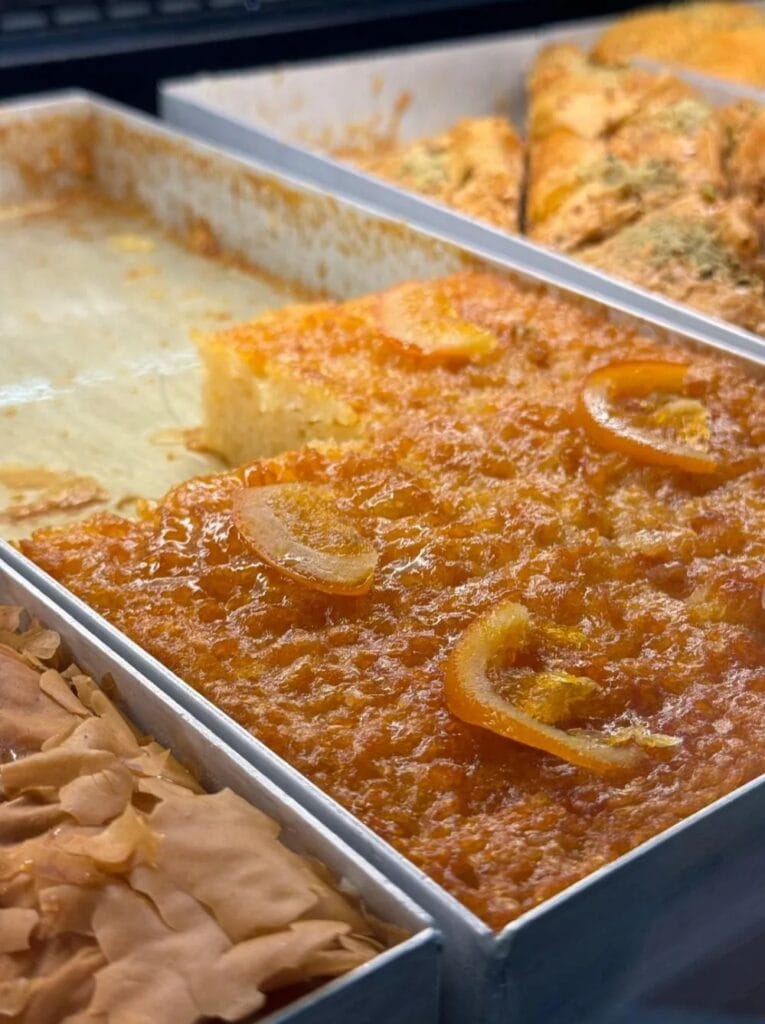
Today, it’s a café and taverna favourite, often served chilled with a scoop of ice cream or a dollop of whipped cream. Some versions include cinnamon, vanilla, or even chocolate chips, but the base always stays the same: torn phyllo, yogurt batter, citrus syrup.
The dishes that began as practical solutions to the constraints of a rural kitchen, dishes built on what was available and what would otherwise be wasted, have proven to be the most enduring and most beloved. Portokalopita is on the menu of every café in Naxos in December because it genuinely deserves to be there. The Cretan home cook who first tore up her leftover phyllo and soaked it in orange syrup produced something that required no improvement and no refinement. The modern version is essentially the same cake.
My Rating
I first encountered this cake in Naxos last December sitting beside a freddo espresso I had not ordered and understood immediately was mandatory. The version I encountered there was cold from the refrigerator, deeply saturated in orange syrup and had been sitting for long enough that the phyllo had lost every trace of crispness and become completely unified with the custard batter around it. It was extraordinary.
The version I made at home, having now made it twice with progressive adjustments to the syrup saturation and the resting time, is a 9.4 out of 10. The key to the home version matching what you eat in a Greek café is time. The cake made the day before and left overnight is significantly better than the same cake eaten warm from the oven. The syrup needs hours to penetrate fully, and the phyllo needs time to transition from slightly crisp to completely unified with the surrounding moisture. Make it the evening before you intend to serve it and serve it cold with a freddo espresso; add a scoop of vanilla ice cream if you are feeling dangerous.

The flavour is orange in a way that few orange cakes achieve. The combination of orange juice, orange zest in the batter, orange peel in the syrup and the slow overnight saturation produces a cake that tastes of orange from the first bite through the last, without sweetness ever dominating the citrus. The cinnamon in the syrup adds a warmth that sits underneath the orange without competing with it. The phyllo adds a specific textural quality that makes this unlike any other cake I have made for this channel.
Rating: 9.4 / 10
The Recipe: Portokalopita
Portokalopita

Don’t lose this one.
I’ll email it to you so it’s waiting when you’re ready to cook.
Ingredients
Instructions
Notes
- The overnight resting is the single most important instruction in this recipe. Every hour the syrup sits in the cake makes it better. A cake eaten two hours after baking is good. A cake eaten the following morning is extraordinary. Make it ahead without any reservation.
- Full-fat Greek yogurt produces a significantly better result than low-fat versions. The fat in the yogurt contributes to the tender, moist texture of the finished cake. Strained Greek yogurt, the very thick version sold as total 0% or total 5%, is the most historically appropriate choice and produces the best result.
- The olive oil replaces butter entirely and is part of what makes this cake taste Mediterranean rather than simply orange-flavoured. A good Greek extra virgin olive oil contributes a faint fruitiness to the batter that you can taste in the finished cake. Use the best Greek olive oil you have.