Go Back

Gnudi - "Naked Pasta"

Print Recipe
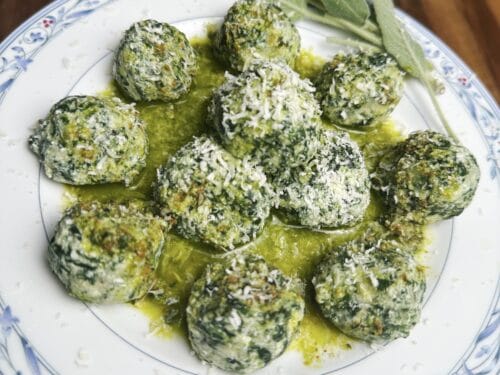
Gnudi is one of the most deceptively simple recipes in Italian cooking and one of the most honest. It comes from the cucina povera tradition of Tuscany, built entirely from ingredients that were byproducts of something else: ricotta from the leftover whey of cheese-making, spinach that grew wild and year-round, eggs from the farm, a handful of aged Parmigiano for seasoning. The dish is essentially the filling of a ravioli cooked without its pasta shell, which is exactly what the name means in Tuscan dialect: naked. What makes the Florentine version distinct from almost every anglicised recipe you will find is the absence of flour inside the mixture, which keeps the gnudi impossibly light and pillowy rather than dense and gummy. Get the ricotta right, squeeze the spinach properly, and what you end up with is one of the finest things the Italian kitchen has ever produced from almost nothing.
Prep Time 20 minutes
Cook Time 20 minutes
Refrigeration Time 1 hour

Ingredients

For the gnudi:

  • 3 cups fresh spinach
  • 1 cup fresh whole milk ricotta well drained
  • 1 egg
  • ½ cup Parmigiano-Reggiano freshly grated
  • Good pinch of freshly grated nutmeg
  • Salt and black pepper
  • ¼ cup semolina flour plus more for dusting

For the butter and sage sauce:

  • 100 g good unsalted butter
  • 10 to 12 fresh sage leaves
  • Extra Parmigiano to serve

Instructions

  • Wash the spinach and cook in a pot with a little salted water for about 5 minutes until completely wilted. Drain thoroughly, then squeeze out as much water as you possibly can, a handful at a time, then again in a clean cloth. This step is not optional and cannot be rushed. Any water left in the spinach will destroy the gnudi in the pot. Chop the spinach very finely with a knife.
  • In a large bowl combine the chopped spinach, well-drained ricotta, egg, Parmigiano, semolina flour, nutmeg, salt and pepper. Mix until cohesive.
  • Dust a tray generously with semolina flour. Using two spoons or wet hands, shape the mixture into rounds or ovals roughly the size of a ping-pong ball. Roll each one gently in the flour to give it a light coating. Place on the floured tray with space between each one. Refrigerate for at least one hour, ideally two, to firm up.
  • Bring a large pot of well-salted water to a gentle simmer, not a rolling boil. Lower the heat so the water is barely moving. Add the gnudi in batches, do not crowd them. They are ready when they float to the surface, which takes about 2 to 3 minutes. Remove with a slotted spoon.
  • While the gnudi cook, melt the butter in a wide pan over medium heat. Add the sage leaves and let them crisp gently in the butter until the butter turns a light golden brown and smells nutty. Remove from heat.
  • Add the cooked gnudi directly into the butter and sage pan. Swirl gently to coat, do not stir aggressively or they will break. Serve immediately with extra Parmigiano grated over the top.
Video

Notes

  • Use deli-counter ricotta, not supermarket tub ricotta. The kind sold by weight that stands on its own and can be cut into a wedge is what you need. Supermarket ricotta is too wet and full of stabilisers and will cause the gnudi to dissolve in the water before they ever reach the plate.
 
  • Drain it overnight in a sieve lined with cheesecloth if you have the time. Squeeze the spinach harder than you think necessary, then squeeze it again. Any water left in the spinach will destroy the gnudi in the pot. This is the step most people underestimate and the most common reason gnudi fall apart. A final squeeze in a clean kitchen cloth after chopping makes a real difference.
 
  • Gnudi must be eaten immediately once sauced. They do not reheat well and lose their texture within minutes of sitting. Make the butter and sage sauce just before the gnudi finish cooking so everything comes together at once and goes straight to the table.