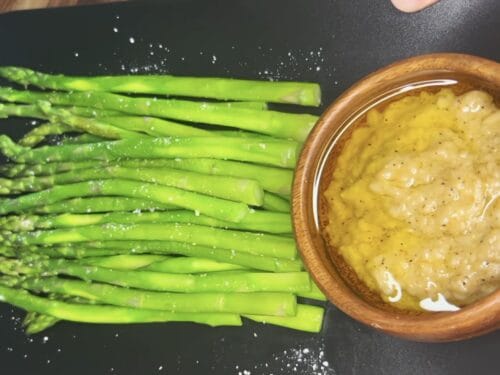

This dish brings together tender Roman-style asparagus with a rich and tangy pine nut sauce, following techniques and ingredients found in Apicius’s ancient cookbook. The asparagus is cooked gently to preserve the delicate texture of the tips while softening the stalks, a method the Romans favored. The sauce blends honey, vinegar, pine nuts, olive oil, and pepper into a luxurious, earthy topping with sweet and sour notes. Served warm, this dish captures the balance of indulgence and restraint that Julius Caesar himself would have appreciated. Whether eaten as an appetizer or a refined side, this recipe offers a bold taste of ancient Rome and its sensual culinary traditions.
Prep Time 10 minutesmins
Cook Time 15 minutesmins
Ingredients
For the asparagus:
1bunch fresh asparagustrimmed
½tspsalt
Water for shallow boiling
Olive oil for drizzling
For the Roman sauce:
2tbsppine nuts
2tbspolive oil
1tbsphoney
1tbspred or white wine vinegar
¼tspblack pepper
Pinchof salt
Optional: splash of white wine
Instructions
Prepare the asparagus:
In a wide, shallow pan, bring about an inch of salted water to a simmer. Stand the asparagus upright if possible (use a steamer insert or bundle them with twine) so the stalks are submerged and the tips remain above water. Cover and steam-boil gently for 5–7 minutes until the stalks are tender but the heads remain firm. Remove and drain.
Make the sauce:
In a mortar and pestle or small food processor, grind the pine nuts into a rough paste. Add olive oil, honey, wine vinegar, salt, pepper, and wine (if using). Mix until smooth and slightly pourable. Taste and adjust for balance—Roman sauces were bold but balanced with sweet and sour.
Serve:
Arrange the warm asparagus on a platter and drizzle generously with the sauce. Finish with a final thread of olive oil or a light sprinkle of crushed pepper if desired.
Video
Notes
Use fresh, firm asparagus for best texture. Thin stalks are ideal for upright steaming, but you can also trim thicker stalks and peel the lower ends slightly to keep the dish tender throughout.
Roman sauces often balance sweet, sour, and savory. Adjust the honey and vinegar in your sauce depending on how bold or subtle you want the flavor. The goal is not sweetness but harmony.
A mortar and pestle gives the most authentic texture. If you have one, grind the pine nuts by hand with the other sauce ingredients. If not, a small food processor will work fine, just avoid over-pureeing to maintain some rustic texture.