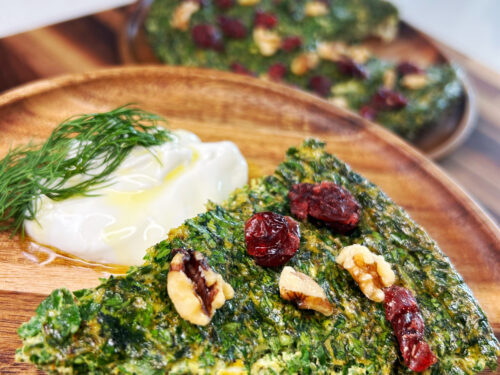

Kuku Sabzi is a deeply aromatic Persian herb frittata traditionally served during Nowruz, the Persian New Year, to celebrate rebirth and the coming of spring. Made with an abundance of finely chopped herbs of parsley, cilantro, dill, and scallions bound gently by eggs and seasoned with turmeric, salt, and pepper, it’s a dish that feels both ancient and alive. While often associated with holiday tables, Kuku Sabzi is equally cherished year-round as a vegetarian main, mezze, or side dish. Each bite is packed with earthy depth, subtle spice, and a satisfying textural contrast between the soft center and golden crust. When paired with yogurt, lavash, or pickled vegetables, it becomes a complete and soul-satisfying meal rooted in centuries of culinary tradition.
Prep Time 20 minutesmins
Cook Time 20 minutesmins
Ingredients
2cupsfinely chopped parsley
2cupsfinely chopped cilantro
1cupchopped dill
1cupchopped scallions or chives
5large eggs
1tspturmeric
Salt and pepper to taste
Optional: 2 tbsp dried cranberries or barberriesand chopped walnuts
Oil or butter for frying
Instructions
Finely chop all herbs by hand or in a food processor until very fine but not puréed.
In a large mixing bowl, whisk the eggs with turmeric, salt, and pepper until light and frothy.
Fold in the herbs and any optional additions, mixing until evenly coated in the egg.
Add a few tablespoons of olive oil to the mixture
Pour in the mixture to a round baking pan, bake at 375 for 20-25 minutes
When the center has set, take the dish out and let cool, then add dried cranberries and walnuts for topping
Let cool slightly before slicing into wedges or squares. Serve warm or at room temperature, I paired mine with yogurt, olive oil, and dill
Video
Notes
Freshness is Everything:
The vibrant flavor and signature green color of Kuku Sabzi comes from using fresh, not dried, herbs. Don’t skimp here. Aim for bright parsley, fragrant cilantro, delicate dill, and snappy scallions. If prepping ahead, wash and dry the herbs the day before and store them in a towel-lined container to avoid wilting. A food processor makes the chopping faster, but avoid over-blending into a paste—this dish thrives on texture.
Eggs Are the Binder, Not the Star:
Unlike an omelet or Western frittata, Kuku Sabzi uses eggs sparingly—just enough to hold the herbs together. The result should be a deeply green, herb-forward dish with a lightly set structure, not an eggy cake. If your batter feels too runny, add one more handful of herbs or a spoonful of flour to tighten it up without throwing off the delicate balance.
Don’t Skip the Crust:
One of the most satisfying elements of a well-made kuku is the crisp, golden crust that forms on the bottom (and top, if flipped or broiled). To get it right, preheat your pan well and let the kuku cook undisturbed for at least 10–12 minutes. Use a lid to steam the center through, and don’t flip too soon. For an even finish, some home cooks bake the whole dish in the oven or use a broiler to crisp the top.