
Go Back

Kulish

Print Recipe
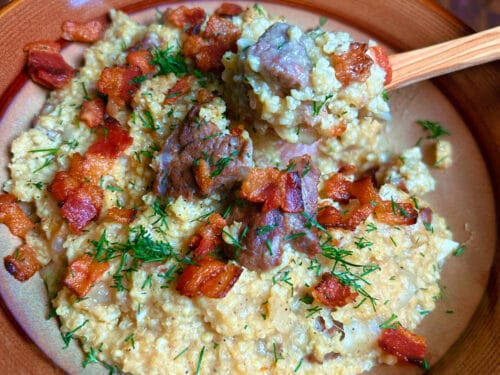
Kulish is the defining camp food of the Cossack warriors who roamed the borderlands of Eastern Europe between the fifteenth and eighteenth centuries. Built around millet, animal fat, and whatever meat was available, this dish was designed to fuel long days in the saddle and cold nights on the steppe. The texture sits somewhere between a stew and a porridge, thick, glossy, and deeply savory. The rendered bacon fat enriches the grain, the stew meat adds substance, and the onion and garlic give just enough aroma without excess. Served with dense rye bread, this is not a refined dish, but it is incredibly satisfying. It tastes exactly like what it was meant to be: practical, warming, and powerful.
Prep Time 10 minutes
Cook Time 45 minutes

Ingredients

Kulish

  • 1 cup millet rinsed very well
  • 3 cups water or light broth beef or pork broth works best
  • 6 –8 oz stew meat beef or pork, cut into small bite-sized chunks
  • 3 oz thick-cut bacon diced
  • 1 medium onion finely chopped
  • 2 cloves garlic minced
  • 1 –2 tablespoons lard or butter
  • Salt to taste
  • Freshly cracked black pepper
  • Optional but historically plausible
  • 1 bay leaf
  • Chopped fresh dill or parsley for garnish
  • Bacon for garnish

To Serve

  • Thick slices of dark rye bread
  • Optional: butter or lard for spreading

Instructions

Prepare the millet

  • Rinse the millet thoroughly under hot water several times until the water runs clear. This step is essential and removes bitterness, giving the finished kulish a creamy, nutty flavor rather than a harsh one. Set aside.

Render the bacon

  • In a heavy-bottomed pot or cast iron pan over medium heat, add the diced bacon. Cook slowly until the fat renders and the bacon becomes golden and crisp. Remove about half of the bacon pieces and reserve them for garnish.

Brown the stew meat

  • Add the stew meat directly into the rendered bacon fat. Cook until lightly browned on all sides. Do not rush this step, as this builds depth and gives the porridge its savory backbone.

Build the flavor base

  • Add the chopped onion to the pot and cook until soft and lightly caramelized. Stir in the garlic and cook for about 30 seconds until fragrant.

Cook the kulish

  • Stir the rinsed millet into the fat, coating it thoroughly. Pour in the water or broth, add a pinch of salt, black pepper, and the bay leaf if using. Bring to a gentle simmer, cover, and cook on low heat for 20–25 minutes, stirring occasionally, until the millet is tender and the mixture thickens into a spoonable porridge.

Finish and serve

  • Remove the bay leaf. Adjust seasoning with salt and pepper. The kulish should be thick but glossy, not dry. Serve hot, topped with reserved bacon and fresh herbs, alongside thick slices of rye bread.

Video

Notes

  • Millet matters: Rinsing the millet thoroughly is not optional. Historical accounts mention washing grains repeatedly, and skipping this step will result in bitterness that overwhelms the dish.
 
  • Texture over thickness: Kulish should never be stiff or dry. If it thickens too much, add a splash of hot broth or water and stir gently to restore its porridge-like consistency.
 
  • Fat is the flavor: This dish relies on animal fat for richness. Lard or bacon fat is historically accurate and essential to achieving the proper depth and mouthfeel.