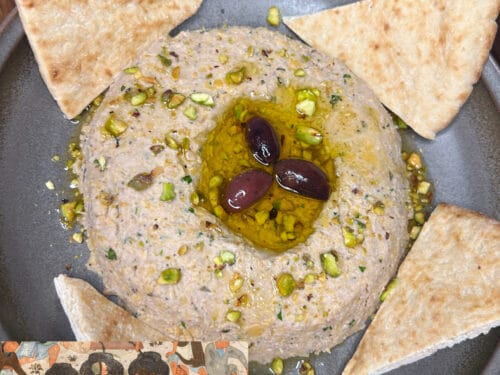

Himmas Kassa is one of the earliest known forms of hummus, preserved in a 14th-century Egyptian cookbook. Unlike the smooth hummus we know today, this recipe has a rustic texture and a nutty depth thanks to walnuts, fragrant spices, and fresh herbs. It was served at banquets as part of the opening courses, showing off the host’s generosity and refinement. Today, recreating this dish connects us directly to the flavors of the medieval Islamic world, with every bite offering history, texture, and tradition.
Prep Time 15 minutesmins
Ingredients
1cupboiled chickpeas
2tablespoonstahinistirred with 2 tablespoons water and 2 tablespoons wine vinegar
¼cupfinely ground walnutstirred with 2 tablespoons lemon juice and 1 teaspoon wine vinegar
½cupchopped parsley
¼cupchopped mint
3tablespoonsolive oil
¼teaspooneach of carawaycoriander, black pepper, ginger, and cinnamon, all crushed
½teaspoonsalt
For garnish: olive oilolives, and chopped pistachios
Flatbread for serving
Instructions
In a mixing bowl, mash the boiled chickpeas until they form a coarse paste.
Stir in the tahini mixture and the walnut mixture until combined.
Fold in the parsley, mint, olive oil, and spices. Taste and adjust salt as needed.
Transfer to a shallow serving dish. Garnish with olive oil, olives, and pistachios.
Serve with flatbread, as it would have been enjoyed in the medieval Islamic world.
Video
Notes
Rustic Texture – Do not over-purée the chickpeas. This hummus was meant to be coarse, offering contrast against soft flatbread and other dishes.
Balance of Flavors – The unusual spice mix of cinnamon, ginger, and caraway gives warmth and complexity, so taste as you go to balance the sharpness of vinegar with the richness of walnuts.
Authentic Garnish – Garnishing with olives, pistachios, and a drizzle of olive oil not only adds flavor but also reflects how medieval cooks presented their food with care and beauty.