
Go Back

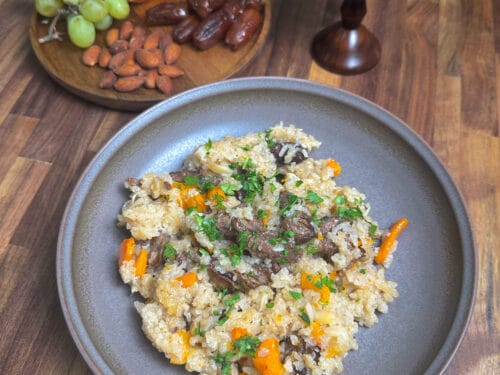
Medieval Silk Road Plov

Donnie
No ratings yet
Reconstructed from the 10th century documented preparation of Avicenna (Abu Ali Ibn Sina), Bukhara, and the traditional Uzbek plov technique as documented by UNESCO's Intangible Cultural Heritage designation, 2016
Primary sources: Abu Ali Ibn Sina (Avicenna), Canon of Medicine, c.1025 AD; Zafarnama (Book of Victory), Timurid period chronicles; Archaeological and Anthropological Sciences, archaeobotanical study of Bukhara, 2023; UNESCO Intangible Cultural Heritage, Uzbek Palov Culture and Tradition, 2016
Prep Time 30 minutes
Cook Time 1 hour 30 minutes

Jump To

Donnie Dodson

Don’t lose this one.

I’ll email it to you so it’s waiting when you’re ready to cook.

Ingredients
  

  • 600 g lamb or beef shoulder cut into large chunks — fatty lamb is the historically accurate and culinarily correct choice. The fat from the lamb renders into the oil and becomes the flavour base of the entire dish. Do not use lean lamb or beef.
  • 400 g long grain rice soaked in cold water for 30 minutes and drained — devzira rice from Uzbekistan is the most historically authentic choice and is available from Central Asian food suppliers online. Any good long grain rice works
  • 2 medium carrots cut by hand into thin matchsticks — the hand-cut technique is specific and documented and is not incidental. Do not grate or use a food processor. The hand-cut matchstick releases moisture at a different rate and integrates into the dish differently from mechanically processed carrot
  • 1 large onion sliced into half-moons
  • 1 whole head of garlic outer papery skin removed but left completely whole and intact
  • 150 ml cottonseed or sunflower oil — cottonseed oil is the traditional documented Central Asian cooking fat for plov. Sunflower oil is the most widely available substitute
  • 1 tsp whole cumin seeds or cumin powder
  • Salt and black pepper
  • Hot water as needed
For the Silk Road merchant feast accompaniment:
  • Fresh pears sliced
  • Dates pitted
  • Walnuts or almonds
  • A glass of wine

Instructions
 

Build the zirvak base

  1. Heat the oil in a heavy-bottomed pot, a cast-iron casserole or a Dutch oven is the best available substitute for the traditional kazan, over high heat until shimmering and very hot. The oil must be genuinely hot before anything goes in. Add the lamb chunks in a single layer without crowding and brown deeply on all sides, 8 to 10 minutes total. Do not move the meat until it releases naturally from the pan. You are building flavour in this step and it cannot be rushed. Season generously with salt and black pepper.
  2. Add the sliced onions to the browned lamb. Stir and cook over high heat for 5 to 7 minutes until the onions are completely soft and beginning to turn golden at the edges. The onions should cook down significantly.
  3. Add the hand-cut carrot matchsticks. Stir to combine with the lamb and onions. Cook over medium-high heat for 8 to 10 minutes, stirring occasionally, until the carrots have softened and begun to colour. The carrots will release moisture as they cook. This is the zirvak forming around the meat and vegetables.

Add the spices and water

  1. Add the cumin seeds directly to the pot and stir for 30 seconds until fragrant. Add hot water to just cover the meat and vegetables, approximately 250 to 300ml. Bring to a simmer and cook covered over medium heat for 20 minutes until the lamb is nearly tender and the zirvak has reduced and deepened in flavour. Taste and adjust salt. The zirvak should be intensely savoury, slightly oily and deeply fragrant.

Add the garlic

  1. Nestle the whole head of garlic, papery skin removed but otherwise completely intact, into the centre of the zirvak. Push it down into the liquid slightly. This is the technique that produces the extraordinary result at serving. The garlic steams from inside rather than cooking in direct contact with the oil, becoming completely soft and sweet without losing its structural integrity.

Add the rice

  1. Drain the soaked rice thoroughly. Add it in an even layer over the top of the zirvak, lamb and vegetables. Do not stir. The rice sits on top of the zirvak as a separate layer. Add hot water carefully over the back of a spoon to avoid disturbing the rice layer, enough to cover the rice by approximately 1.5cm. The water should be absorbed into the rice during steaming, not pooling excessively above it.
  2. Bring to a vigorous boil, then reduce to the lowest possible heat. Cover tightly and cook for 20 to 25 minutes without lifting the lid. The rice steams from the moisture in the pot and the liquid in the zirvak below it. After 20 minutes check the rice. It should be completely cooked through and the liquid fully absorbed. If there is still liquid visible, re-cover and cook for 5 more minutes.

Rest and serve

  1. Remove the whole garlic head carefully and set aside. Fluff the rice gently with a fork or large spoon, incorporating the lamb and vegetables from below into the rice as you turn it. The plov should be a unified golden, fragrant mixture of rice, lamb, carrot and onion, with the cumin seeds distributed throughout.
  2. Transfer to a large serving plate. Place the whole garlic head in the centre of the plov as garnish. Scatter fresh parsley over the top if using. At the table press the softened garlic cloves out of their skin and work them through the rice and vegetables before serving.
  3. Serve with the fresh pears, dates and walnuts arranged on a separate plate alongside, and a glass of wine, for the complete Silk Road merchant feast.

Video

Notes

  • The hand-cut carrot technique is the single most important technical detail of this recipe and the one most often shortcut in modern adaptations. The matchstick cut produces a carrot that integrates into the zirvak while retaining enough structure to provide texture in the finished dish. A grated carrot dissolves completely and becomes invisible. A food-processed carrot is too irregular. Hand-cut matchsticks are what every Uzbek oshpaz, the professional plov cook, has used for centuries and the difference in the finished dish is significant.
 
  • The whole garlic is not optional. It is the technique that produces the single most extraordinary flavour element in the dish. An oshpaz in Tashkent will push garlic heads halfway into the rice before steaming, allowing them to turn soft and sweet, perfect for squeezing over your serving. The method in this recipe follows the same principle. Do not substitute minced or crushed garlic for the whole head. The result is completely different.
 
  • Devzira rice is available online from Central Asian food importers and from some specialty grocery stores. This amber-coloured variety absorbs more liquid without turning mushy and produces a more authentic result than standard long grain rice. If you cannot find it, any good quality long grain rice that has been soaked and drained thoroughly will work.

Tried this recipe?

Let us know how it was!