
Go Back

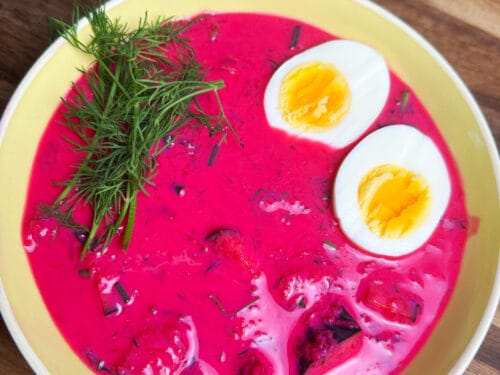
Šaltibarščiai — Lithuanian Cold Beetroot Soup

Donnie
No ratings yet
Lithuania's national summer dish, with roots in the culinary traditions of the Grand Duchy of Lithuania and the Polish-Lithuanian Commonwealth. Still prepared by every Lithuanian family during the summer months in essentially the same form it has taken for generations.
Prep Time 10 minutes
Cook Time 40 minutes
Chill Time 1 hour

Jump To

Donnie Dodson

Don’t lose this one.

I’ll email it to you so it’s waiting when you’re ready to cook.

Ingredients
  

For the soup:
  • 4 medium beetroots fresh — bought whole with skin on. Do not use pre-pickled beetroot. The pickling vinegar will fundamentally change the flavour of the finished soup and make it unpleasantly sharp
  • 1 medium cucumber diced into chunks — the cucumber should be diced generously, not finely minced. You want pieces substantial enough to provide textural contrast with the liquid base
  • Small bunch of fresh dill finely chopped — fresh dill is not optional. Dried dill will not produce the same result
  • Small bunch of fresh chives finely chopped
  • 500 ml kefir or buttermilk — kefir is the most historically accurate and culturally authentic choice for the Lithuanian version. Buttermilk is the most widely available substitute and produces an excellent result. Full-fat versions of either produce a richer more satisfying soup
  • Salt and freshly ground black pepper to taste
  • Cold water to adjust consistency if needed
For serving:
  • 4 hard-boiled eggs halved — boil for exactly 9 minutes from cold water, transfer to ice water immediately, peel when cool
  • Additional fresh dill for garnish
  • Hot boiled potatoes on the side (optional)

Instructions
 

Cook the beetroots

  1. Place the whole, unpeeled beetroots in a large saucepan and cover with cold water. Bring to a boil and cook for 35 to 45 minutes depending on size, until completely tender when pierced with a knife at the thickest point. Do not peel before boiling. Cooking the beets with their skin on preserves both the colour and the flavour that makes this soup what it is.
  2. Drain and allow to cool completely. This step is essential: adding warm beets to cold kefir will produce a lukewarm soup rather than a cold one, and the temperature is fundamental to the dish. Once cool enough to handle, peel the skins, which will slip off easily with your hands. The cooking liquid will turn a spectacular deep crimson. Reserve it. Adding a small amount of beet cooking liquid to the finished soup deepens both the colour and the flavour.

Prepare the beets

  1. Grate the peeled, cooked beets on a coarse grater, or dice them into small pieces depending on your textural preference. The grated version produces a more uniform pink soup with the beet distributed throughout. The diced version produces a more textural soup with distinct pieces of beetroot visible in the kefir base. Both are legitimate. The Lithuanian version most commonly uses grated beet.

Assemble the soup

  1. Place the grated or diced beets in a large bowl. Add the diced cucumber, the chopped dill and the chopped chives. Pour the kefir or buttermilk over everything. Add a ladleful or two of the reserved beet cooking liquid to deepen the colour and intensify the beet flavour. Stir gently to combine. Season generously with salt and freshly ground black pepper. Taste and adjust seasoning. The soup should be tangy from the kefir, sweet and earthy from the beet, fresh and herbal from the dill, and properly salted.
  2. If the soup seems too thick, add cold water gradually until you reach your preferred consistency. It should be drinkable and pourable rather than stiff.

Chill

  1. Cover and refrigerate for at least one hour before serving. Overnight is better. The flavours develop and integrate significantly with chilling time and a properly cold soup is fundamentally different from a room temperature one.

Boil the potatoes

  1. Bring a pot of well-salted water to a boil and add medium-sized waxy potatoes. Cook for 18 to 22 minutes until tender throughout. Serve hot and whole or halved alongside the cold soup. The temperature contrast between the icy soup and the steaming potato is the definitive Lithuanian summer lunch experience.

Serve

  1. Ladle the cold pink soup into bowls. Place one or two hard-boiled egg halves in each bowl, cut side up. Scatter additional fresh dill over the top. Serve immediately with the hot boiled potatoes alongside.

Video

Notes

  • The beetroots must be fresh whole beets cooked from raw. Pre-pickled beetroot from a jar will introduce acetic acid from the pickling vinegar that fundamentally changes the character of the soup from sweet and earthy to sharp and vinegary. The difference is immediately apparent.
 
  • Kefir is the most culturally authentic base ingredient for the Lithuanian version and is widely available at most supermarkets in the yoghurt and dairy section. Full-fat kefir produces a richer result. If you cannot find kefir, full-fat buttermilk is the best substitute and produces an excellent soup. Plain yoghurt thinned with a little cold water also works but produces a slightly thicker result.
 
  • The dill is the herb that defines this dish and fresh dill is non-negotiable. The quantity in this recipe may seem generous. It is correct. Lithuanian cooks do not use dill sparingly in šaltibarščiai.

Tried this recipe?

Let us know how it was!