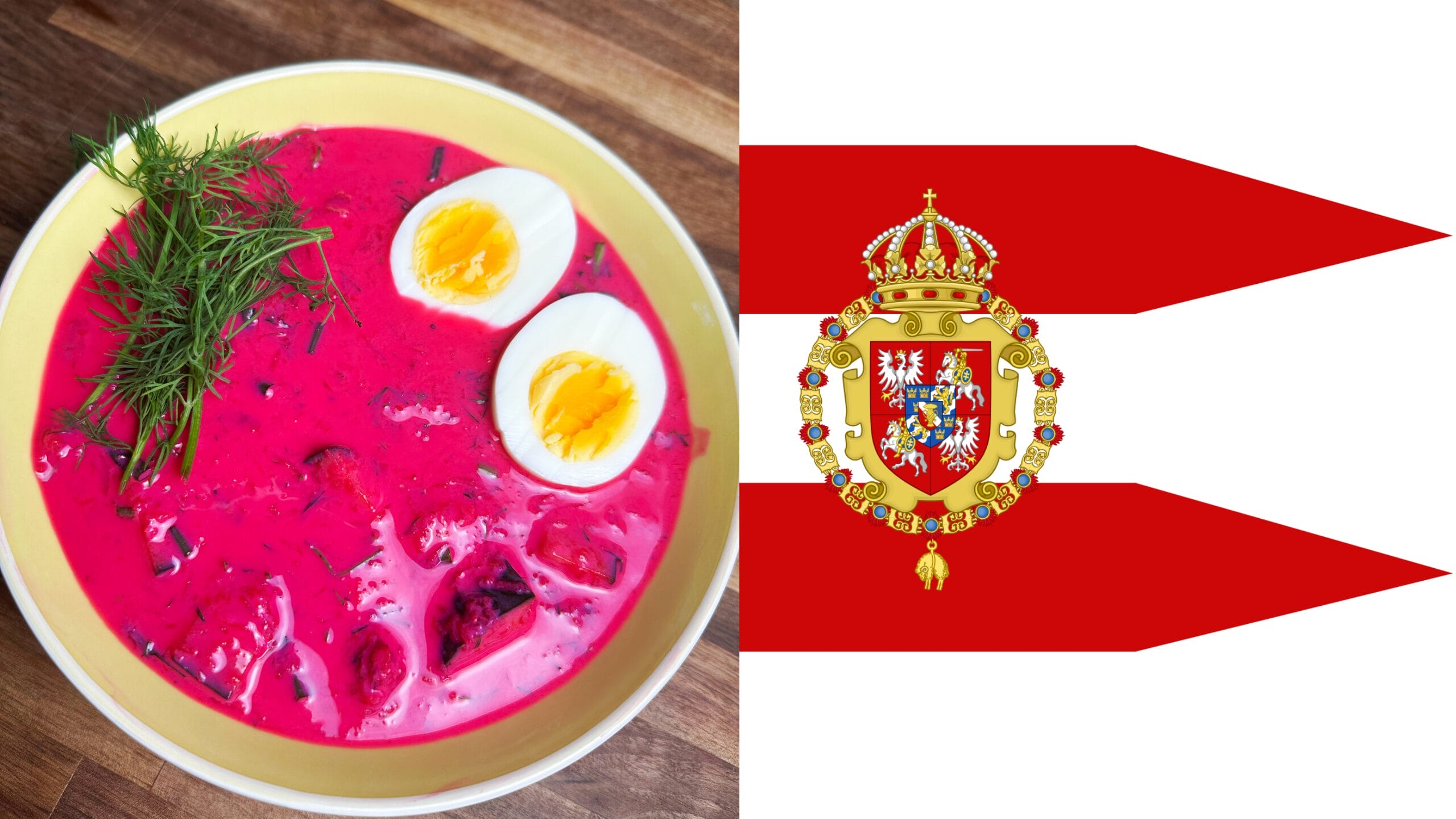
Šaltibarščiai (shul-tee-barsh-chay) is a bowl of cold soup the colour of a neon sign, somewhere between hot pink and deep magenta, topped with a halved hard-boiled egg and a shower of fresh dill. It looks like something a food stylist invented for a magazine shoot. It is actually a Lithuanian peasant tradition dating back centuries.
I made it this week in the spirit of the Eats History Project, documenting living food traditions across the places I travel. The Lithuanian version of this soup is not just a recipe. It is a national institution, the subject of a dedicated annual festival, the dish that every Lithuanian grandmother makes from memory without measuring anything, and the most photographed food in the entire Baltic region every summer. It tastes as extraordinary as it looks. Here is the full story.
The Origins: Baltic and Slavic Peasant Traditions
Cold beet soup is not uniquely Lithuanian. Variations exist across Belarus, Poland, Ukraine, and Russia, all rooted in the same medieval Slavic and Baltic tradition of using fermented dairy as a base for vegetable soups during the warm months when fresh milk would not keep.
Next week
I cook these before I write them. Some of it never makes the post.
The failures, the source documents, the version that actually tasted good. That part goes out by email, and next week’s is already on the stove.
 Written and cooked by Donnie
The foundational logic of šaltibarščiai is the logic of peasant food everywhere: use what you have, preserve what spoils quickly, and find ways to make simple ingredients nourishing and satisfying. In the Baltic and Slavic agricultural world, fermented dairy products including kefir, buttermilk and sour cream were not luxury items. They were the practical result of preserving milk before it went bad in the summer heat. Root vegetables including beetroot, turnip and carrot were the foundational crops of the Lithuanian and broader Baltic agricultural tradition. Fresh herbs, particularly dill, grew abundantly across the region and were gathered seasonally.
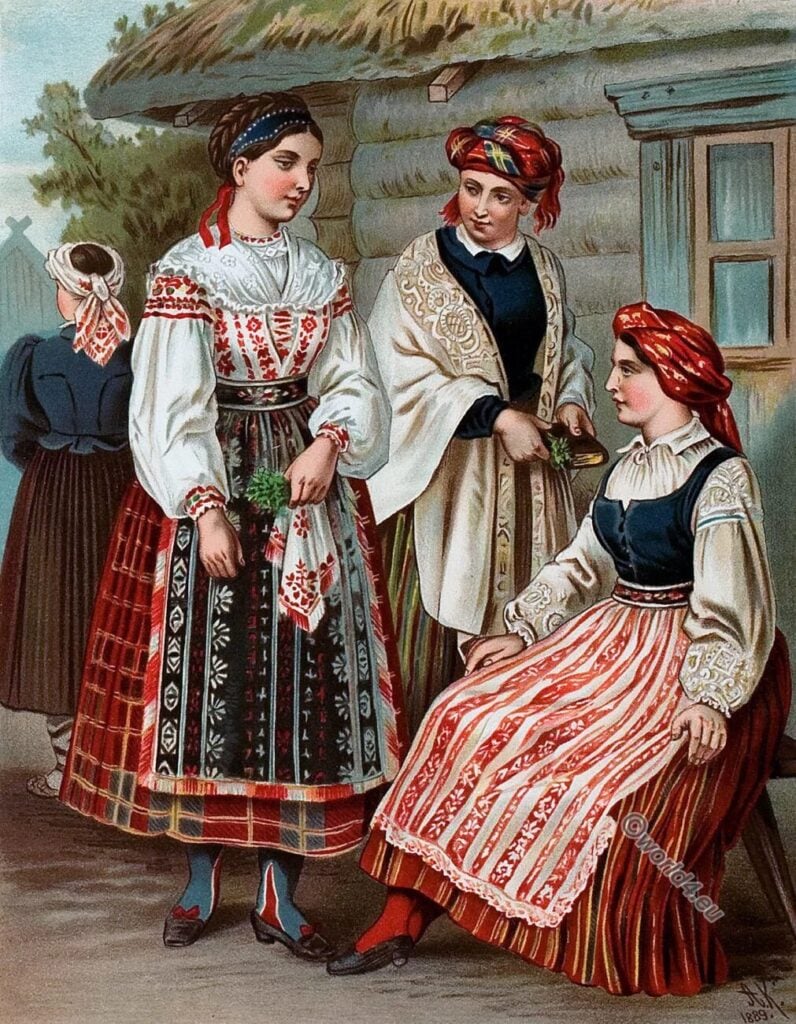
Šaltibarščiai has its roots in Baltic and Slavic culinary traditions, where fermented milk and root vegetables were dietary staples for centuries. Cold soups were common in peasant diets, especially in warmer months when a refreshing, easy-to-prepare meal was welcome.
The history of this unique dish dates back to the times of the Grand Duchy of Lithuania, the medieval state that at its greatest territorial extent in the 15th century stretched from the Baltic Sea to the Black Sea, encompassing what is now modern Lithuania, Belarus, much of Ukraine and parts of Poland and Russia. Within this vast territory a shared food culture developed around the common ingredients of the Baltic and Slavic agricultural world. In the past, luxurious ingredients were added to the cold soup to emphasize the status of the host. These were often crab necks, pieces of roasted game, or finely chopped fish. Such additions made the soup both extremely filling and exquisite. Over the centuries, the recipe began to spread to the poorer sections of rural society, and in doing so became simplified and standardised into the kefir, beet, cucumber and dill combination that defines it today.
Beetroot became the defining ingredient of the dish during the period of the Polish-Lithuanian Commonwealth, the political union of the Kingdom of Poland and the Grand Duchy of Lithuania that existed from 1569 to 1795. As beetroot cultivation spread through the agricultural lands of the Commonwealth and became more widely available to ordinary farming families, it entered the cold soup tradition and permanently defined the dish’s character and colour.
The Same Soup, Six Countries, Six Names
One of the most fascinating aspects of šaltibarščiai’s history is the evidence it provides for the shared food culture that developed across the former territories of the Grand Duchy of Lithuania and the Polish-Lithuanian Commonwealth. The same soup, in recognisably similar forms, is eaten across an enormous geographic area under different names and with regional variations that reflect local ingredients, dairy traditions and cultural preferences.
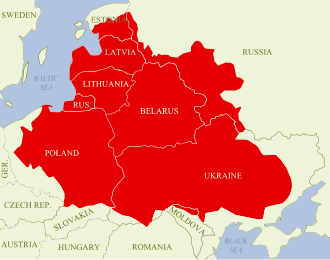
There are Latvian, Polish, Ukrainian, Belarusian and Russian versions, but for me, a pescatarian Lithuanian, the Lithuanian version is best.
Lithuania: Šaltibarščiai
The Lithuanian version is the most internationally recognised and the one most closely associated with national identity. Lithuanians adapted their own version of cold borscht using kefyras, kefir, which has long been a part of the Lithuanian dairy tradition. With the abundance of beets and fresh herbs in the region, Šaltibarščiai evolved into a distinct dish with a bold identity. The Lithuanian version uses more kefir relative to beet juice than most other regional versions, producing a creamier, more dairy-forward soup with a vivid pink colour. It is served cold with hot boiled potatoes on a separate plate, the temperature contrast between the icy soup and the steaming potatoes being considered an essential part of the eating experience.
Poland: Chłodnik Litewski
The Polish name for the dish is chłodnik litewski, which translates literally as Lithuanian cold soup. The fact that the Poles named their version of the dish after Lithuania is the clearest possible evidence of where the soup is understood to have originated. Poland has a cold beetroot soup too called chłodnik litewski. And in this case, since litewski literally translates to “Lithuanian” — the Poles at least consider the dish to be a Lithuanian thing and not a fully Polish dish. The Polish version typically uses more sour cream than kefir and often incorporates crayfish tails or shrimp as a nod to the aristocratic versions documented from the Grand Duchy period.
Belarus: Khaladnik or Chaladnik
In Belarusian cuisine, it is known as chaladnik and is well attested in 18th and 19th century ethnographic materials as a traditional and widespread summer dish. Belarusian cold borscht is made of beets, sometimes beet leaves or sorrel, served with sour cream and hard-boiled eggs, often accompanied by hot boiled potatoes. The Belarusian version tends to be more intensely beet-forward than the Lithuanian version, using less dairy and more beet juice in the base.
Latvia: Aukstā zupa
The Latvian cold beet soup, aukstā zupa, meaning simply cold soup, is the closest in character to the Lithuanian version given the shared Baltic cultural heritage. It typically uses kefir or buttermilk as the dairy base and includes cucumber, dill and hard-boiled eggs in the same combination as its Lithuanian neighbour.
Ukraine: Kholodnyk
The Ukrainian version, kholodnyk, is particularly associated with the regions of Ukraine that were historically part of the Polish-Lithuanian Commonwealth. It often incorporates sorrel or beet greens alongside the beetroot, producing a more complex green-pink colour rather than the pure magenta of the Lithuanian original.
The Pink Soup Festival and Lithuania’s National Dish
Šaltibarščiai is the undisputed queen of the Lithuanian table and a true aesthetic phenomenon. Its intense, almost neon pink color immediately catches the eye of every tourist. This distinctive color comes from a combination of juicy beets and thick, cool kefir.
Every summer Lithuania celebrates its most famous dish at the Pink Soup Festival, held in Vilnius and in various regional towns across the country, where hundreds of versions of šaltibarščiai are prepared, judged and eaten by thousands of participants. The festival is simultaneously a celebration of a specific recipe and a celebration of Lithuanian national identity, reflecting the degree to which this dish has become inseparable from the country’s cultural self-image.
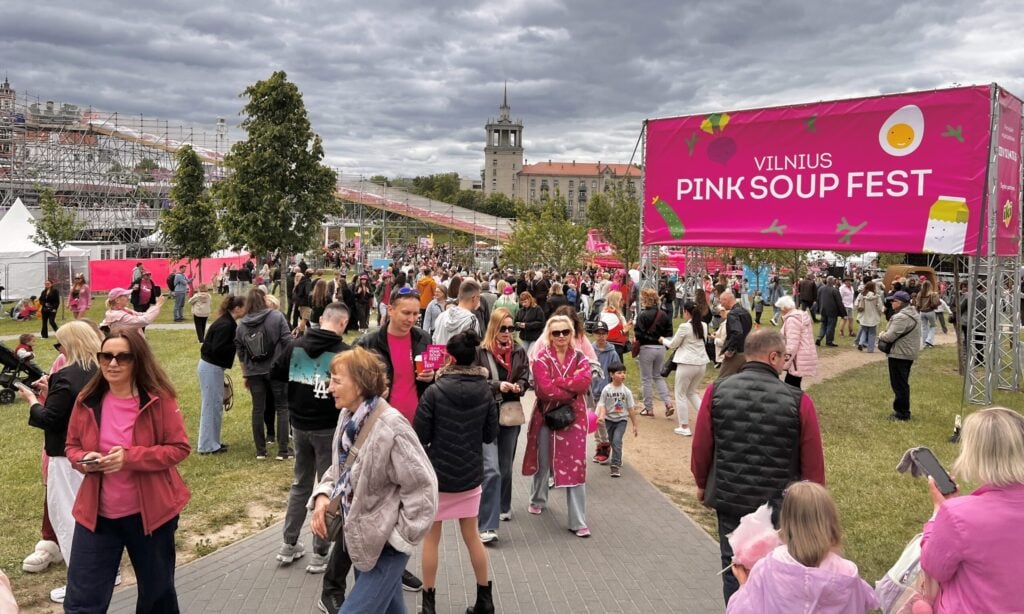
The festival draws international visitors who have heard about the soup and are curious enough to travel for it, which makes šaltibarščiai one of the small number of dishes in the world that functions as genuine food tourism. Visiting Lithuania in summer and not eating šaltibarščiai would be, by Lithuanian standards, the equivalent of visiting Naples and not eating pizza. Technically possible. Completely inexcusable.
The dish is also the subject of a genuine Lithuanian cultural phenomenon around the serving temperature. The soup must be cold. Not room temperature. Not slightly chilled. Cold, from a refrigerator or with ice, so that the contrast with the hot boiled potatoes served alongside is as dramatic as possible. The combination of icy pink soup and steaming potatoes eaten together is the defining sensory experience of a Lithuanian summer lunch and it is not negotiable.
My Rating
Šaltibarščiai surprised me in the way that only the best simple dishes do. The combination of earthy sweet beetroot, tangy cold kefir, crisp cucumber and pungent fresh dill produces a flavour profile that is simultaneously refreshing and deeply satisfying. The cold temperature amplifies everything. The dill, which can feel aggressively herbal at room temperature, becomes aromatic and bright when cold. The kefir’s tanginess is softened and made more refreshing by the chill. The beetroot’s earthiness is the flavour anchor that holds everything together.
The hard-boiled egg on top is the component most people overlook when thinking about this dish and it is the component that makes it complete as a meal rather than simply as a cold starter. Sliced and dropped into the cold pink soup, the egg provides the protein and richness that the vegetable and dairy base lacks on its own.
The hot boiled potatoes alongside are genuinely necessary rather than optional. The temperature contrast is the point. Eating a spoonful of cold soup and immediately following it with a piece of hot potato is the full Lithuanian summer lunch experience and it is considerably better than either component eaten alone would suggest.
Rating: 7.5/10
The Recipe: Šaltibarščiai — Lithuanian Cold Beetroot Soup
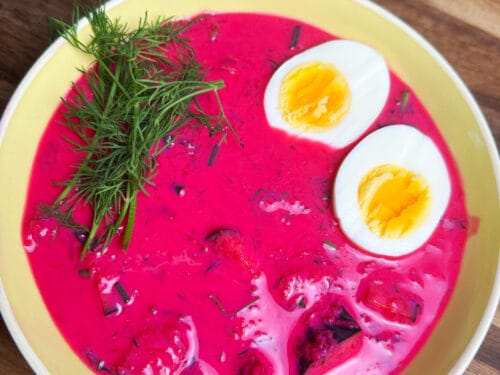
Šaltibarščiai — Lithuanian Cold Beetroot Soup

Don’t lose this one.
I’ll email it to you so it’s waiting when you’re ready to cook.
Ingredients
Instructions
Notes
- The beetroots must be fresh whole beets cooked from raw. Pre-pickled beetroot from a jar will introduce acetic acid from the pickling vinegar that fundamentally changes the character of the soup from sweet and earthy to sharp and vinegary. The difference is immediately apparent.
- Kefir is the most culturally authentic base ingredient for the Lithuanian version and is widely available at most supermarkets in the yoghurt and dairy section. Full-fat kefir produces a richer result. If you cannot find kefir, full-fat buttermilk is the best substitute and produces an excellent soup. Plain yoghurt thinned with a little cold water also works but produces a slightly thicker result.
- The dill is the herb that defines this dish and fresh dill is non-negotiable. The quantity in this recipe may seem generous. It is correct. Lithuanian cooks do not use dill sparingly in šaltibarščiai.