A reconstruction using documented Roman recipes assembled into a modern burger format. All components sourced from primary Roman culinary texts. The burger assembly format is anachronistic. Every individual component is historically accurate. Primary sources: Apicius, De Re Coquinaria, Book II Recipe 7 (Isicia Omentata) and Book III Recipe 11.2 (beet dressing), compiled 4th to 5th century AD Marcus Porcius Cato, De Agri Cultura, 2nd century BC (spelt flatbread basis) Sally Grainger and Christopher Grocock, Apicius: A Critical Edition, 2006 (academic translation)
Prep Time 30 minutesmins
Cook Time 30 minutesmins
Ingredients
For the Isicia Omentata patties:
500glean minced pork or mixed pork and beef — Apicius specifies pulpalean meat, without indicating the species. Pork is the most commonly documented Roman meat. A pork and beef blend produces a good result
2thick slices of good white breadcrusts removed, soaked in 4 tbsp dry white wine or red wine until fully absorbed — this is the medulla siliginei in vino infusi, bread crumb soaked in wine, that Apicius specifies as the binder
1tspfreshly ground black pepper — Apicius specifies piper prominently
1tbspgarum or Vietnamese fish sauce — Apicius lists liquamen as optional. Fish sauce is the most historically accurate modern substitute
1tspdried myrtle berriescrushed, or substitute dried juniper berries — bacam myrtam extenteratam, myrtle berry with seeds removed, is the documented Apicius flavouring. Juniper is the closest accessible modern equivalent
2tbsppine nutswhole — placed inside the patty per Apicius instruction
Extra whole black peppercorns to press inside the patties — documented in the Apicius text
Caul fat if availableor thin streaky bacon as a substitute — the omentum wrapping that gives the dish its name
Caroenum for basting: reduce 1 cup of red wine with 1 tsp honey until syrupyapproximately 15 minutes, as the closest accessible substitute for the Roman reduced grape must
For the spelt flatbreads (buns):
250gspelt flour or emmer wheat flour — the historically accurate Roman grain. Spelt flour is widely available at health food stores
150mlwarm water
½tspsalt
1tbspolive oil
½tspactive dry yeast dissolved in 2 tbsp warm water — Roman bakers used a sourdough culture but active yeast produces a close functional equivalent for home bakers
For the beet dressing:
2medium beetrootscooked until completely tender — boil whole, unpeeled, for 45 minutes to 1 hour
1tbspDijon mustard — sinapimustard, is the documented Apicius flavouring
2tbspgood olive oil
1tbspred wine vinegar — acetovinegar, documented in the recipe
Salt to taste
100gfresh ricotta — moretumfresh white cheese, was widely documented in Roman cooking and adds the bright pink colour when blended with the beet and the mild creamy note that balances the acidity of the dressing
For the toppings:
4green onionstrimmed and lightly grilled or raw — documented Roman ingredient
50gdried cured pork or pancetta — dried pork preparations are thoroughly documented in Roman food culture
Handful of good olivespitted and roughly chopped — olives were the most universally documented food in the entire Roman diet
Instructions
Make the spelt flatbreads
Combine the spelt flour and salt in a bowl. Add the dissolved yeast, olive oil and warm water gradually, mixing until a smooth, slightly sticky dough forms. Knead for 5 minutes until the dough is elastic and smooth. Cover and leave to rest for 30 minutes. Divide into 8 equal pieces. Roll each piece into a flat round approximately 12cm in diameter and 5mm thick. Cook on a dry hot griddle or cast iron pan over medium-high heat for 2 to 3 minutes per side until lightly charred in spots and cooked through. Stack and keep warm wrapped in a cloth. The flatbreads will be denser and more flavourful than modern burger buns, with a slight nuttiness from the spelt.
Make the beet dressing
Peel the cooked beetroots and roughly chop. Place in a food processor or blender with the mustard, olive oil and red wine vinegar. Blend until completely smooth. Add the ricotta and blend again until the dressing is uniformly pink, smooth and slightly thick. Taste and adjust salt and vinegar. The dressing should be tangy, slightly sweet from the beet and creamy from the ricotta. The colour should be a vivid deep pink. Refrigerate until needed.
Make the Isicia Omentata patties
Squeeze the wine-soaked bread firmly to remove excess liquid. In a large bowl combine the minced meat, squeezed bread, ground pepper, fish sauce, crushed myrtle or juniper berries and a generous pinch of salt. Mix thoroughly with your hands until completely combined. The bread crumb binder will give the mixture a slightly softer, more yielding texture than a standard burger patty.
Divide into 4 equal portions. Form each into a patty approximately 2cm thick. Press a small amount of pine nuts and a few whole peppercorns into the centre of each patty, then fold the meat over them and reshape. The pine nuts and peppercorns inside the patty are specifically documented in the Apicius text and produce a textural surprise as you eat.
Wrap each patty in caul fat if using, or lay a thin strip of streaky bacon across the top and bottom. If using neither, the patties will cook perfectly well unwrapped.
Cook the patties
Heat a cast iron grill pan or heavy skillet over medium-high heat. Cook the patties for 4 to 5 minutes per side until well-coloured on the outside and cooked through. In the final minute of cooking, baste generously with the caroenum, the reduced wine and honey. The caroenum will caramelise on the surface and produce a glossy, slightly sweet glaze. Apicius specifies subassabis cum caroeno, lightly grill with caroenum, and this step is what distinguishes the finished patty from a plain grilled meat preparation.
Assemble the Roman burger
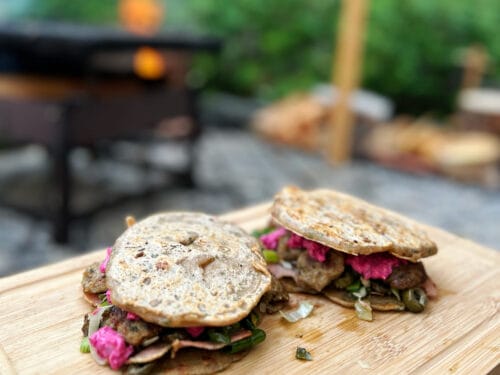
Take one spelt flatbread as the base. Spread a generous amount of the pink beet and ricotta dressing across the surface. Place the cooked Isicia Omentata patty on top. Add a few pieces of dried cured pork. Scatter the chopped olives. Add the green onion, lightly grilled or raw. Top with a second flatbread. Press gently. The dressing will be visible at the edges and the colour contrast of the deep pink sauce against the dark grill marks on the patty against the pale flatbread is one of the more visually striking food history moments this channel has produced.
Serve immediately. The Isicia Omentata does not improve with waiting.
Notes
Myrtle berries are not widely available but are worth sourcing if you want the most historically accurate version. They are available online from specialty herb suppliers and some Mediterranean food importers. Dried juniper berries are an accessible and flavourally appropriate substitute.
Caul fat is available from any butcher who breaks down whole animals. Call ahead. Most butchers have it but do not always display it. It produces a noticeably juicier patty than the unwrapped version and is worth the sourcing effort.
The caroenum glaze is easy to make and dramatically improves the finished patty. Do not skip it. The reduction of red wine with honey produces a syrup that caramelises on contact with a hot grill pan and gives the patty a sweet, slightly jammy exterior that balances the pepper and fish sauce inside.
The beet and ricotta dressing is the component that makes the burger work as a complete dish. Its acidity cuts through the richness of the meat and cheese while its vivid colour makes the whole construction visually extraordinary. Make more than you need and use the excess as a dipping sauce or a dressing for a simple salad of whatever Roman vegetables you have available.