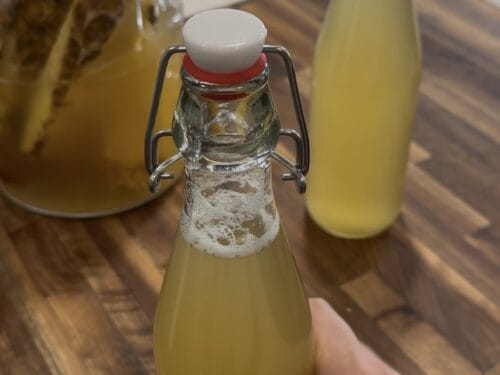

Reconstructed from the pre-colonial Nahua fermentation tradition and the post-colonial pineapple and piloncillo preparation documented in Mexican culinary history from the 17th century onward. The oldest continuously made fermented beverage in the Americas, still sold from street stalls throughout Mexico in the same basic form it has taken for centuries.
Prep Time 20 minutesmins
Fermenting Time 3 daysd
Ingredients
1whole pineapplerind and core only — the flesh is set aside for another use. The rind carries the wild yeast that drives the fermentation and the core contributes body and additional sugar. Do not skip the core
2litres filtered water — tap water should be filtered to remove chlorinewhich inhibits wild yeast fermentation. A standard Brita filter is sufficient
150gpiloncillo or unrefined dark cane sugar — piloncillo is not optional for an authentic result. It is available at any Latin grocery store and most large supermarkets in the international foods section. The molasses content and caramel depth of piloncillo is integral to the flavour of traditional tepache
2cinnamon sticks
3whole cloves
2star anise
Instructions
Prepare the pineapple
Wash the pineapple skin thoroughly under cold running water. Scrub with a brush if you have one. The wild yeast lives on the surface of the rind and you want to remove surface dirt and any pesticide residue without stripping the yeast. Cut off the rind in large pieces and cut the core into rough chunks. Set the pineapple flesh aside for another use. The rind and core are your fermentation base.
Dissolve the piloncillo
Pour 500ml of the filtered water into a large glass jar or ceramic container. The container should hold at least 3 litres to allow room for the pineapple and leave headspace above the liquid. Add the piloncillo to the warm water and stir continuously until completely dissolved. Piloncillo in block form takes a few minutes to dissolve fully. Break it into smaller pieces first if needed to speed the process.
Build the tepache
Add the remaining 1.5 litres of cold filtered water to the dissolved piloncillo. Add the pineapple rind and core pieces to the jar. Add the cinnamon sticks, whole cloves and star anise. The liquid should cover everything completely. If the pineapple pieces float above the surface press them down gently or weigh them with a small clean plate or jar.
Ferment
Cover the jar loosely with a clean cloth secured with a rubber band. Do not use an airtight lid. The fermentation needs to breathe and any seal will cause pressure to build and you may have a mexican nuke on your hands. Leave at room temperature, ideally 70 to 80°F, for 48 to 72 hours. A warmer kitchen will ferment faster. A cooler kitchen will ferment more slowly.
After 24 hours you may begin to see small bubbles forming around the pineapple pieces. By 48 hours there should be visible white foam on the surface of the liquid. This is the wild yeast working and is exactly what you want to see. Taste the tepache at 48 hours. It should be lightly sweet, faintly sour and just beginning to develop carbonation. If you prefer a sweeter, less sour tepache pull it at 48 hours. At 72 hours the sourness will be more pronounced, the carbonation more active and the alcohol content slightly higher. Pull it when the balance tastes right to you.
Strain and serve
Strain the tepache through a fine mesh strainer into a clean container or bottles. Discard the pineapple solids and spices. Refrigerate immediately. The cold temperature will slow the fermentation significantly and preserve the balance of flavour you have achieved.
Serve cold over plenty of ice. Tepache is most commonly sold on the street throughout Mexico iced in a bag with a straw, which is still the most satisfying way to drink it.
Notes
Star anise is not in every traditional tepache recipe but it is documented in regional variations particularly from central Mexico and adds a subtle anise note that works well with the pineapple and piloncillo. Leave it out if you prefer a cleaner pineapple flavour.
The tepache will continue to ferment slowly in the refrigerator. Drink within 3 to 5 days for the best flavour. As it ages in the fridge it will become progressively more sour and more alcoholic. Some people prefer the day 3 refrigerator version to the freshly strained version. Both are worth trying.
For a tepache cocktail, combine 3 parts tepache with 1 part blanco tequila or mezcal over ice. The natural acidity of the tepache means no additional lime juice is needed. This is the combination that put tepache on craft cocktail menus across the United States and it is genuinely excellent.
Do not use tap water without filtering first. Chlorine in municipal tap water actively inhibits wild yeast fermentation and can prevent the tepache from fermenting at all or produce an off-flavour in the finished drink.