There is a specific category of fermented health foods that the internet rediscovers every few years and presents as a new trend that is actually thousands of years old. Kombucha. Kefir. Sourdough. And now tepache, the fermented pineapple drink that has been showing up on cocktail menus, in canned form at Whole Foods, and in the feeds of every food content creator who has discovered that wild fermentation produces something genuinely extraordinary with almost no effort.
Here is what most of those posts leave out. Tepache is not a modern trend. It is one of the oldest documented fermented beverages in the Americas, with roots that predate Spanish contact by centuries and a history that tells you as much about colonisation, cultural transformation and the resilience of Indigenous food traditions as it does about fermentation. The drink in your trendy can at the natural foods store is the descendant of something made by the Nahua people of central Mexico long before Christopher Columbus was born.
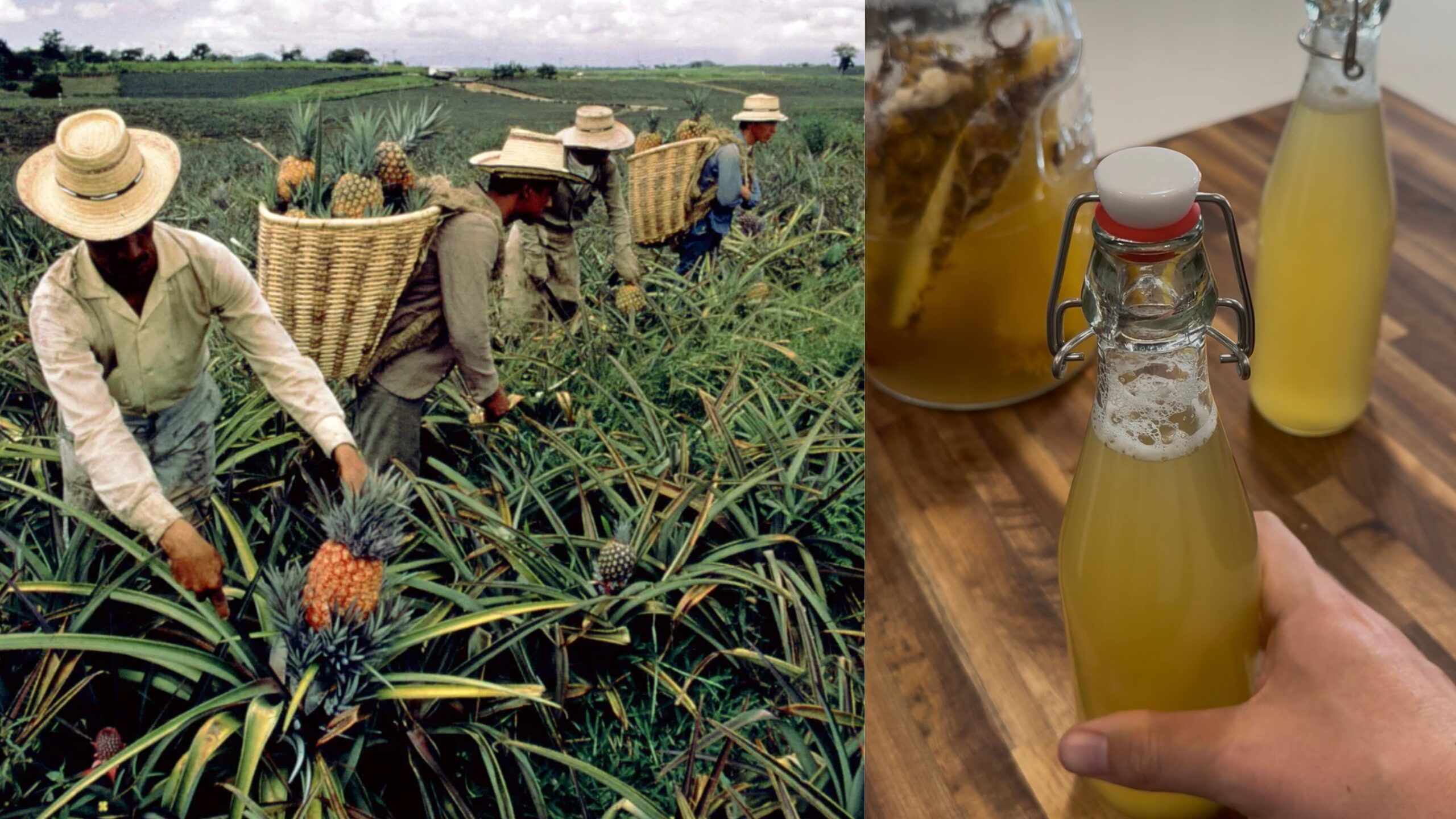
I made it. It is slightly sweet, tangy and has a pleasantly sharp bite that I like a lot. The spices complement the pineapple without overwhelming it. On a hot summer’s day this would be genuinely great. Full history and the complete recipe below. Here is the full story.
The Origin: Older Than You Think
The word tepache comes from the Nahuatl word tepiātl, which means drink made from corn. That detail is the first clue that the tepache most people know today, the pineapple version, is not the original. The original tepache was made from corn, or maize, the foundational grain of Mesoamerican civilisation and the crop around which the entire Aztec agricultural and religious system was organised. Corn-based tepache predates the Aztec Empire and was almost certainly being made in the Americas for thousands of years before any Spanish explorer set foot on Mexican soil.
Next week
I cook these before I write them. Some of it never makes the post.
The failures, the source documents, the version that actually tasted good. That part goes out by email, and next week’s is already on the stove.
 Written and cooked by Donnie
The preparation was fundamentally simple. Fermented corn or maize was soaked in water, the wild yeast on the grain’s surface began the fermentation process naturally, and the result was a mildly fermented, low-alcohol beverage consumed daily by working people across central Mexico. It was not a luxury drink or a ritual preparation reserved for special occasions. It was an everyday drink, produced in households across the region in the same way that kvass was produced in Russia or small beer was produced in medieval England. A safe, nourishing, mildly fermented alternative to untreated water in a climate where water safety was a genuine concern.
The reason there is no single earliest written recipe for tepache is a fascinating piece of food history in itself. As one food historian documented, tepache escaped the heavy taxation that colonial authorities placed on other traditional drinks and foods because it was produced domestically, transmitted through oral tradition, and never significant enough as a commercial product to attract official attention. It lived in the gaps of the colonial record, made in kitchens and courtyards by Indigenous women who had no reason to write anything down and every reason to keep making what had sustained their families for generations.
The Transformation: From Corn to Pineapple
The shift from corn-based tepache to the pineapple version we know today happened gradually and is one of the more interesting examples of colonial culinary transformation in the historical record.
Pineapple, Ananas comosus, is native to South America and was already traded throughout Mesoamerica by the time Spanish colonisers arrived in the 16th century. The Nahua people and their neighbours were familiar with pineapple as both a fruit and a flavouring agent. As Spanish colonial rule disrupted traditional corn cultivation and altered the agricultural landscape of central Mexico, fermenters began experimenting with other available ingredients. Pineapple, particularly the rind and core that would otherwise be discarded, proved to be an ideal fermentation base. The natural sugars in the pineapple fed wild yeast efficiently. The rind carried its own yeast cultures. The fermentation happened quickly and reliably in the warm Mexican climate.
The Spanish colonial ingredients that arrived after 1521 also began to find their way into the preparation. Piloncillo, the unrefined cane sugar produced from sugarcane introduced by the Spanish, became the sweetener of choice, replacing whatever indigenous sweeteners the original corn-based versions had used. Cinnamon from Sri Lanka, cloves from Indonesia, and eventually star anise, all brought to Mexico through the Spanish colonial trade networks, became standard additions that gave the pineapple tepache its characteristic warm spiced quality. The drink that emerged from this collision of pre-Columbian fermentation tradition and colonial-era ingredients was neither entirely Indigenous nor entirely Spanish. It was something new that belonged to both worlds simultaneously and to neither completely.
By the 18th and 19th centuries tepache was a fixture of Mexican street food culture, sold by vendors called tepacheros from large clay pots or wooden barrels in markets and on street corners across central Mexico. The vendors served it chilled with ice when available, in cups or bags, to workers and passersby who needed refreshment in the heat. This street vendor tradition is documented continuously from the colonial period through to the present day and is the direct ancestor of the modern Mexican street tepache still sold iced in plastic bags with a straw throughout the country.
The Piloncillo Question: Why It Matters for Authenticity
If you have seen tepache recipes online and noticed that many of them substitute white sugar or brown sugar for piloncillo, this is worth addressing directly because it matters more than most people acknowledge.
Piloncillo is unrefined cane sugar, produced by boiling and evaporating sugarcane juice until it concentrates and sets into the characteristic cone or block shape. It retains the molasses content that is stripped out of refined white sugar during processing, which means it contains significantly more minerals, a deeper, more complex flavour profile, and a distinctive caramel and molasses note that white sugar simply cannot replicate. The colour it produces in tepache is also deeper and more amber than white sugar, which gives the finished drink its characteristic warm golden tone.
For authentic tepache, piloncillo is not optional. It is the sweetener that defined the post-colonial version of the drink for several centuries and its specific flavour profile is integral to the taste that makes tepache distinctively itself rather than simply a pineapple-flavoured sugar water. Piloncillo is available at virtually any Latin grocery store and most large supermarkets in the international foods section. If you genuinely cannot find it, raw unrefined cane sugar or panela, the South American equivalent, are the closest substitutes. White sugar or brown sugar will produce a fermented pineapple drink but it will not be tepache in any historically grounded sense of the word.
The Modern Tepache Boom
The contemporary tepache revival is a genuinely interesting food culture phenomenon. Tepache began appearing on craft cocktail menus in the United States in the early 2010s as bartenders discovered that a mildly fermented, naturally carbonated pineapple drink was an extraordinary mixer for tequila and mezcal. Its profile, slightly sweet, lightly sour, faintly tropical and with a natural carbonation that performed well in a glass, made it ideal for the craft cocktail moment that was simultaneously celebrating house-made ingredients and fermented preparations.
The canned tepache category emerged commercially around 2018 and grew rapidly, with brands like De La Calle and others bringing shelf-stable commercial versions to mainstream retailers. The distinction between commercially produced canned tepache, which is typically pasteurised, filtered and flavour-stabilised for shelf stability, and traditionally fermented home tepache is significant. Commercial tepache is a convenient approximation. Traditional tepache is a living fermentation product with a flavour profile that changes daily and a direct connection to one of the oldest drink-making traditions in the Americas.
The home fermentation revival that accelerated dramatically during the pandemic also brought tepache to a new generation of home fermenters who had been making sourdough and kombucha and discovered that tepache was considerably easier, faster and more immediately gratifying than either. A batch of tepache requires 48 to 72 hours from start to drinking. It requires no starter culture, no special equipment and no prior fermentation experience. The wild yeast that drives the fermentation lives on the surface of the pineapple rind and in the air around it. You are not adding anything to make it ferment. You are simply creating the conditions that allow it to ferment itself.
My Rating
Tepache surprised me in the best way. I went into the fermentation expecting something broadly similar to a pineapple-flavoured soda and got something considerably more interesting. The slight tanginess that develops as the wild yeast works through the sugar creates a complexity that no manufactured flavouring can replicate. The piloncillo gives it a warmth and depth that white sugar never would. The cinnamon and cloves complement the pineapple without dominating it, sitting in the background as a warm spiced note that you notice mostly in the finish.
The carbonation is gentle and natural rather than the aggressive fizz of a commercial soft drink, which makes it more refreshing rather than less. It does not assault your palate. It settles onto it and lingers pleasantly. On a hot summer’s day with plenty of ice this would be genuinely excellent. It also has an obvious affinity with tequila or mezcal if you want to take it in that direction, and I can see exactly why bartenders started putting it on cocktail menus.
The one variable to be aware of is that fermentation is a living process and no two batches will be identical. Temperature, the specific wild yeast cultures on your pineapple, the mineral content of your water and the precise moment you decide to stop the fermentation all affect the finished flavour. The 48 hour version and the 72 hour version are meaningfully different drinks. I pulled mine at about 60 hours and the balance of sweet and sour was exactly what I was looking for.
Rating: 7.9 / 10
The Recipe: Traditional Mexican Tepache
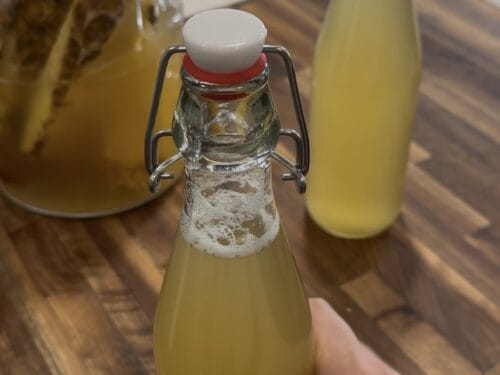
Traditional Mexican Tepache

Don’t lose this one.
I’ll email it to you so it’s waiting when you’re ready to cook.
Ingredients
Instructions
Notes
- Star anise is not in every traditional tepache recipe but it is documented in regional variations particularly from central Mexico and adds a subtle anise note that works well with the pineapple and piloncillo. Leave it out if you prefer a cleaner pineapple flavour.
- The tepache will continue to ferment slowly in the refrigerator. Drink within 3 to 5 days for the best flavour. As it ages in the fridge it will become progressively more sour and more alcoholic. Some people prefer the day 3 refrigerator version to the freshly strained version. Both are worth trying.
- For a tepache cocktail, combine 3 parts tepache with 1 part blanco tequila or mezcal over ice. The natural acidity of the tepache means no additional lime juice is needed. This is the combination that put tepache on craft cocktail menus across the United States and it is genuinely excellent.
- Do not use tap water without filtering first. Chlorine in municipal tap water actively inhibits wild yeast fermentation and can prevent the tepache from fermenting at all or produce an off-flavour in the finished drink.