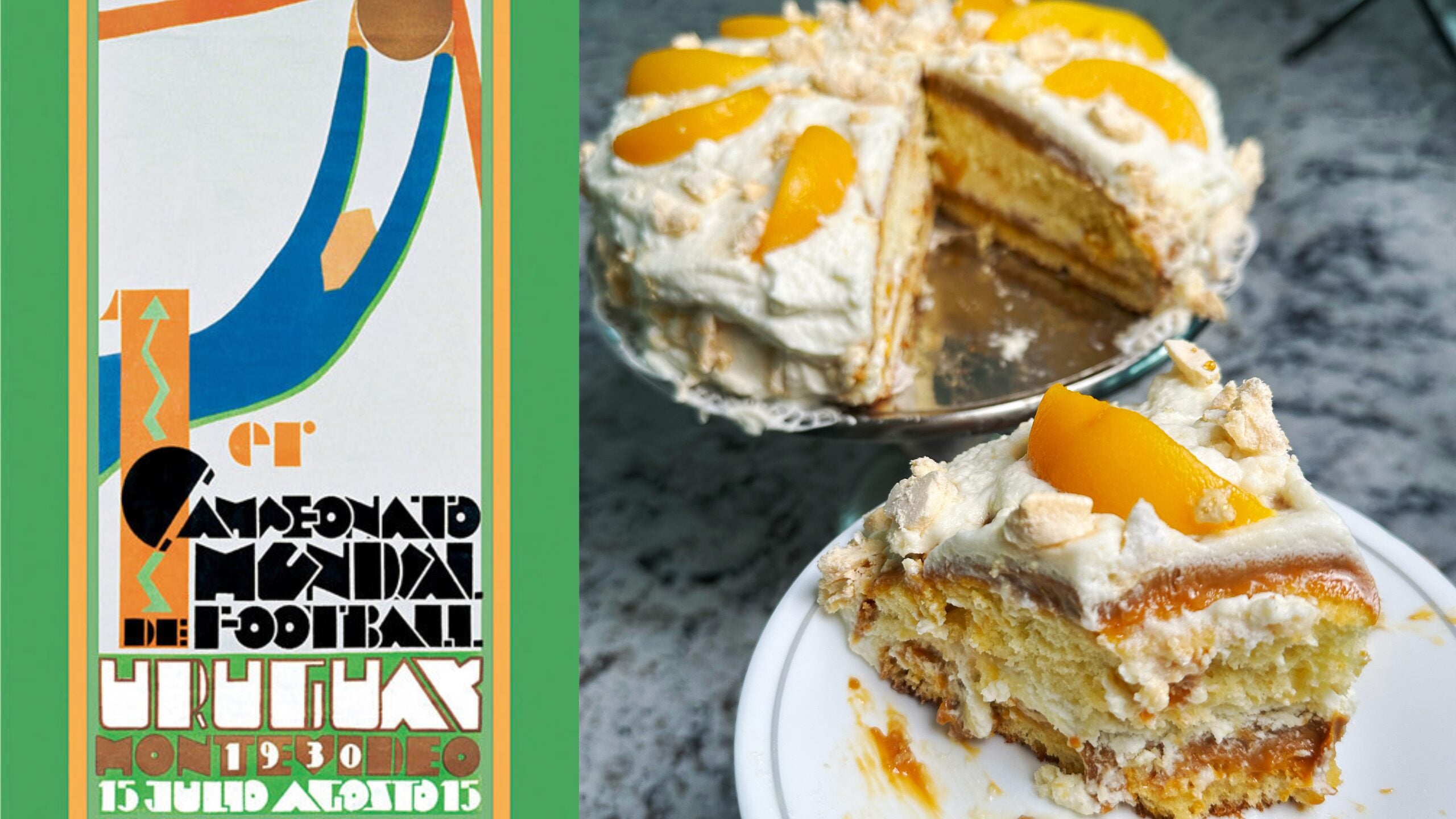
A towering construction of light sponge cake soaked in peach syrup, layered with dulce de leche, whipped cream, canned peaches and broken meringue pieces, finished with meringue pressed all over the outside so it looks like something between a cloud and a celebration. It is extraordinary. It is 9.6 out of 10. And it is the perfect cake to eat while watching the World Cup because Uruguay invented the World Cup.
I am watching this year’s tournament from North America and the scene is genuinely one of the more joyful food culture moments I have witnessed in recent memory. Europeans experiencing Buc-ee’s for the first time. Scots taking over Boston with a flag and an attitude. Texas Roadhouse inexplicably becoming an international football pilgrim destination. The World Cup coming to North America has produced a collision of food cultures that this channel was built to document. And in the middle of all of it, I made a Uruguayan cake from 1930 and it was the best thing on the table.
The First World Cup: Uruguay, 1930
The story of the first FIFA World Cup is one of the more remarkable origin stories in sporting history and it begins not with the most powerful footballing nations of the era but with a small South American country of fewer than two million people that happened to be the best football team in the world.
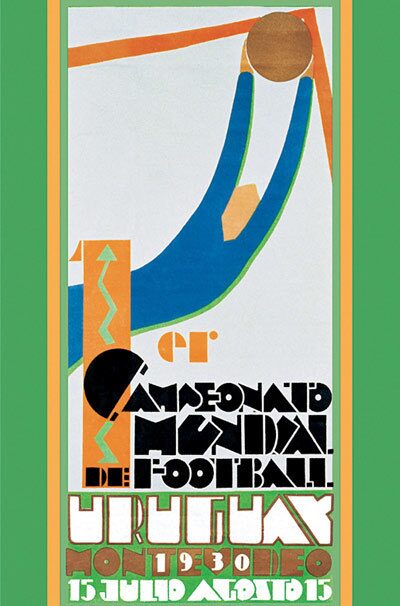
Uruguay had won the football gold medal at the 1924 Paris Olympics and again at the 1928 Amsterdam Olympics, establishing themselves as the undisputed world champions of the sport. When FIFA began seriously discussing a World Cup tournament in the late 1920s, Uruguay lobbied aggressively for the right to host it, offering to build a new stadium, cover the travel and accommodation costs of all participating nations, and guarantee a financial contribution to FIFA. They were celebrating the centenary of their constitution in 1930 and a World Cup on home soil was the centrepiece of the national celebration.
Next week
I cook these before I write them. Some of it never makes the post.
The failures, the source documents, the version that actually tasted good. That part goes out by email, and next week’s is already on the stove.
 Written and cooked by Donnie
The tournament was awarded to Uruguay. The Estadio Centenario, named for the constitutional centenary, was built in Montevideo in less than eight months specifically for the occasion. Thirteen nations participated, the entire European contingent reduced to just four teams because most European football associations refused to make the long Atlantic crossing for a tournament they considered premature and inconvenient. Belgium, France, Romania and Yugoslavia made the journey. The rest of Europe stayed home and missed history.
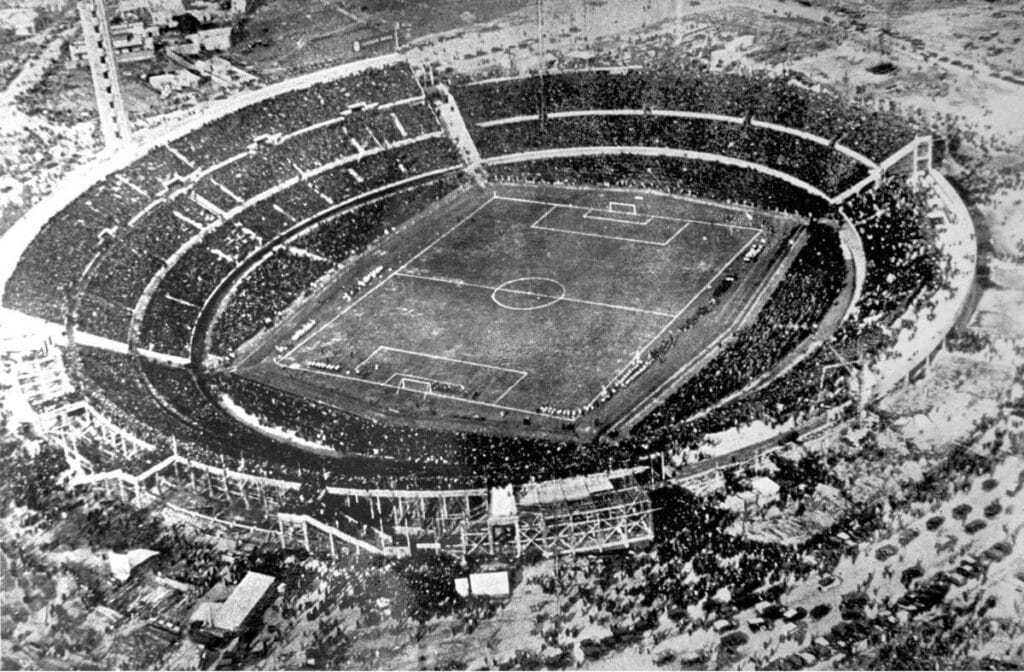
The format was simple. Four groups of three to four teams, top two from each group advancing to the semi-finals, then a final. The matches were played in Montevideo’s three stadiums in July 1930, in the Uruguayan winter, in front of crowds that by the standards of the era were extraordinary. The semi-finals produced the results everyone hoped for. Uruguay defeated Yugoslavia. Argentina defeated the United States.
The final on July 30, 1930, between Uruguay and Argentina, was played in front of approximately 93,000 people at the Centenario. Argentina led 2-1 at half time. Uruguay scored three times in the second half and won 4-2, becoming the first World Cup champions in the history of football. The Uruguayan government declared the following day a national holiday. In Argentina, rioters threw stones at the Uruguayan consulate in Buenos Aires. The rivalry between these two countries, separated by the Río de la Plata estuary and united by the most intense sporting hatred in South America, was born on that afternoon and has not diminished in the ninety-five years since.
How the World Cup Evolved: From 13 Teams to a Global Spectacle
What began as a thirteen-team tournament hosted by a single South American nation has become the most watched sporting event in human history, comfortably outpacing the Olympics in viewership and cultural reach.
The second World Cup in Italy in 1934 saw the tournament expand to sixteen teams and the introduction of a qualification process, acknowledging that the event had outgrown the invitation model of 1930. Uruguay, still bitter about European non-attendance at their tournament, boycotted in retaliation. The pattern of growing pains and political friction that would characterise the World Cup across the following decades was already establishing itself before the tournament was five years old.
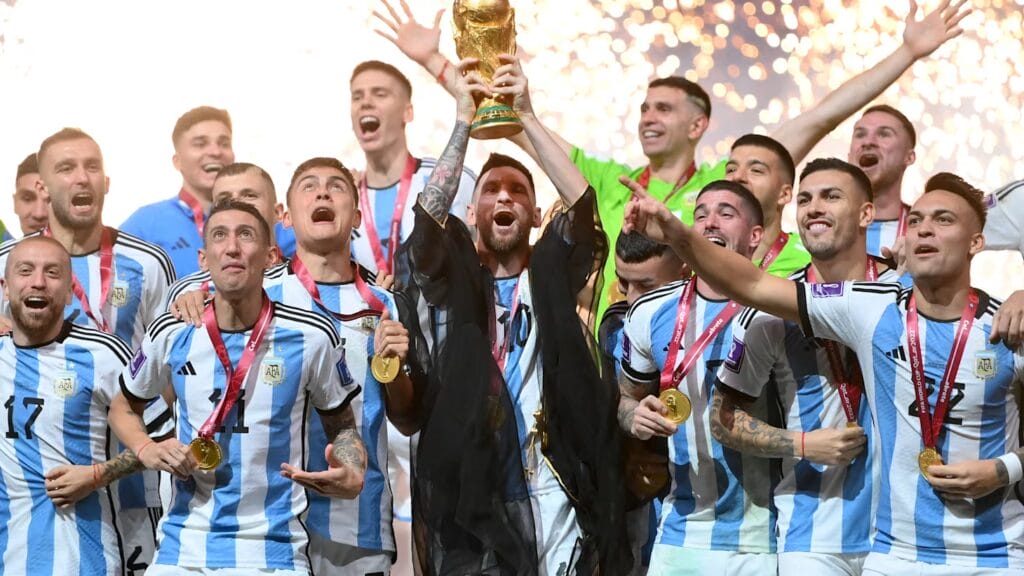
The post-war era transformed the World Cup into something closer to its modern form. The 1950 tournament, held in Brazil, produced one of the most shocking results in sporting history when the host nation, overwhelming favourites, lost the deciding match to Uruguay in front of 200,000 people in the Maracanã stadium in Rio de Janeiro. The Brazilians called it the Maracanazo and the trauma was so severe that the national team’s yellow and green kit was changed to the blue and gold combination still worn today specifically to avoid association with the disaster.
The 1966 World Cup in England, won by the host nation in a controversial final against West Germany that remains disputed to this day, established the tournament as a genuinely global media event. The 1970 tournament in Mexico, the first to be broadcast in colour internationally, produced what most football historians consider the finest World Cup ever played and the finest team, the Brazil of Pelé, Jairzinho, Tostão and Rivelino, that has ever won it. Four-two against Italy in the final. It was not close.
The expansion to twenty-four teams in 1982 and then thirty-two in 1998 reflected both the growth of football globally and FIFA’s commercial logic, which consistently favoured more matches, more teams and more broadcast revenue over sporting purity. The 2026 tournament, the first co-hosted by the United States, Canada and Mexico and the first to feature forty-eight teams, is the logical endpoint of that expansion trajectory. Whether forty-eight teams produces better football than thirty-two is a question most serious football people answer with polite scepticism. Whether it produces more matches in more markets with more broadcast revenue is not a question at all.
The Scene in North America: A World Cup Unlike Any Other
Watching this World Cup from North America has been one of the more genuinely unexpected pleasures of recent months and I want to document it properly because it is the kind of thing that this channel exists to capture.
The collision of international football culture with American food culture has produced moments of genuine absurdity and genuine warmth in approximately equal measure. European fans who have flown across the Atlantic for the first time are encountering Buc-ee’s, the extraordinary Texas-based travel stop chain with its 100-plus gas pumps, its beaver mascot and its industrial quantities of beaver nuggets, with the specific bewilderment of people who genuinely cannot process what they are looking at. The brisket. The fudge. The wall of jerky. All of it inside a building the size of a regional airport. The reactions are extraordinary.
Scottish fans, who travel to every major tournament in numbers disproportionate to their team’s actual success rate and whose collective good humour in defeat has made them the most beloved supporters in international football, took over Boston in a way that the city seemed genuinely delighted by. The intersection of Scottish football fan culture and the city with the strongest Irish-American identity in the country produced a warmth and a chaos that was entirely its own thing. The Scots drank the city’s bars in the direction of empty and left with everyone on good terms. Texas Roadhouse, the American chain steakhouse, became an inexplicable pilgrimage destination for international supporters who had presumably been told by someone that it was a genuinely American experience. They were not wrong. It is a genuinely American experience.
In the middle of all of this I made a Uruguayan cake to honour the country that started all of it ninety-five years ago in Montevideo. That felt exactly right.
Torta Chajá: The Cake That Belongs to This Moment
Torta Chajá was created in 1927 by Orlando Castellano, owner of the Confitería Las Familias in the Uruguayan city of Paysandú, three years before the first World Cup and in the same decade that Uruguay established itself as the greatest football nation on earth. The cake takes its name from the chajá bird, a large, loud, spectacular South American bird whose white plumage inspired the meringue-covered exterior of the finished cake.
The pairing of this cake with the World Cup centenary is not forced. This is the cake of Uruguay’s golden decade, made in the same years that the national team was winning Olympic gold medals and preparing to win the first World Cup. Dulce de leche, whipped cream, peaches, meringue and sponge. The flavours of a country that was, in 1930, the most celebrated sporting nation in the world.
My Rating
Torta Chajá is extraordinary and I want to say that without qualification. The architecture of the cake, the layers of dulce de leche and whipped cream against the sponge soaked in peach syrup, with the broken meringue providing crunch and the whole thing finished with more meringue pressed into the outside, is one of the more cleverly constructed desserts I have made for this channel. Every element serves a purpose. The dulce de leche adds richness and a deep caramel sweetness. The peaches add acidity and a fresh fruitiness that prevents the dulce de leche from becoming heavy. The whipped cream ties everything together. The meringue provides texture contrast, crisp on the outside and softened by the cream within the layers. The sponge, soaked in peach syrup, is the lightest possible vehicle for all of that richness.
The overnight refrigeration step is not optional. The cake on the day of assembly is good. The cake the following morning, after the meringue has had time to soften partially within the cream layers while staying crisp on the outside, is significantly better. Make it the day before you want to serve it.
Rating: 9.6 / 10
The Recipe: Torta Chajá
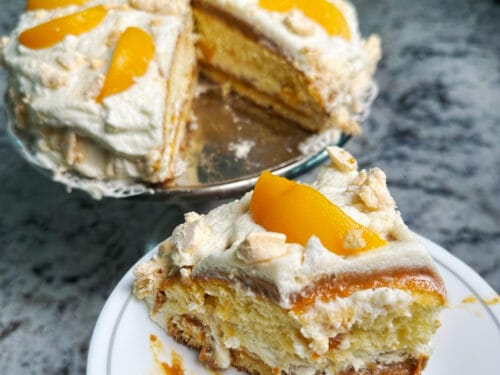
Torta Chajá

Don’t lose this one.
I’ll email it to you so it’s waiting when you’re ready to cook.
Ingredients
Instructions
Notes
- The overnight refrigeration is the single most important instruction in this recipe. The cake is good on the day of assembly. It is significantly better the following morning when the textures have had time to integrate properly.
- The dulce de leche should be spread in a relatively thin layer. It is intensely sweet and rich and a heavy hand will unbalance the cake. Think of it as a flavour accent rather than a primary layer.
- The peach syrup from the can is the soaking liquid and should not be discarded. It is sweet and faintly tropical and penetrates the sponge with exactly the right flavour to complement the dulce de leche and peach layers.