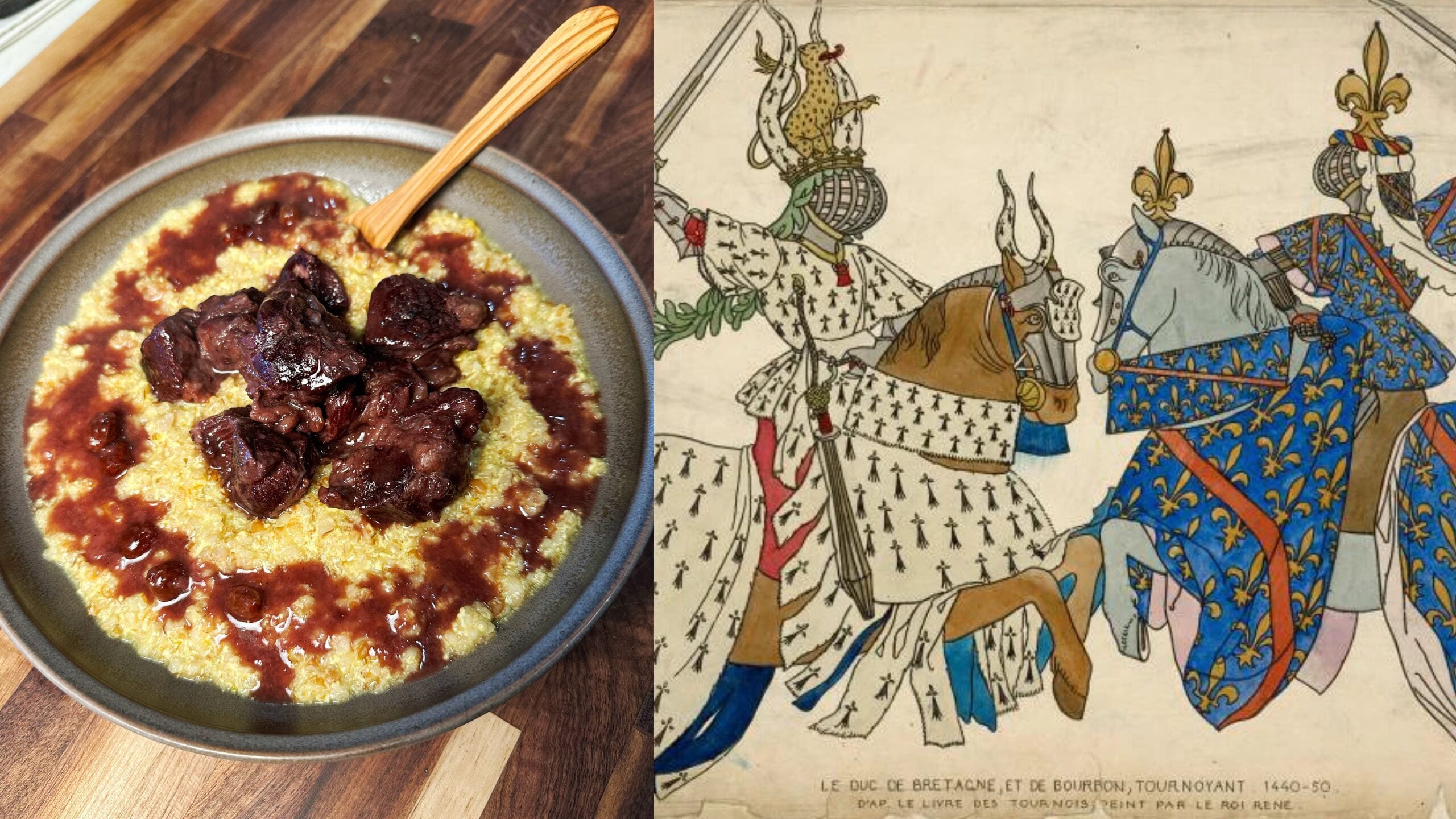
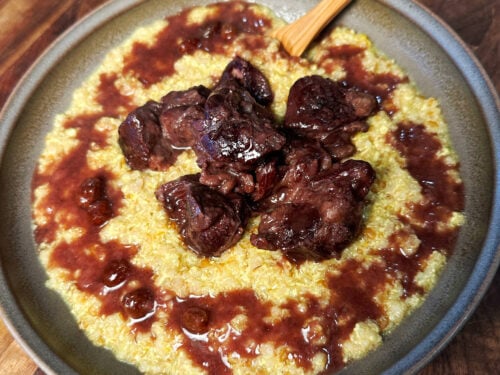
What dish best represented dining at a medieval tournament? From my research, this venison stew with a porridge called frumenty is a perfect candidate.
Every ingredient is accessible. The technique is straightforward. But sitting down to a bowl of saffron-gold wheat porridge with dark, spiced venison stew served over the top, you are eating the most legally protected food in medieval England, the dish that only nobles and their guests could consume by law, the meal that concluded a tournament feast and signalled to everyone in the great hall exactly who you were and what you had done to be sitting at that table.
I made it. It is an 8.8 out of 10 and genuinely one of the most beautiful plates I have produced for this channel. The saffron gold of the frumenty against the dark wine-spiced sauce of the venison is the most medieval-looking thing I have ever put in a bowl. Here is the full story.
The Tournament: Three Days of Combat, Feasting and Theatre
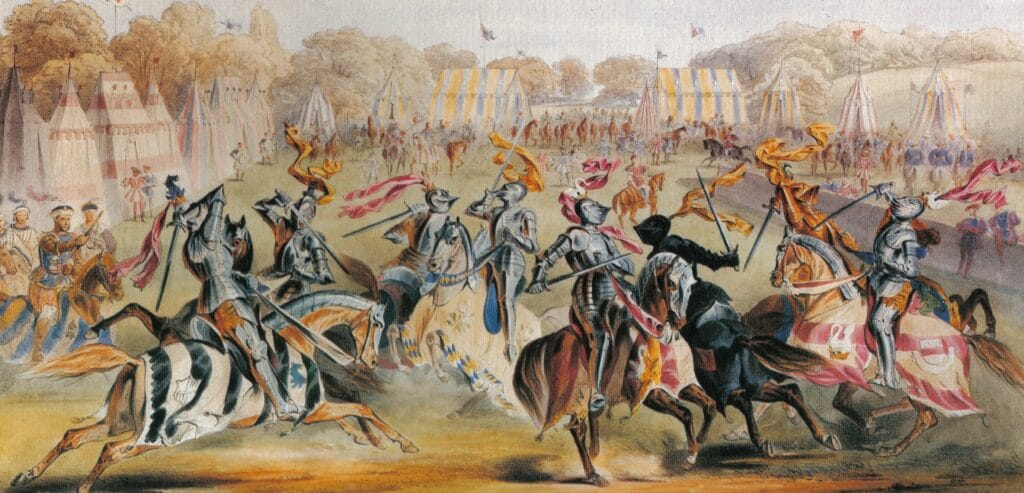
The medieval tournament was one of the defining social institutions of the high and late medieval period and its structure, carefully choreographed across three days, was as much about display, politics and social positioning as it was about combat.
Next week
I cook these before I write them. Some of it never makes the post.
The failures, the source documents, the version that actually tasted good. That part goes out by email, and next week’s is already on the stove.
 Written and cooked by Donnie
The first day was the parade. Participants were formally introduced to the assembled crowd, their heraldic colours displayed, their lineage announced. This was the day of first impressions, when the quality of a knight’s horse, armour and retinue told the watching crowd everything they needed to know about his wealth and standing before he had struck a single blow.
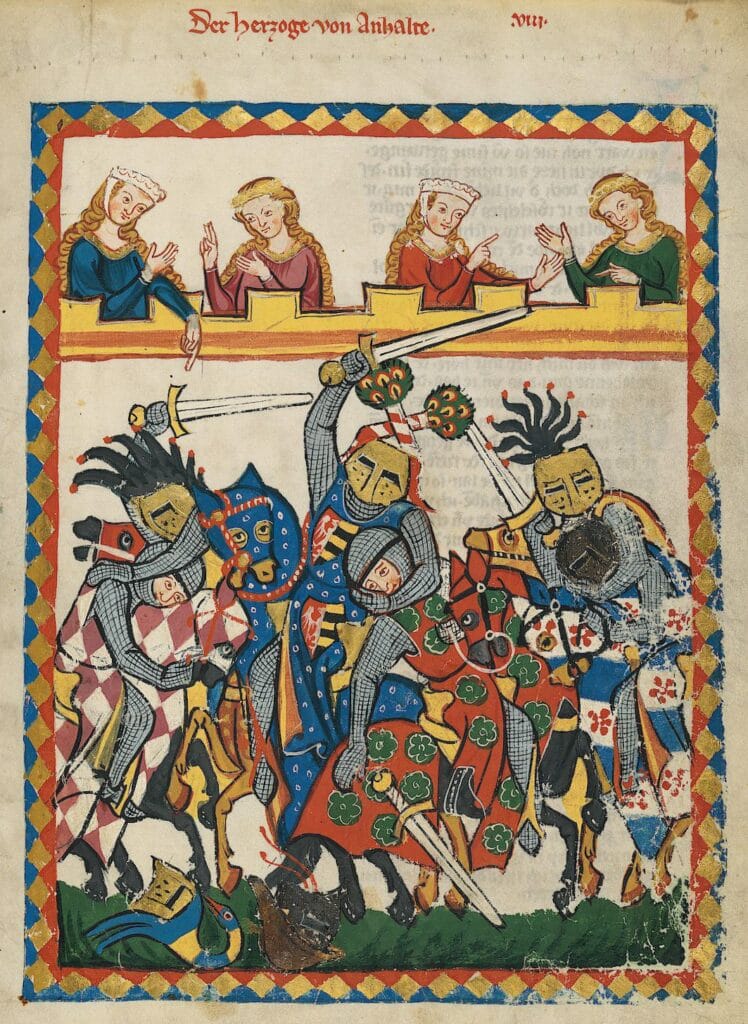
The second day was the joust, individual mounted combat between pairs of knights with lances, the most theatrical and most dangerous element of the tournament. The joust separated the skilled from the merely well-equipped and produced the outcomes, victories, defeats, broken lances, unhorsed knights, that gave the feast that followed its narrative.
The third day was the tournament itself, the mêlée, a chaotic general engagement between teams of mounted knights that was in its earliest form barely distinguishable from actual warfare and in its later, more regulated form a structured display of coordinated fighting. By the 14th century the tournament had evolved from genuine battlefield practice into something more closely resembling theatre, with elaborate rules, designated safe zones, and strict protocols governing when fighting could begin and end.
Throughout all three days, and especially at the conclusion, feasting was continuous. Dancing in the evenings. Wine distributed by the host’s household. Entertainers, musicians, acrobats and storytellers. The post-combat feast on the final day was the social centrepiece of the entire event, the moment when the combatants became guests, when the hierarchy of the day’s fighting was translated into seating arrangements and serving order, and when the food itself made a series of statements about the host’s wealth, generosity and status that every person present was fully equipped to read.
The Sources: What Medieval Documents Actually Say
The primary source for both recipes in this post is the Forme of Cury, compiled around 1390 by the master cooks of King Richard II and the oldest surviving cookbook written in the English language. The manuscript is held at the John Rylands Library in Manchester and has been digitised and made publicly available. It is one of the most significant culinary documents in British history and contains the recipes that were being made in a royal kitchen at precisely the period when the English tournament culture was at its most elaborately developed.
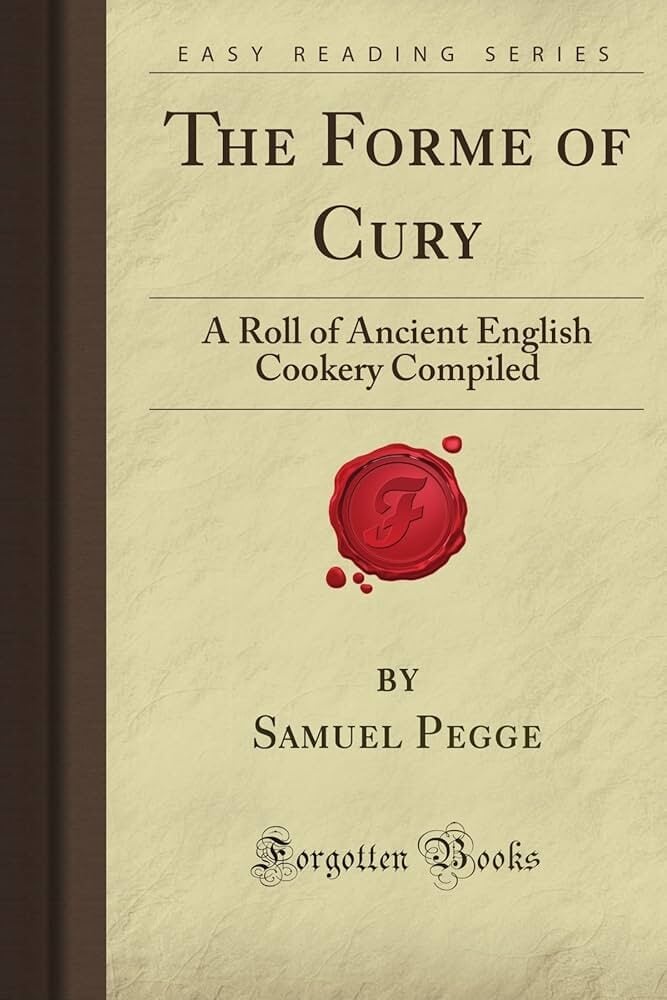
The Forme of Cury instructs directly on frumenty and venison together: Messe it forth with venesoun or with fat motoun fresch. Serve it with venison or fresh fat mutton. Venison was the prestige choice. Mutton was for lesser occasions. The pairing is not incidental to the recipe. It is the point of the recipe.
Medieval dietary theory, documented across multiple treatises of the period including the work of physicians drawing on Arabic medical tradition, added a formal structure to the feast menu that modern readers would not expect. Before the main meal, the stomach should preferably be opened with an aperitif of a hot and dry nature, confections of sugar or honey-coated spices including ginger, caraway, anise, fennel and cumin. A meal should begin with easily digestible fruits such as apples, then vegetables, light meats and broths, with heavier roasted and braised meats served later. The frumenty with venison was the substantial main course, the serious eating that followed the lighter preparations of the earlier courses.
For the scale of what was expected at the highest level of medieval feast, the chronicle records are illuminating. At Christmas 1251, Henry III and his guests were served 830 red, fallow and roe deer, 200 wild boar, 1,300 hares, 385 young pigeons and 115 cranes, and that was merely the wild game. For the knighting of Edward II in 1306, the cattle required numbered 400 oxen, 800 sheep, 400 pigs and 40 boars. A tournament hosted by a major lord operated at the same level of expectation. The food was not simply sustenance. It was a demonstration of the host’s ability to mobilise the resources of an entire estate at short notice and feed hundreds of people at the highest standard available.
Venison: The Most Legally Protected Food in Medieval England
To understand why venison with frumenty carried the meaning it did at a tournament feast, it is necessary to understand the specific legal status of venison in medieval England, because it was unlike any other food.
Venison, meaning the flesh of the red deer, fallow deer, roe deer and other protected game animals, could not be purchased. It was not available in markets or at butchers’ shops. Its sale was illegal. Venison could only be consumed if it had been given as a gift by a nobleman from his own deer park or royal forest, or if the consumer had themselves participated in a royal or noble hunt on land where hunting rights were held.
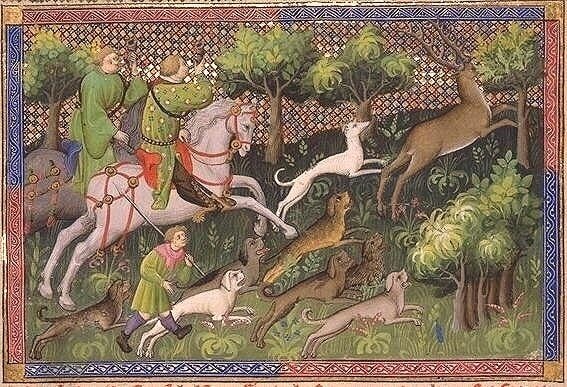
The forest laws that protected venison were among the most severe in the medieval English legal code. Poaching deer was punishable by blinding, castration, or death depending on the era and the severity of the infringement. These punishments were not theoretical. They were enforced and documented in court records across the medieval period. Common people who killed deer on royal or noble land, even in genuine need, faced consequences that were disproportionate by any standard and were deliberately designed to be so. The point was not merely to protect the deer. The point was to maintain the deer as a visible, legally enforced marker of the absolute distinction between those who had the right to eat it and those who did not.
Sitting down to venison at a tournament feast was therefore not simply eating dinner. It was a public confirmation of status. Every person in the great hall who saw venison placed on the high table understood immediately what it signified. The host had the land, the connections and the legal standing to provide it. The guests had the rank to receive it. The frumenty served beneath it was the appropriate, documented accompaniment that elevated the venison from a single ingredient to a complete declaration.
Tournament Customs: The World Around the Food
The feast that concluded a tournament was surrounded by customs and protocols that governed everything from who sat where to how the food was served, and understanding those customs gives the meal its full context.
Seating at a medieval feast was not casual. The great hall of a castle or manor house was arranged with the high table on a raised dais at one end, where the host, the most honoured guests and the most successful combatants of the tournament were seated. Long trestle tables ran down the length of the hall at a lower level for guests of lesser status. The food served at the high table was better, more varied and more expensive than the food served at the lower tables, a visible and deliberate expression of the social hierarchy that the tournament itself had just reinforced.
Food was served in courses, typically three at a formal English feast of the period, each course containing multiple dishes. A page or squire, young men in training for knighthood, carried the food from the kitchens and served at table. Serving at a feast was considered part of the education of a young nobleman, a practical exercise in the manners, physical grace and attentiveness to others that knighthood was supposed to embody. The same young men who would eventually be competing in tournaments were, in the meantime, carrying the platters at them.
Before each course, heralds would sometimes sound trumpets to announce the arrival of the food, adding ceremony and spectacle to the progression of the meal. The feast was theatre as much as eating, and the food was its material expression.
Trenchers, thick slices of stale bread used as plates, were a practical and meaningful element of the feast. After the meal, the food-soaked trenchers were collected and given to the poor waiting outside the hall gates or to the castle’s working dogs. The gesture was both practical and ceremonial, a visible demonstration of the lord’s generosity extending beyond the walls of the feast itself.
Hypocras, a spiced wine made from red or white wine with honey, cinnamon, ginger and other spices, was the drink most closely associated with feast celebrations. It was served warm and sweet and was considered both a luxury drink and a medicinal preparation. It would have been present throughout a tournament feast and especially at the conclusion of the meal as the company moved toward entertainment and dancing.
My Rating
The combination of frumenty and venison stew is one of the more genuinely beautiful things I have made for this channel and I want to say that clearly before the rating. The visual contrast of the deep saffron gold of the frumenty against the dark, spiced, wine-vinegar sauce of the venison is extraordinary. It is the most medieval-looking plate I have ever produced. It looks like something out of an illuminated manuscript and it tastes considerably better than that description might suggest.
The frumenty is warmer and more interesting than plain porridge. The saffron gives it a floral, slightly exotic depth. The egg yolks give it a glossy richness. The almond milk gives it a sweetness that makes it function as a foil for the savoury, spiced venison rather than competing with it.
The venison stew is the revelation. The sweet-sour balance of the currants and vinegar against the warm medieval spice blend of ginger, cinnamon and mace is the flavour philosophy of an entire era expressed in a single pot. It is not a balance that modern Western cooking uses routinely and encountering it for the first time in a properly made medieval dish is genuinely surprising in the best possible way. The pounded bread thickening the sauce produces a texture that is different from any modern sauce thickener. Glossy and slightly grainy and completely right for what it is.
This is the meal that concluded a tournament. The frumenty was the starch. The venison was the status. The spiced sweet-sour sauce was the flavour philosophy of an era. I rated it 8.8 out of 10 and I would make it again without hesitation.
Rating: 8.8 / 10
The Recipes: Frumenty and Roo Broth
Frumenty and Roo Broth

Don’t lose this one.
I’ll email it to you so it’s waiting when you’re ready to cook.
Ingredients
Instructions
Notes
- The saffron in the frumenty is not optional and cannot be substituted. Turmeric produces a similar colour but a completely different flavour profile that is not authentic to the medieval preparation. Saffron is expensive but a single generous pinch is sufficient for this quantity and the flavour difference is immediate and significant.
- The powder fort spice blend is worth making as a separate prepared mixture that you can use across multiple medieval recipes. It appears repeatedly in the Forme of Cury and in contemporaneous French and Italian medieval cookbooks. The combination of ginger, pepper, cinnamon and cloves is the defining spice flavour of late medieval English cooking.
- The pounded bread thickening is correct and should not be substituted with flour or cornstarch. The stale bread absorbs into the braising liquid and produces a sauce with a specific texture, slightly grainy and deeply coating, that cannot be replicated with modern thickeners. It is also the historically accurate technique and worth using for that reason.