The Wieliczka Salt Mine, located just southeast of Kraków in southern Poland, is an experience I’ll never forget. I spent a full day underground there this month on a private tour that I am still thinking about days later.
I went down 135 meters through a wooden shaft, walked through corridors carved entirely from salt, stood inside an underground cathedral the size of a concert hall with chandeliers made from salt crystals, and came back up with a bag of medieval salt from the deepest levels of one of the oldest continuously operating mines in Europe. Then I came home and made a medieval Polish soup from the era when this mine was producing a third of the entire Polish royal treasury’s income.
A Day Underground: The Private Tour
Most visitors to Wieliczka take the standard tourist route, a two to three hour guided walk through the most photogenic chambers on the upper levels. I arranged a private tour that went considerably deeper into the mine’s history and its less visited sections, and the difference was significant.
Next week
I cook these before I write them. Some of it never makes the post.
The failures, the source documents, the version that actually tasted good. That part goes out by email, and next week’s is already on the stove.
 Written and cooked by Donnie
The descent begins in a wooden shaft cage, which drops you through 135 meters of Polish earth in a matter of seconds. The temperature underground is a constant 14 degrees Celsius regardless of the season above, which in the August heat of a Polish summer felt like stepping into a cold shower. The air smells faintly of minerals and damp stone and has the particular quality of air that has not seen sunlight for a very long time.
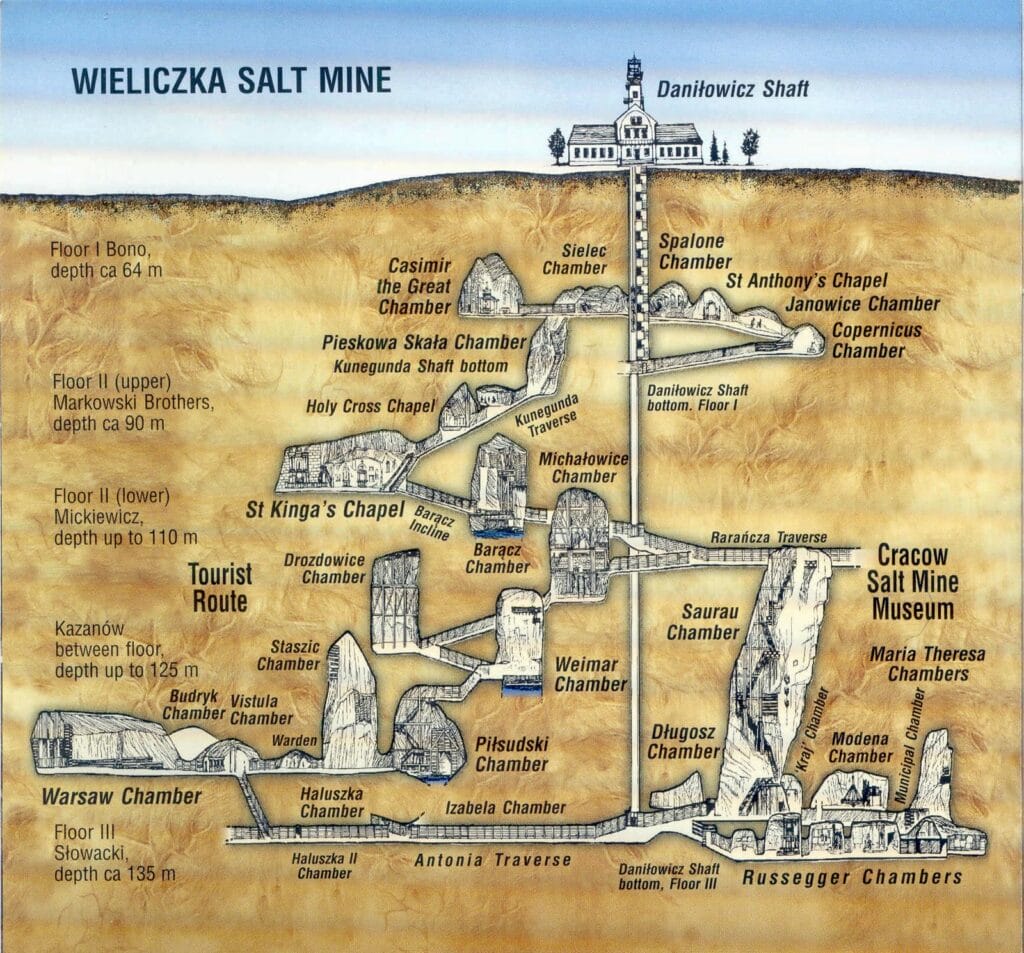
What struck me immediately, and what the private guide was able to explain in considerably more depth than the standard route allows, was the scale. The modern Wieliczka mine complex consists of nearly 2,400 chambers and 178 miles of corridors spread over nine levels, reaching depths of 327 meters. What tourists see on the standard route is a small fraction of an underground city that took over 700 years to build and that the salt itself has preserved in extraordinary condition. Salt kills bacteria and repels moisture, which is why wooden structures from the 15th century survive underground in Wieliczka in better condition than most wooden structures from the same era do above ground anywhere in Europe.
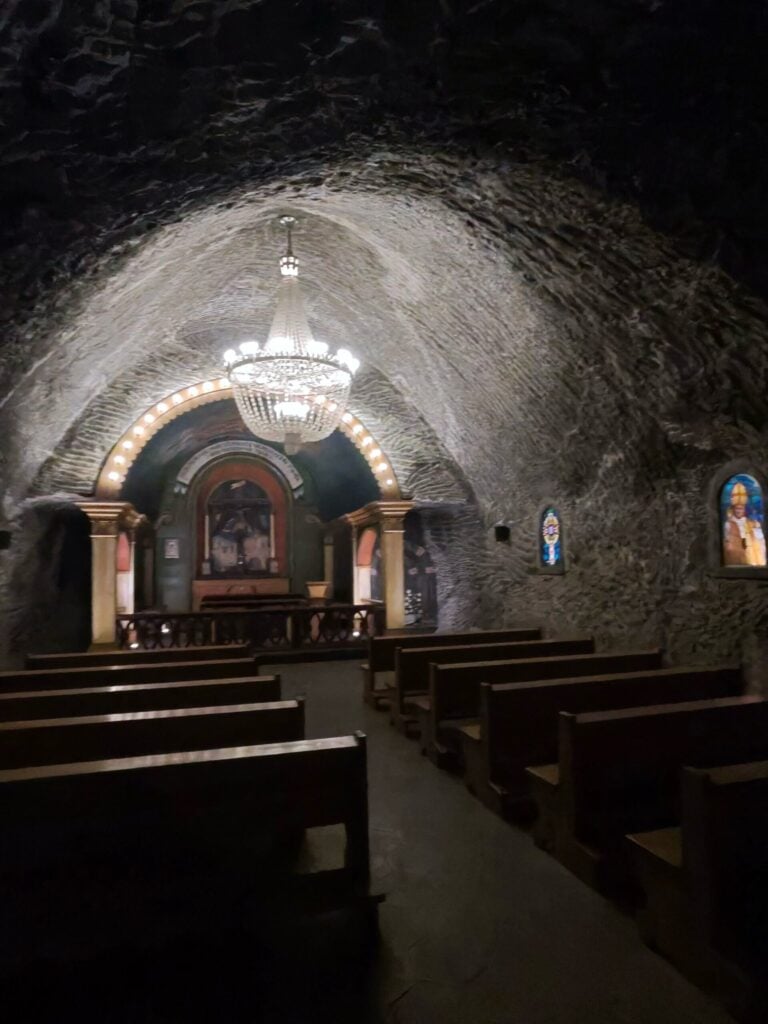
The Chapel of St. Kinga is the centrepiece of any Wieliczka visit and it earns its reputation. Located 101 meters underground, it is the largest underground church in the world, carved entirely from salt by miners working in their spare time over the course of more than a century. Everything in the chapel, the floor, the walls, the altar, the biblical reliefs, the full-scale recreation of Leonardo da Vinci’s Last Supper, the statue of Pope John Paul II, and the chandeliers that light the whole extraordinary space, is carved from the same salt deposit that surrounds it. The chandeliers were constructed from salt crystals and adapted for electricity. Standing inside it in near-silence with the tour group gone ahead is one of the stranger and more moving experiences I have had in a building.
The Mine: History, Location and Importance
The Wieliczka Salt Mine is located in the town of Wieliczka, approximately 14 kilometers southeast of Kraków in the Lesser Poland region. It sits on top of one of the most significant salt deposits in Central Europe, formed approximately 13.5 million years ago when a shallow inland sea evaporated and left behind enormous reserves of rock salt beneath what is now the fertile agricultural land of the Małopolska region.
Salt production at Wieliczka began long before the medieval mine we know today. Traces of the earliest saltworks producing salt from surface salt waters derive from the Middle Neolithic period, approximately 3,500 BC. They were discovered in Barycz near Wieliczka. In historical times, between the 11th and 12th century, Wieliczka was the largest salt processing centre in Małopolska, first documented as Magnum Sal, meaning Great Salt, in a document of the papal legate Giles dated to the years 1124 to 1125. The name itself is revealing. Wieliczka means something like large or great in Polish, a name given to the settlement not for any civic reason but because of the enormous salt resource beneath it.
Rock salt was first discovered in Wieliczka in the 13th century, when the first shafts were dug, and it was mined continuously from then until 1996. The transition from extracting salt from surface brine springs to mining solid rock salt underground transformed what had been a local processing operation into one of the most economically significant industrial enterprises in the history of Central Europe.
It is estimated that at the time of King Casimir III the Great in the 14th century, revenue from the sale of salt constituted one third of the state treasury income. That single statistic explains everything about why the Polish crown invested so heavily in the mine’s infrastructure, its organisation, its workers’ welfare and its physical development across the medieval period. Wieliczka was not simply a mining operation. It was the primary engine of the Polish medieval state.
The mine was known in the medieval world as the Cracow Saltworks, a name that reflected its administrative connection to the royal capital rather than its physical location. At the end of the 13th century, an enterprise called Cracow Saltworks was developed, comprising salt mines in Wieliczka and Bochnia along with the saltworks located there. It continued to operate in this organisational form for almost 500 years.
The Legend of Princess Kinga
No account of Wieliczka is complete without the legend of Princess Kinga and it is worth telling properly because it is one of the better foundation myths in Polish history.
Kinga was a Hungarian princess who in the 13th century was betrothed to Bolesław V the Chaste, the Prince of Kraków. Before leaving Hungary, she asked her father for a salt mine as her dowry, since salt was extraordinarily valuable in Poland but rare. Her father took her to the Hungarian salt mine at Marmarosch, where she dropped her engagement ring into a shaft. She then asked miners to dig a shaft at Wieliczka upon her arrival in Poland. When they dug, they found a lump of rock salt and when they split it open, Princess Kinga’s ring was inside. The legend suggests that she had miraculously transported the Hungarian salt deposit to Poland through her ring.
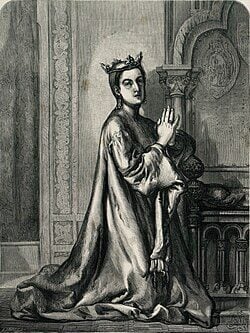
Kinga was later canonised and is the patron saint of Polish salt miners. The most magnificent chamber in Wieliczka, the underground Cathedral of St. Kinga, bears her name. There is a statue of Pope John Paul II and a detailed picture of The Last Supper among the most famous carvings in the chapel. The chapel still holds weekly services, concerts and even weddings 101 meters underground, making it simultaneously an active Catholic church and one of the most visited tourist attractions in Poland.
King Casimir III and the Miner’s Charter
The transformation of Wieliczka from an important regional operation to the backbone of the Polish state happened primarily during the reign of King Casimir III the Great, who ruled Poland from 1333 to 1370 and is the only Polish king to have earned the epithet Great in the historical record.
Casimir understood that the mine’s productivity depended entirely on the skill, health and motivation of its workforce, and he invested in its workers in ways that had no real precedent in European mining of the period. King Casimir III the Great contributed largely to the development of the salt mine of Wieliczka, granting it many privileges and laws. He also founded a hospital near the ancient salt mine in 1363. A hospital, built and maintained by royal decree, specifically for the workers of a single industrial enterprise. In 14th century Europe, this is an extraordinary institutional provision.
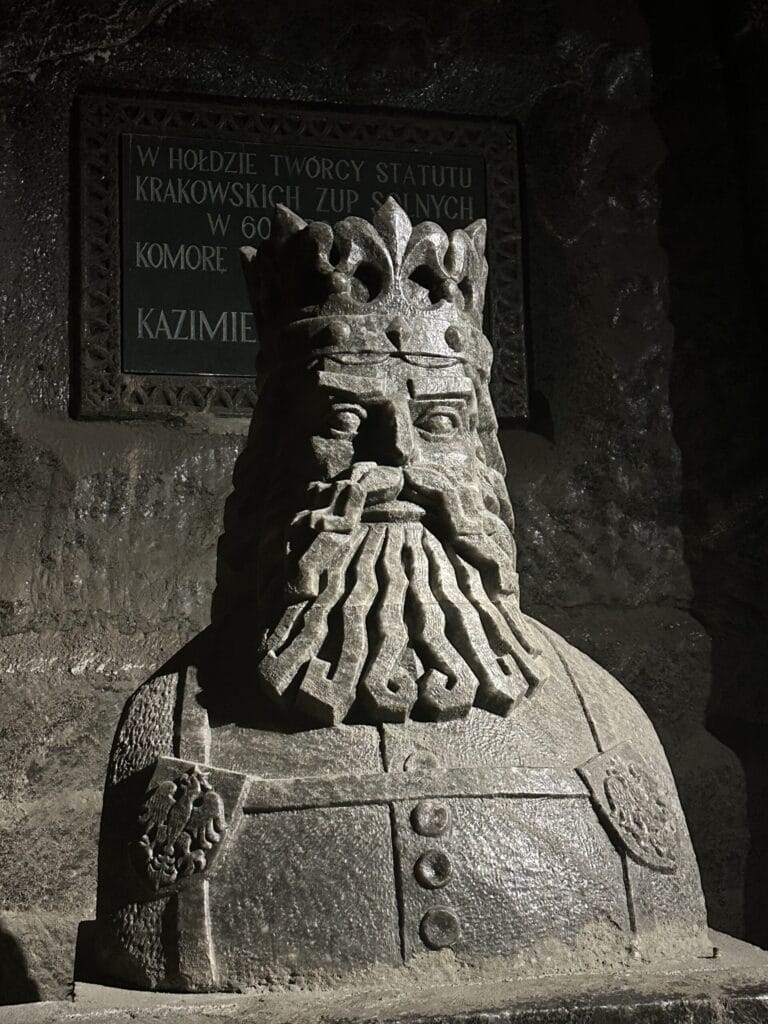
The Saltworks Statute of 1368 codified the legal framework governing the mine’s operation, establishing the rights and obligations of workers, the conditions of their employment and the regulatory structure of what was by that point the largest enterprise of its type in the Polish state. The Krakow Academy, funded by salt profits, was a testament to his greatness. The institution that later became the Jagiellonian University, the second oldest university in Central Europe, was founded on revenue from Wieliczka salt. Every Polish intellectual tradition that flows from that university traces its origins in part to the underground chambers of Wieliczka.
The Miners: Better Off Than Most
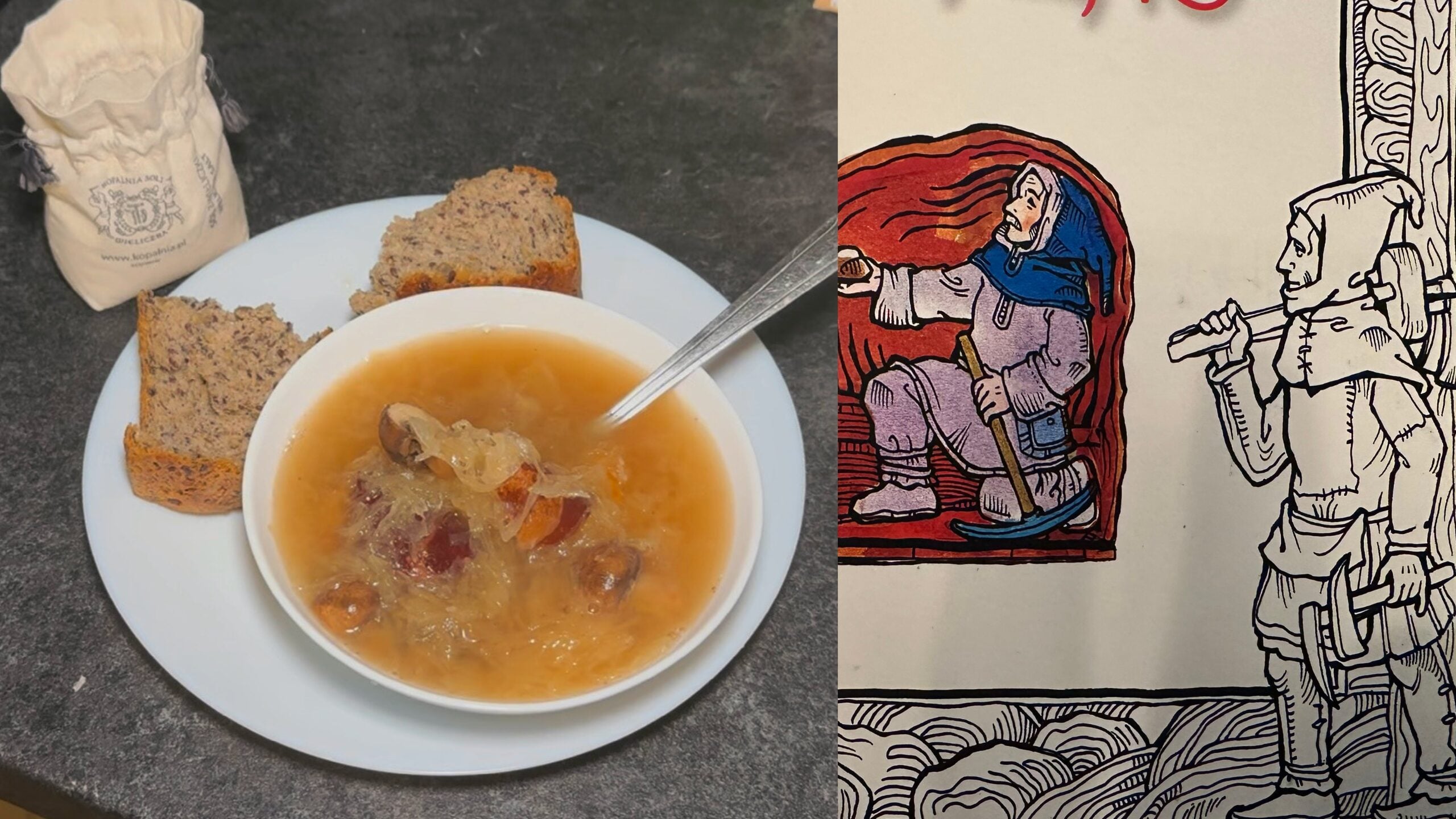
One of the genuinely surprising things I learned on the private tour was the social and economic status of the Wieliczka miners relative to other workers of the same period. The popular image of the medieval miner as an exploited, disposable slave is not inaccurate for most mining operations of the era. It is significantly inaccurate for Wieliczka.
The miners of Wieliczka had a great deal of rights. Only free males were allowed down there, and they were compensated a great deal, leading to a number of wealthy guilds and families that tied their fortunes to the Polish crown and mines. Wieliczka miners were not serfs or forced labourers. They were skilled specialist workers with documented rights, established guilds and a level of compensation that made mining at Wieliczka a genuinely desirable career in the medieval Polish economy.
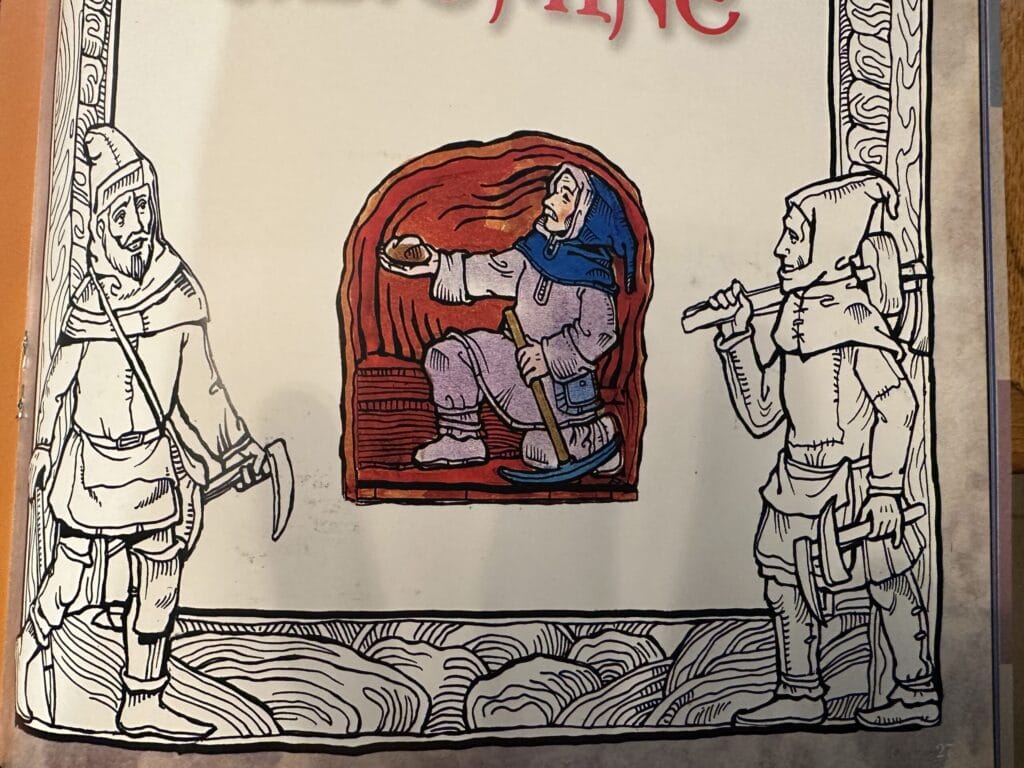
The reasons for this are straightforward once you understand the mine’s economics. Salt mining requires significant technical skill. The ventilation, drainage and structural engineering required to maintain safe working conditions at depth demanded experienced workers who had accumulated years of practical knowledge. Losing a skilled miner to an accident, illness or resignation meant losing that accumulated knowledge. The Polish crown’s investment in worker welfare, including the hospital founded by Casimir in 1363, was not altruism. It was the economically rational response to the reality that Wieliczka’s productivity depended on the continued health and loyalty of its workforce.
The documented welfare provisions included medical care at the hospital, access to food provision as part of their employment conditions, and the organisational protection of the guild system. The Cracow Saltworks records document a food provisioning system for workers that was significantly more systematic than what was available to most medieval European workers in comparable industries. While the specific term cafeteria does not appear in medieval documents, the documented reality of organised food provision paid for by the mine’s administrative structure represents one of the earliest organised workplace feeding systems in Central European history. Workers descending into the mine for shifts that could last many hours required food and water brought to them underground, and the logistical system that provided this was documented in the Saltworks administrative records.
Salt in Medieval Polish Cuisine: The Foundation of Everything
To understand why the Wieliczka salt mine was so economically significant, you have to understand what salt meant to medieval food culture, and specifically to medieval Polish food culture, in a way that goes considerably beyond simple seasoning.
Salt was the primary preservative technology of the medieval world. Without it there was no preserved meat through the winter, no fermented vegetables to prevent scurvy during months without fresh produce, no way to transport fish from the Baltic coast to inland cities without spoilage, and no way to store dairy products for more than a few days. Salt was not a flavouring. It was the technology that made year-round adequate nutrition possible in a northern European climate where fresh food was available for perhaps six months of the year and unavailable or scarce for the other six.
In the specific context of Polish medieval cuisine, salt’s role was foundational in ways that remain visible in the most iconic dishes of the tradition today. Kiszona kapusta, fermented sauerkraut, requires salt as the medium of fermentation. Ogórki kiszone, the fermented pickles that appear on every Polish table, are impossible without salt. Kielbasa and the entire tradition of Polish cured and smoked meats require salt for preservation. The brine from fermented vegetables, the flavoured liquid that carries the salt, the lactobacillus cultures and the complex sour flavour that defines so much of Polish cooking, was and remains a primary flavouring agent in soups, stews and sauces.
The medieval Polish cook in a wealthy household used salt from Wieliczka for everything. The peasant household used it more sparingly but no less essentially. The salt from a specific mine in Lesser Poland was not one of many options. In medieval Poland, Wieliczka was effectively the only option for most of the population, which is precisely why its royal monopoly was so valuable and why King Casimir invested so heavily in its productivity.
The Bag of Salt
I brought a bag of salt home from Wieliczka. It is not a souvenir purchase from the gift shop, though the gift shop does sell excellent salt in various forms. It is rock salt from the deeper levels of the mine, obtained through the tour and carried back to Kraków in my luggage and subsequently to Scotland and then to the Seville apartment where I am now based.
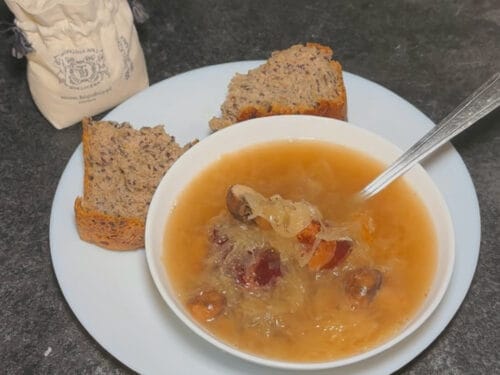
Using it to make the medieval Polish soup in this post was a deliberate choice. The soup I made, a boczek and kiszona kapusta soup built from smoked bacon, fermented sauerkraut, dried mushrooms and caraway, is the direct descendant of the food that medieval Polish miners and their families ate when this salt was being extracted from the earth 300 meters below their feet. Adding Wieliczka salt to a medieval Polish soup is not a theatrical gesture. It is the historically accurate use of the specific ingredient that the recipe requires.
My Rating
The Wieliczka Salt Mine is one of the most extraordinary places I have visited for this channel and I want to say that without reservation. The standard tourist route is genuinely good. The private tour is significantly better because the additional time and the absence of large groups allows the space to be something other than a queue.
The guide’s knowledge of the mine’s food history and workers’ welfare systems was what surprised me most. I went expecting an impressive engineering and artistic achievement. I came away having learned something genuinely new about medieval Polish labour relations, royal economic policy and the specific ways that salt shaped the culture I was in the middle of documenting.
As for the soup, it’s savory and smokey from the bacon, with a tang from the fermented cabbage: 7.7/10.
The Recipe: Medieval Polish Miners’ Soup
Medieval Polish Salt Miners’ Soup

Don’t lose this one.
I’ll email it to you so it’s waiting when you’re ready to cook.
Ingredients
Instructions
Notes
- The boczek must be a thick piece rather than thin slices. Thin sliced bacon renders too quickly and produces a different texture and flavour to the slow-rendered chunky boczek that is the correct preparation for this soup. Ask at a Polish delicatessen or butcher for a proper piece of smoked bacon.
- Every drop of the sauerkraut brine goes in. The brine is where the fermentation character lives and it is the most flavourful liquid in the recipe. Discarding it produces a less complex, less historically accurate result.
- The mushroom soaking liquid must be strained before adding to the soup as it contains grit from the dried mushrooms. Strain through a fine cloth or coffee filter. The soaking liquid is intensely flavoured and adds enormous depth to the broth.