
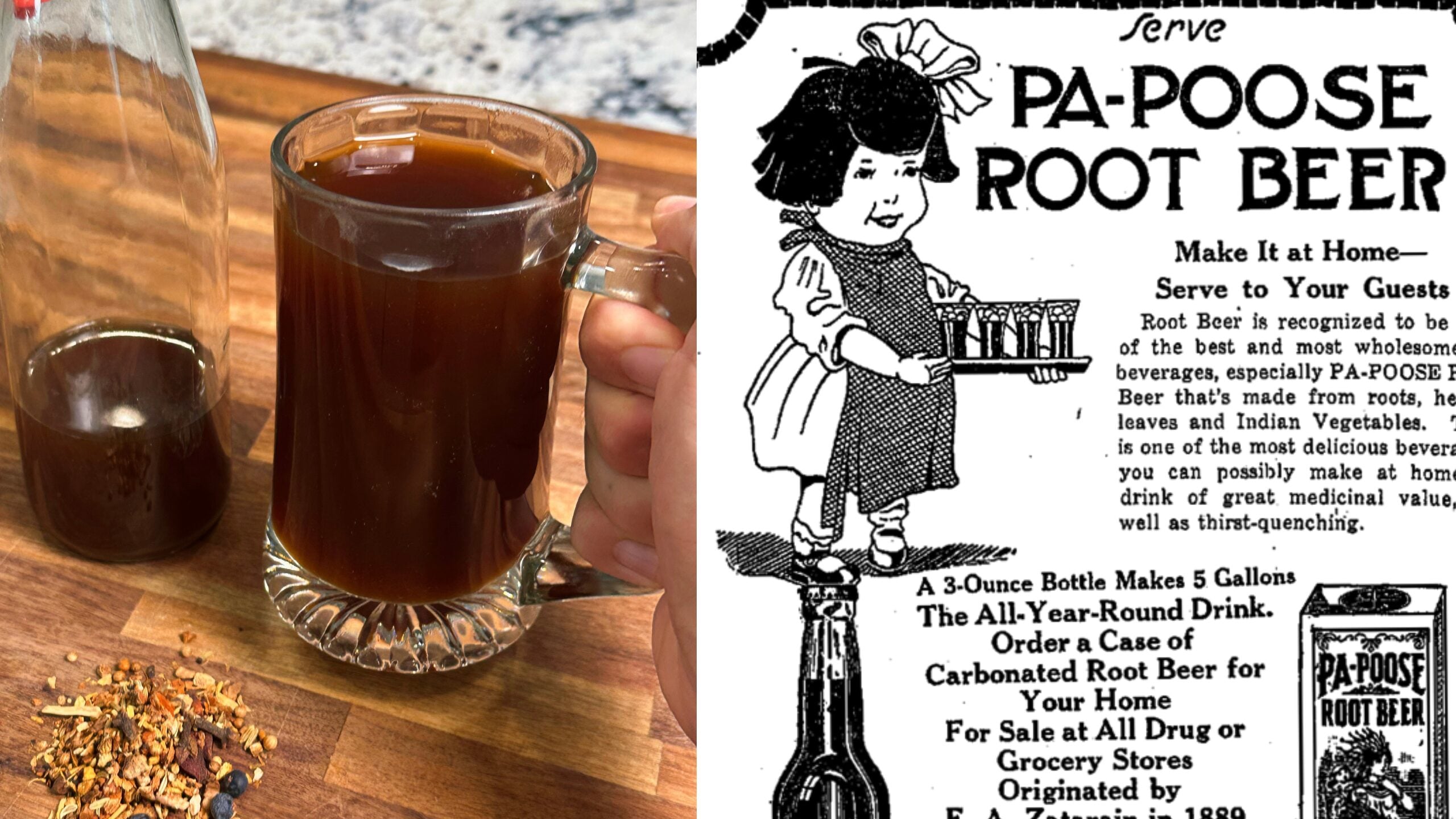
You have been driving for hours through the American Southwest, the heat shimmering off the asphalt, and you pull into a general store that looks like it has not substantially changed since 1953. There is a refrigerator full of glass bottle sodas near the back. You reach in and pull out a root beer, and it is cold in a way that only a glass bottle soda from a refrigerator in a hot general store can be cold. You crack the cap on the metal opener bolted to the counter and drink it right there standing up.
Root beer is the oldest distinctly American soft drink tradition, built on Indigenous botanical knowledge, colonial folk medicine, a Philadelphia pharmacist’s honeymoon, and a 1960 FDA ban that changed the flavour of every commercial bottle produced since then. The root beer you are drinking today tastes different from the root beer your great-grandparents drank, and the recipe I made this week from Dr. A.W. Chase’s 1869 cookbook is closer to theirs than to yours.
The Indigenous Foundation: Where Root Beer Actually Begins
Sassafras root beverages were made by Indigenous peoples of the Americas for culinary and medicinal reasons before the arrival of Europeans in North America. This is the origin point of root beer and it predates European contact by an unknown number of centuries. Sassafras albidum, the medium-sized deciduous tree that grows from Maine to Florida and west to Texas, was one of the most medicinally significant plants in Eastern Woodland Indigenous botanical knowledge. Its roots, bark and leaves were used in teas, infusions and preparations for a wide range of applications including fever reduction, blood purification and general tonic use.
Next week
I cook these before I write them. Some of it never makes the post.
The failures, the source documents, the version that actually tasted good. That part goes out by email, and next week’s is already on the stove.
 Written and cooked by Donnie
Sassafras was one of the first products the French and later Spanish explorers exported in the mid-1500s, making certain areas a centre of the sassafras trade. In France, sassafras commanded a high price as a remedy for illnesses, especially in all venereal and scorbutic tempers. In Spain too, the root was valuable, selling for ten pounds per ton. The commercial interest that French and Spanish colonial powers took in sassafras was directly informed by what they observed Indigenous peoples doing with it. The plant that became the defining flavour of the most American of soft drinks entered European consciousness as an Indigenous medicine traded across the Atlantic for serious money.
The early European settlers quickly adopted this practice, incorporating sassafras and other native herbs into their own medicinal brews, which eventually evolved into the carbonated, sweetened root beer we know and love today.
The Small Beer Tradition: Root Beer as Public Health
The tradition of brewing root beer is thought to have evolved out of other small beer traditions that produced fermented drinks with very low alcohol content that were thought to be healthier to drink than possibly tainted local sources of drinking water, and enhanced by the medicinal and nutritional qualities of the ingredients used.
This context is essential for understanding why Dr. Chase’s 1869 recipe, which you will find at the end of this post, includes yeast and produces a lightly fermented, mildly alcoholic beverage rather than the still, highly sweetened carbonated drink of a modern commercial bottle. The early root beer was a small beer, a practical solution to the genuinely dangerous problem of contaminated water sources in colonial and 19th-century American settlements. A lightly fermented drink with slightly acidic properties and low alcohol was considerably safer to drink than untreated water from wells that sat adjacent to privies and animal pens.
The medicinal herbs in root beer, sarsaparilla, dandelion root, burdock, yellow dock, hops, and the various other roots that appear in early recipes, were not simply the flavourings, but were the therapeutic rationale for drinking the preparation in the first place. Root beer was medicine before it was refreshment. In fact, the earliest root beers were root teas and medicines.
The first written recipe for a sassafras-based root beer-style beverage appears in Eliza Leslie’s Directions for Cookery published in 1837, the earliest documented cookbook recipe of its type. Dr. Chase’s 1869 recipe, which is the recipe I made this week, is the first specifically called root beer with exact measurements, predating Charles Hires by six years.
Safrole and the Sassafras: The Ingredient That Defined Everything
Sassafras root bark contains an aromatic oil called safrole, which gave traditional root beer its distinctive flavor. Safrole is the compound responsible for the characteristic deep, slightly medicinal, warm and complex flavour that every root beer drinker recognises as the defining note of the drink. It is also the compound that changed the entire commercial root beer industry in a single regulatory action.
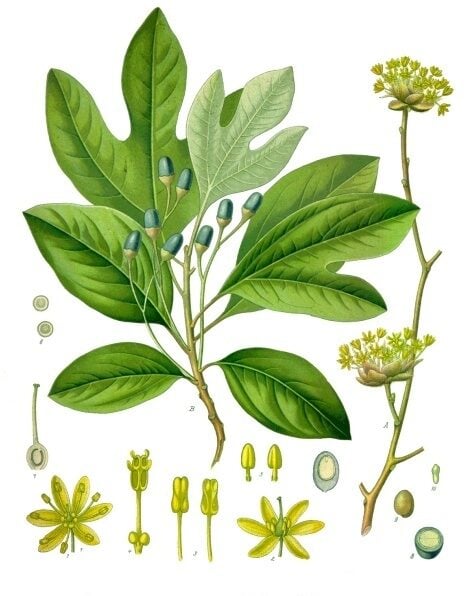
Laboratory animals that were given oral doses of sassafras tea or sassafras oil that contained large doses of safrole developed permanent liver damage or various types of cancer. Safrole, the aromatic oil found in sassafras roots and bark that gave traditional root beer its distinctive flavor, was banned in commercially mass-produced foods and drugs by the FDA in 1960.
The ban was not without its critics and the scientific debate around it has continued for decades. The doses given to laboratory animals were unrealistically large, and other legal foods, like nutmeg, also contain safrole. Recent research indicates safrole in small amounts may play a protective role in human cancers. Whether the ban was proportionate to the actual risk at typical human consumption levels is a question that food safety researchers continue to examine. What is not debated is its effect on the industry.
The ban forced manufacturers to reformulate their recipes and seek alternative ingredients to replicate the distinct flavor of sassafras. Manufacturers switched to artificial sassafras flavoring or extracts from sassafras albidum which contains minimal safrole. Root beer enthusiasts consistently maintain that these substitutes lack the depth and complexity of the original. Safrole makes up roughly 80 to 90 percent of the essential oil distilled from sassafras root bark. Removing that compound and trying to replicate what remains is a significant flavour challenge that no commercial formula has fully solved.
Every bottle of commercial root beer you have ever purchased was made after 1960. Every bottle made before 1960 tasted different. That is the most significant quality change in the history of an American beverage and almost nobody talks about it.
Charles Hires and the Commercialisation of Root Beer
In 1875, Charles Hires, a Philadelphia pharmacist, introduced the first commercially produced root beer. Inspired by a delicious herbal tea he encountered during his honeymoon, Hires set out to create a healthier alternative to alcoholic drinks, which were prevalent at the time. He first marketed his product as Hires’ Herb Tea, but soon realized that the name didn’t resonate with his target audience.
The name change from herb tea to root beer, as documented in the previous episode on this channel about the Hires origin story, came on the advice of Russell Conwell, the founder of Temple University, who told Hires that Pennsylvania coal miners would never drink something called tea. Call it root beer and they will drink it instead of actual beer. The man who hated alcohol renamed his temperance drink beer specifically to compete with the thing he was trying to eliminate.

Hires introduced his commercial product at the 1876 Philadelphia Centennial Exposition, handing free glasses to 10 million visitors, and by 1891 was selling over a million bottles a year. His commercial success created the template for the root beer industry that followed.
Roy Allen opened his first root beer stand in Lodi, California in 1919, partnering with Frank Wright in 1922 to create A&W, still the oldest and largest root beer brand in the world. Mug Root Beer began in San Francisco in 1940, originally called Belfast Root Beer before rebranding in 1947. Barq’s, the New Orleans-based root beer that famously contains caffeine, was founded by Edward Barq in 1898 and has been made in Louisiana continuously since. Dad’s Root Beer appeared in Chicago in 1937. The commercial landscape of American root beer that exists today was essentially established between the 1870s and the 1940s, built on the foundation of Indigenous sassafras knowledge, colonial small beer tradition and one pharmacist’s honeymoon discovery.
The Recipe I Made: Dr. Chase’s 1869 Medicinal Root Beer
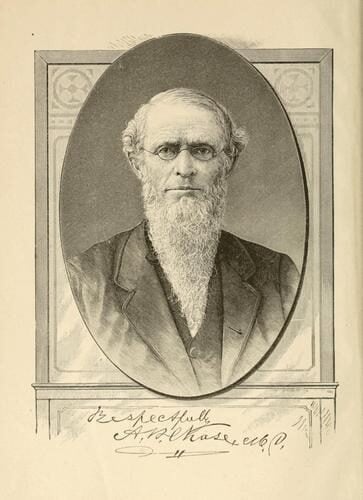
Dr. Alvin Wood Chase published his Recipe Book in 1869 and it became one of the most widely distributed household reference manuals in American history, selling over a million copies. The root beer recipe it contains is the earliest specifically called root beer recipe with exact measurements anywhere in documented culinary history. It predates Hires by six years.
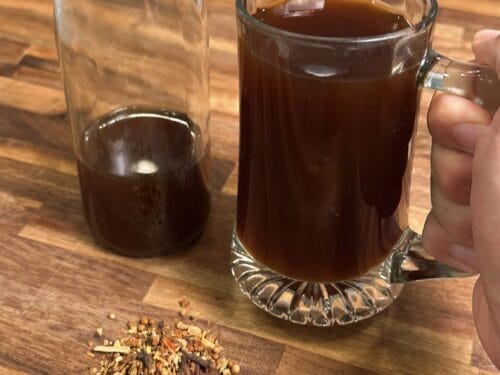
Making it is making the most historically direct version of the drink that can be documented with exact measurements. The combination of hops, burdock root, yellow dock root, sarsaparilla root, dandelion root and spikenard root produces a complex herbal base that modern commercial root beer does not resemble. The spruce and sassafras oils, used in safrole-free extract form for legal compliance, add the characteristic depth. The yeast fermentation produces light natural carbonation and a very low alcohol content that would have been entirely normal for a 19th century medicinal small beer.
The taste is genuinely interesting and significantly more complex than any commercial root beer. There is a herbal bitterness from the roots, a faint sweetness from the molasses, a background spice from the spruce and sassafras, and a very light natural carbonation that is gentler than commercial carbonation. It does not taste like A&W. It tastes like the ancestor of A&W, maybe even closer to a herbal tea.
Rating: 7.2/10
Dr. Chase’s Medicinal Root Beer, 1869

Don’t lose this one.
I’ll email it to you so it’s waiting when you’re ready to cook.
Ingredients
Instructions
Notes
- The roots required for this recipe, burdock, yellow dock, sarsaparilla, dandelion and spikenard, are all available dried from Mountain Rose Herbs, Frontier Co-op and similar herbal suppliers online, as well as at most health food stores. Order them in advance as they are not always in stock locally.
- The safrole-free sassafras extract is essential for the characteristic root beer flavour. Without it the recipe produces an interesting herbal beer but not something that reads as root beer to a modern palate. It is available from homebrew supply stores including Northern Brewer and MoreBeer, and online from Amazon and specialty suppliers. Look specifically for safrole-free or food-grade versions.
- Plastic screw-cap bottles rather than glass are recommended for the carbonation phase. The fermentation continues building pressure and glass bottles can shatter if over-carbonated. Squeeze the plastic bottle periodically to check pressure. When it feels firmly resistant, it is carbonated. Refrigerate immediately.

we have a root beer called A&W here in NJ… I wonder if it comes from Dr. Chases initials…
nicely done