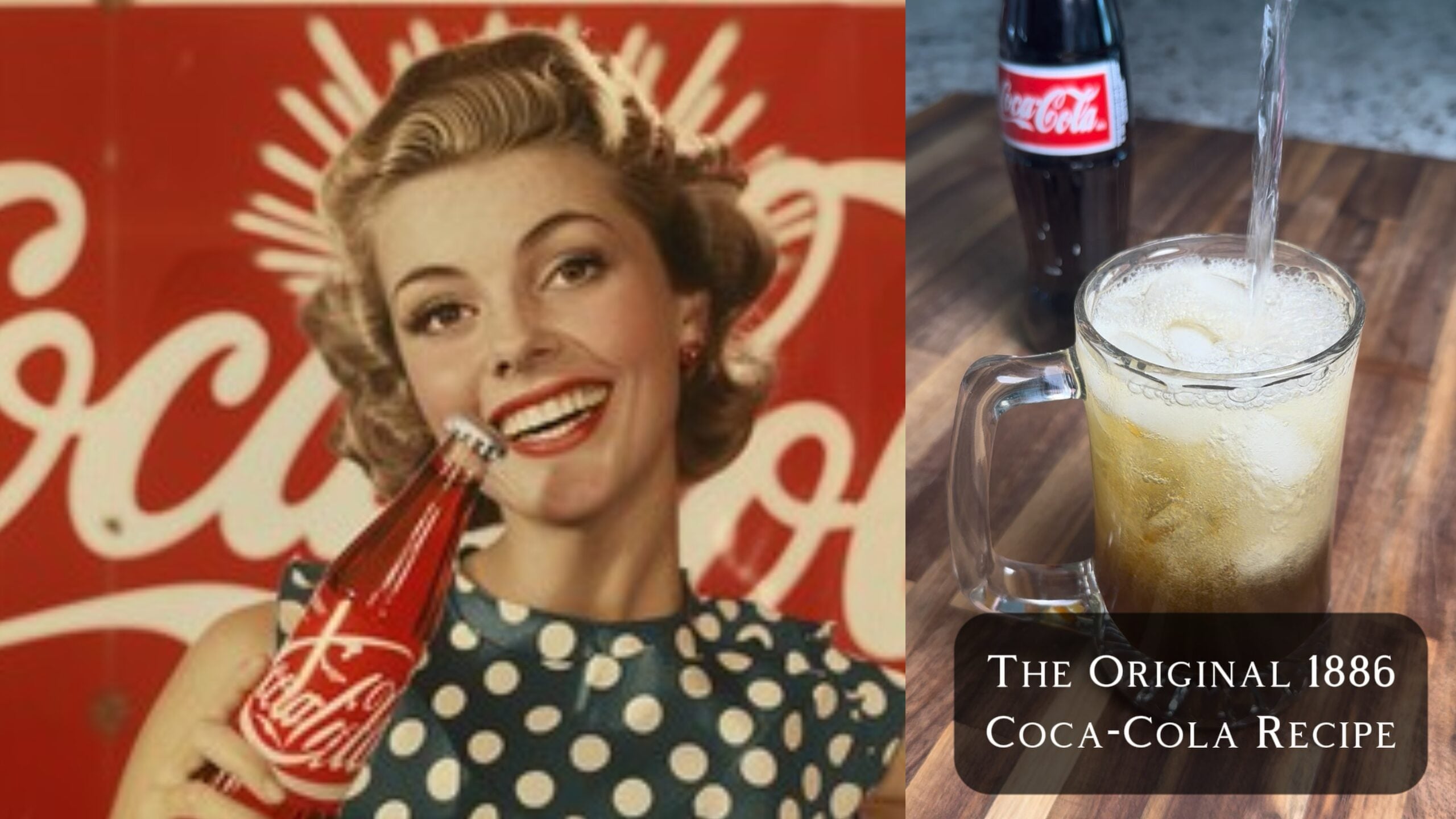
There is a vault in Atlanta, Georgia, inside the World of Coca-Cola museum, where the Coca-Cola Company stores what it claims is the only written copy of the original Coca-Cola formula. It is guarded around the clock. The Coca-Cola Company has consistently denied the authenticity of any publicly revealed version of the formula for over a century, including every leaked recipe, every claimed reconstruction and every investigative journalism piece that has attempted to decode it. The recipe that started as a pharmacist’s attempt to cure his own morphine addiction and became the most recognised commercial product in human history is, officially, still a secret.
I made it anyway. Or at least the closest documented reconstruction that exists. Here is the full story, an honest assessment of what the home reconstruction actually tastes like, and the recipe.
The Creator: John Stith Pemberton
John Stith Pemberton was born in 1831 in Knoxville, Georgia, trained as a pharmacist and chemist, served as a lieutenant colonel in the Confederate Army during the Civil War, and received a saber wound to the chest at the Battle of Columbus in April 1865, the last major land battle of the war, fought days after Lee’s surrender at Appomattox. The morphine prescribed to manage his injury became a dependence that would define the rest of his life. He was not unusual in this. Morphine addiction among Civil War veterans was so widespread it was called the soldier’s disease. Pemberton was one of hundreds of thousands of men who came home from the war dependent on the drug that had kept them alive.
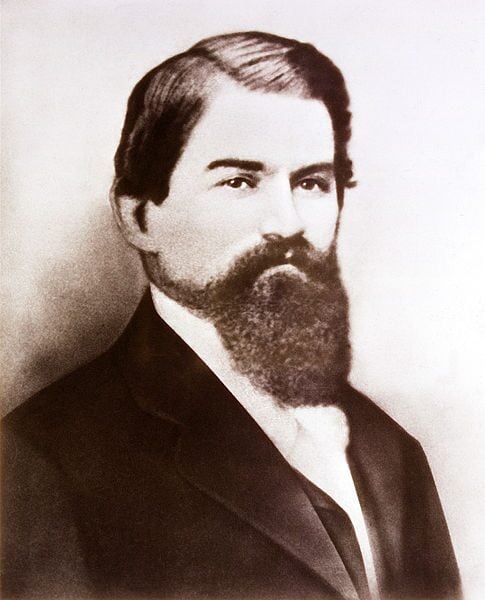
He spent the following two decades as a working pharmacist in Atlanta, simultaneously attempting to cure his morphine addiction through a series of patent medicine experiments. He was a trained chemist, not a charlatan, and he approached the problem with genuine scientific intent. He developed several medicinal preparations including French Wine Coca, his adaptation of Vin Mariani, the wildly popular Bordeaux and coca leaf tonic that had been endorsed by Pope Leo XIII, Queen Victoria and Thomas Edison. His French Wine Coca sold reasonably well in Atlanta until the city passed prohibition legislation in 1886.
Next week
I cook these before I write them. Some of it never makes the post.
The failures, the source documents, the version that actually tasted good. That part goes out by email, and next week’s is already on the stove.
 Written and cooked by Donnie
The prohibition law was the pivot. With an alcoholic preparation now illegal, Pemberton reformulated. He stripped out the wine and replaced it with carbonated water, adjusted the proportions, added the aromatic oil blend that would eventually be called Formula 7X, and produced what he called Coca-Cola. His bookkeeper Frank Robinson named it and designed the flowing cursive script that is still on every can today. First year sales totalled approximately fifty dollars against seventy dollars in costs. Pemberton considered it a failure.
He was sick, nearly bankrupt and spending whatever money he made on morphine. He began selling off portions of the formula to business partners. In 1888 he and his son sold the remaining rights to Atlanta pharmacist Asa Griggs Candler for approximately three hundred dollars. Pemberton died in August 1888 from stomach cancer, poor and still addicted. He never knew what he had made.
The Formula: What Pemberton Actually Invented
The original Coca-Cola formula contained two classes of ingredients. The base syrup and the flavour blend known as 7X.
The base syrup, as documented in the 1979 Everett Beal recipe book and published by the Atlanta Journal-Constitution and subsequently This American Life in 2011, contained fluid extract of coca, citric acid, caffeine, sugar, water, lime juice, vanilla and caramel colouring. Every cola from Pepsi to supermarket knock-offs starts with a basic recipe of these ingredients. The coca leaf extract contained approximately 9 milligrams of cocaine per serving in the original 1886 formula. This was not a secret in 1886. Cocaine was legal, widely used in patent medicines, and Pemberton marketed his drink as a brain tonic and intellectual beverage partly because of the coca leaf’s stimulant properties.
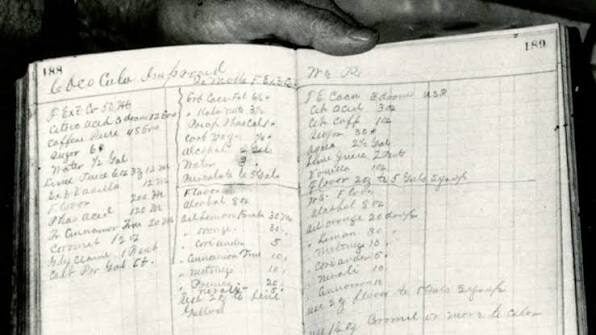
The 7X formula is the component that separates Coca-Cola from everything else and it is the component that has been the subject of the most intense historical detective work. According to the Beal recipe book, This American Life’s investigation, Mark Pendergrast’s book Secret Formula and multiple other independent sources, the 7X flavour blend consists of: alcohol, orange oil, lemon oil, nutmeg oil, coriander oil, neroli oil, which is the essential oil distilled from the blossoms of the bitter orange tree and a common ingredient in high-end perfumery, and cinnamon oil. The specific documented ratios from the Beal recipe book are: 8 oz of high-proof alcohol as the carrier, 20 drops of orange oil, 30 drops of lemon oil, 10 drops of nutmeg oil, 5 drops of coriander oil, 10 drops of neroli oil and 10 drops of cinnamon oil. Two ounces of this 7X blend was added to five gallons of the base syrup.
The Coca-Cola Company has consistently denied the authenticity of this formula. They have never confirmed any publicly revealed version. The formula in the World of Coca-Cola vault remains officially secret. What the leaked Beal recipe represents is the most thoroughly documented and most independently corroborated reconstruction of the original formula that exists outside the company’s own vault.
The Evolution: From Pharmacy to Global Dominance
Asa Candler paid three hundred dollars for a formula that he turned into one of the most valuable brands in human history. His approach was marketing rather than innovation. The product itself changed relatively little in the decades after Pemberton’s death. Candler’s genius was understanding that distribution and brand consistency were the mechanisms of commercial success, not product reformulation.
The cocaine content was the element that changed most significantly over the first decades of the company’s history. The fresh coca leaf extract was reduced gradually under pressure from temperance advocates and early anti-drug legislation. By 1903 the fresh leaves had been replaced entirely by spent coca leaves, the byproduct of a cocaine extraction process that left only trace amounts of cocaine in the finished syrup. By 1929 the formula used fully cocaine-free coca leaves processed by a single licensed manufacturer, the Stepan Company in New Jersey, which remains the only company legally permitted to import and process coca leaves in the United States. Coca-Cola is still made with coca leaf extract today. The cocaine has been removed. The flavour compounds from the leaf remain.
Candler sold the Coca-Cola Company to Ernest Woodruff in 1919 for twenty-five million dollars. Woodruff’s son Robert took over in 1923 and spent the next sixty years turning a successful American soft drink into a global institution. The military contracts during World War Two, which made Coca-Cola available to American servicemen wherever they were stationed in the world at a guaranteed price of five cents per bottle, created the global distribution infrastructure that the postwar commercial expansion built on. By 1960 Coca-Cola was available in over a hundred countries. The formula that Pemberton sold for three hundred dollars generates over eleven billion dollars in annual revenue today.
My Rating
I want to be completely honest about this because honesty is what this channel is built on, and a dishonest tasting note serves nobody.
The home reconstruction does not taste exactly like Coca-Cola. I want to be direct about that before anything else. The proportions of the 7X oils in the reconstruction are an approximation of a formula whose exact ratios have never been confirmed by the company. The home reconstruction lacks the precision of industrial flavour compounding, the specific coca leaf extract that is not available to home cooks, and whatever proprietary processing steps the actual Coca-Cola Company uses that are not in any leaked formula. These are not minor variables.
What the home reconstruction does taste like is something immediately recognisable as the ancestor of Coca-Cola. The citric acid and lime juice provide the acidic backbone. The caramel colouring gives it the visual identity. The caffeine provides the characteristic slight bitterness that distinguishes cola from other carbonated sweet drinks. And the 7X blend, even in approximate form, produces something genuinely distinctive, a warm, slightly spicy, citrus-forward aromatic note that is immediately more complex than any other commercial cola you have ever tasted. The neroli oil in particular produces a floral, almost perfumey quality that is present in Coca-Cola but much more pronounced in a home reconstruction where the proportions are approximate rather than industrially calibrated.
If someone handed you a glass of this without context you would not say that is Coca-Cola. You would say that tastes like something in the Coca-Cola family, more complex and more herbal than the modern product, interesting in a way that the commercial drink is not, and immediately suggesting the apothecary origins of the formula. Which is exactly what it is. A pharmacist’s preparation made from medicinal oils, coca leaf extract, caffeine and citric acid in 1886. The complexity of those origins is more present in the home reconstruction than in the industrially refined modern product. Whether that is a feature or a bug depends on what you are looking for.
Rating: 7.1 / 10 as a home experiment. Would not replace Coke. Would drink it again.
Note: Most of these ingredients are not available at a standard grocery store. Here is everything you need, with links to exactly what I used:
The Base Syrup
- Citric acid — food grade
- Caffeine powder (in pill form) — food grade, measure carefully with a precision scale
- Caramel food colouring — food grade liquid
- Vanilla extract — pure, not imitation
The 7X Flavour Blend
- High proof grain alcohol — Everclear 190 proof or equivalent, available at liquor stores
- Orange essential oil — food grade
- Lemon essential oil — food grade
- Nutmeg essential oil — food grade
- Coriander essential oil — food grade
- Neroli essential oil — food grade
- Cinnamon essential oil — food grade
The Recipe: Home Reconstruction of the Original 1886 Coca-Cola Formula
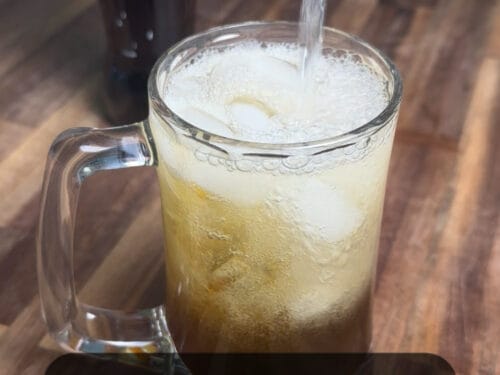
Original 1886 Coca-Cola Formula

Don’t lose this one.
I’ll email it to you so it’s waiting when you’re ready to cook.
Ingredients
Instructions
Notes
- Caffeine powder requires careful handling. It is genuinely potent and accurate measurement matters. Use a precision kitchen scale rather than measuring spoons. The lethal dose of caffeine is approximately 10 grams for an adult, which is a relatively small volume of powder. Measure carefully and keep it out of reach of children.
- Neroli oil is the most expensive and most difficult to source component of the 7X blend. It is available from reputable essential oil suppliers including Mountain Rose Herbs and similar specialty retailers. Use food grade oil specifically. Cosmetic grade or aromatherapy grade oils are not certified for consumption.
- The finished reconstruction will be noticeably more complex and more herbal than commercial Coca-Cola. The neroli in particular produces a floral quality that the modern commercial product has largely refined away. Whether you consider this an improvement or a curiosity is a matter of personal taste. As a food history experiment it is genuinely interesting. As a commercial product it is clearly less calibrated than 140 years of industrial flavour refinement would produce. Both of those things are simultaneously true.