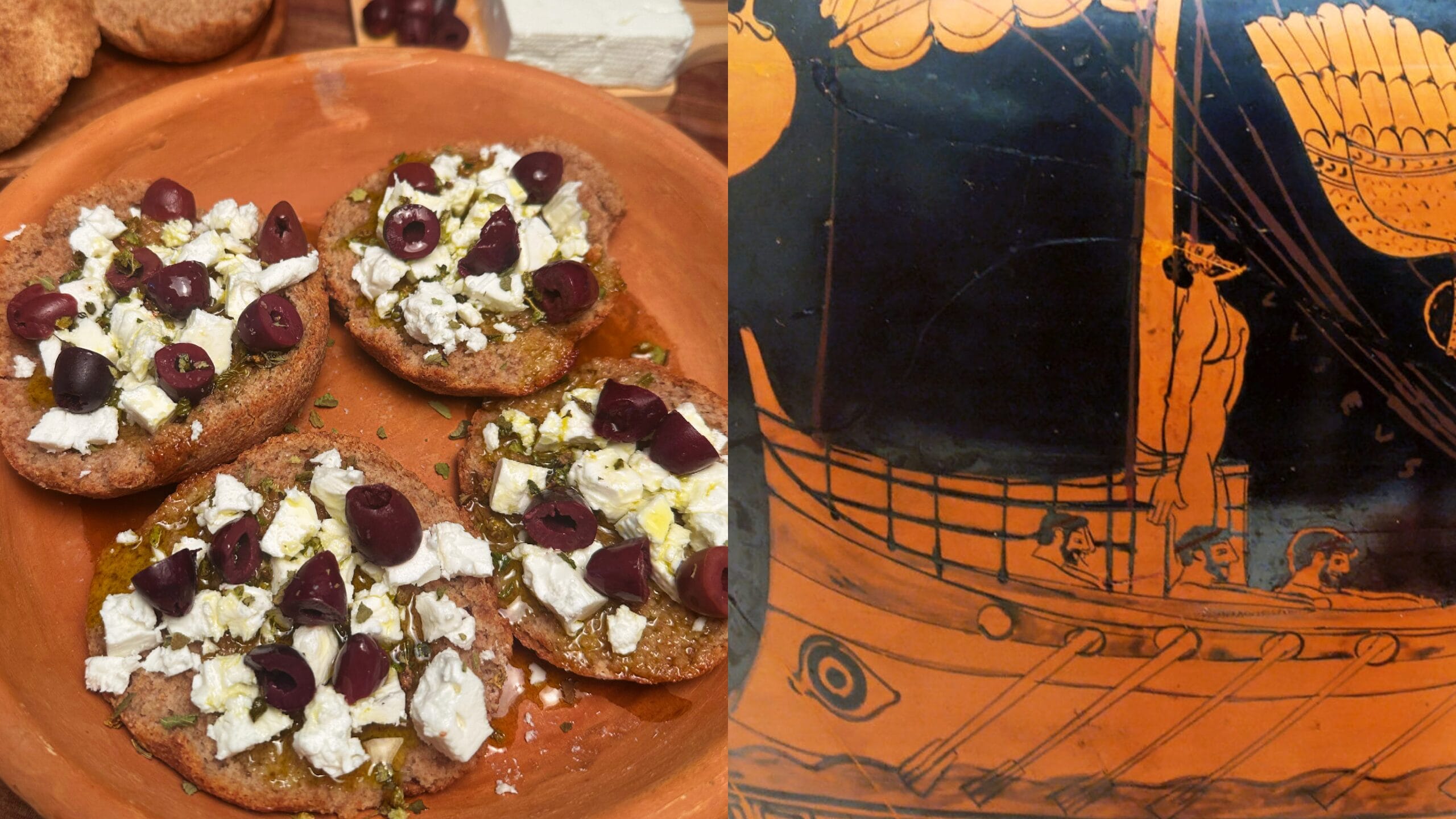
I went to see the 2026 Odyssey yesterday, and I genuinely enjoyed it. As a food history blogger whose opinion does not matter whatsoever, I feel obligated to give you my honest take before we proceed!
Was it historically accurate to the Bronze Age period it depicts? No! But to be fair, it is based on a mythological story, and it is a 2026 American Hollywood interpretation of that story with popular contemporary actors and actresses. In terms of a summer blockbuster retelling of one of the greatest adventure stories ever written, the cinematography was extraordinary, and I left the cinema thinking about ancient Greece, which is exactly what a good historical epic should do to you. The controversy around the casting reflects something genuinely interesting though: that there is a real appetite for serious historical films that reflect the civilisations and cultures they depict more accurately. I am looking at you, Joaquin Phoenix’s Napoleon. They massacred my boy l’Empereur in that film…
But here is what the Odyssey did that matters for this channel. It made me want to make the bread that Odysseus’s sailors would have eaten. And that bread, still made today on the island of Crete in essentially the same way it was made three thousand years ago, is one of the most extraordinary food history stories I have ever encountered for this channel.
The Cretan paximadi, the barley rusk, is the oldest continuously made bread in the Western world. It fed Greek sailors before Homer was born, and it is still eaten for breakfast in Crete today. I rated it 9.2 out of 10. Rehydrate it before eating, or you might break a tooth. Here’s the full story.
Next week
I cook these before I write them. Some of it never makes the post.
The failures, the source documents, the version that actually tasted good. That part goes out by email, and next week’s is already on the stove.
 Written and cooked by Donnie
The Bronze Age Problem: What We Know and How We Know It
Before getting into the documented history of paximadi, complete honesty about the sourcing situation is essential because this channel takes historical accuracy seriously, and the Bronze Age presents specific challenges that classical antiquity does not.
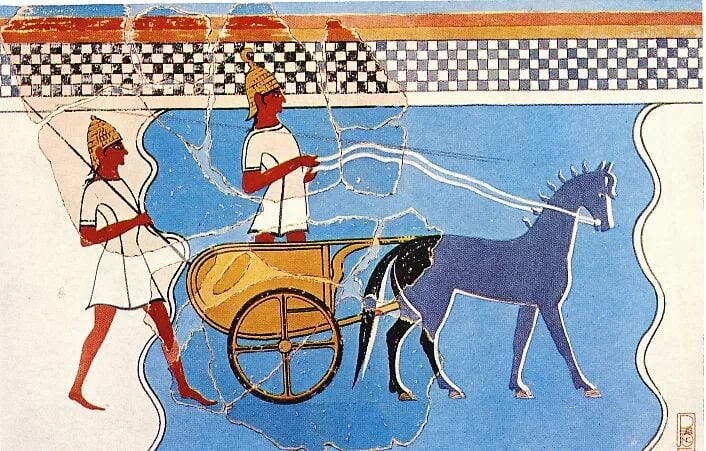
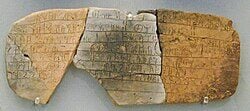
The Bronze Age in Greece, the period depicted in the Odyssey, spans roughly 3200 to 1100 BC. The Trojan War, if it occurred at all, is generally dated by scholars to somewhere around 1180 to 1200 BC. This is so far back in human history that written records in the modern sense do not exist for most of it. Linear B, the earliest documented Greek writing system, dates from roughly 1500 to 1200 BC and consists primarily of administrative and economic tablets from Mycenaean palace sites. These tablets document grain allocations, which do confirm that barley was a primary crop in Bronze Age Greece, but they do not give us recipes or menus.
The classical Greek sources that document barley bread, twice-baked bread, and sailor provisions date from roughly the 5th century BC to the 2nd century AD, hundreds of years after the events the Odyssey depicts. We are therefore working backwards from documented classical practice to infer Bronze Age reality, which is a legitimate historical methodology but requires being transparent about the inference.
What the Bronze Age archaeological record does confirm directly is that the key ingredients of paximadi were all present in Aegean culture long before Homer:
Barley was the primary grain crop of Bronze Age Greece, confirmed by both the Linear B tablets and by archaeobotanical evidence at multiple Mycenaean and Minoan sites across Crete. Olive cultivation is documented in Crete from at least 3000 BC, well into the early Bronze Age. Wild oregano grows across the Greek landscape and has been gathered as a flavouring herb since the Neolithic. Goat cheese, the predecessor of feta, is documented through both animal bone evidence and through ceramic residue analysis at Bronze Age sites throughout the Aegean. (Even the Cyclops in the Odyssey was a big fan of goat cheese!) Salt was produced and traded extensively throughout the Bronze Age Mediterranean.
Every single ingredient in a paximadi with feta, olives, olive oil and oregano existed in Bronze Age Crete. The specific twice-baked technique is documented from classical sources. The inference that Minoan and Mycenaean sailors were eating something functionally very similar to what Cretan bakers are still making today is historically reasonable. It is an inference, but it is a well-supported one.
The Primary Sources: What Ancient Writers Actually Said
The most important primary source for ancient Greek bread culture is Athenaeus of Naucratis, a 2nd to 3rd century AD Greek rhetorician whose Deipnosophistae, which translates as The Dinner Sophists or Banquet of the Learned, is the most comprehensive surviving document of ancient Greek food culture. Athenaeus lists over seventy different types of ancient Greek bread and documents the central role of barley in the Greek diet in detail. The Deipnosophistae is the oldest surviving work to discuss Greek food in encyclopaedic terms and is available in full translation through the Perseus Digital Library at Tufts University.
Hesiod, writing in Works and Days in approximately the 8th century BC, documents the preparation of barley bread as the foundational home cooking of ancient Greek households: it was made in the kitchen of each home, out of barley flour, water, oil or milk. Hesiod’s explicit mention of olive oil as a component of basic barley bread preparation is the direct classical predecessor of the olive oil in the paximadi recipe made in this post.
Plato, in his documented conversations, specifically recommended a diet built around barley bread as the foundation of healthy eating: you should eat barley bread and wheat bread, olives, cheese, bulbs and vegetables. Plato’s specific pairing of barley bread, olives and cheese in a single dietary recommendation is the ancient philosophical endorsement of the exact combination served on this channel’s paximadi this week.
The term dipyros artos, twice-baked bread, is documented in ancient Greek sources and is the linguistic ancestor of both paximadi and the entire Western biscuit tradition. Both the Italian biscotti and the French and English word biscuit derive their names from the description of the twice-baked technique in Latin. The connection between an ancient Greek sailor’s hardtack and a modern Italian coffee accompaniment is direct and etymological.
The most quotable surviving account of twice-baked bread as military and naval provisions comes from Andrew Dalby, the food historian who specialises in the ancient Mediterranean, writing about the Byzantine period where paximadi documentation becomes more explicit: paximadia was probably the food that the future Emperor Justin II, uncle of Justinian, carried in his knapsack, the food that kept him alive on his long walk from Illyria to Constantinople. It was certainly food for soldiers and for frugal priests as well. The military and naval application of the bread is documented explicitly in Byzantine sources and the technique is confirmed as continuous from ancient practice through the Byzantine period to the present.
The 196 Flavors culinary history resource documents directly that this barley bread has been known since ancient times as the staple food for the poor, but also the soldiers, shepherds and sailors who carried paximadia during their expeditions. They could thus preserve them for a long time without spoiling.
The Name: Paximus, Paxamos and the Byzantine Connection
The word paximadi comes from a specific and documented origin. The rusks are named after a Byzantine figure called Paximus or Paxamos, depending on the source, who refined and systematised the ancient twice-baked bread technique. Diane Kochilas, the authoritative Greek food writer, documents this directly: the rusks are called paximadia after a Byzantine monk named Paximus, who improved on the ancient recipe leaving a legacy that to this day is a living tradition.
A separate tradition identifies the name’s origin with Paxamos, a Greek author of the first century AD who wrote a complete cookbook, now lost, and whose name became synonymous with high quality food in the Byzantine world. Whether the bread takes its name from a Byzantine monk or a first century cookbook writer, the documented lineage from the ancient dipyros artos through the Byzantine paximadi to the modern Cretan rusk is continuous and explicitly documented.
The Living Tradition: Paximadi in Crete Today
Paximadi is not a museum piece or a historical reconstruction; it’s still made and eaten daily across Crete in essentially the same way it has been made for thousands of years. Kritiko paximadi, the specifically Cretan barley rusk, has a protected designation of origin status, meaning it can only legally be called Kritiko paximadi if it is produced on Crete. It is still considered the bread of Cretan identity in a way that few foods anywhere in the world can claim for their culture.
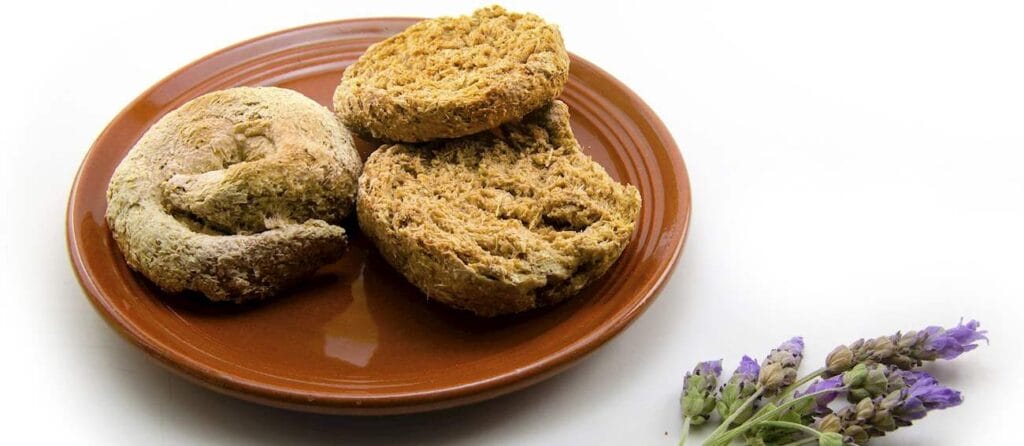
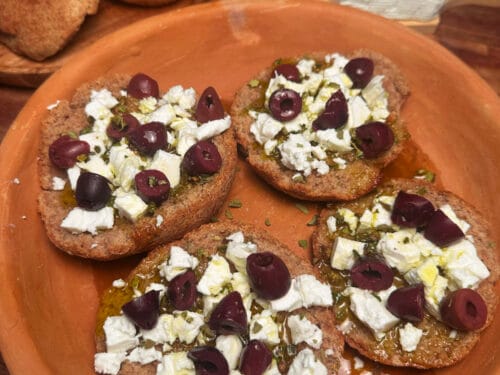
The most famous contemporary preparation using paximadi is dakos, the Cretan bruschetta, where the rusk is briefly rehydrated in water, topped with chopped ripe tomatoes, crumbled mizithra or feta cheese, olive oil and oregano, and served as a meze or light meal. Dakos is on every taverna menu in Crete and has been eaten in some version of this form since classical antiquity, the tomatoes being the one post-Columbian addition to an otherwise ancient combination.
The twice-baked rusks are still made in the same way. Baked once to produce a bread, then split and baked again at low heat to remove all moisture, producing something that will last for months at room temperature without spoiling. The logic is identical to the logic that made it the sailors’ bread of the ancient Aegean. Shelf stability, lightweight and edible in any conditions on land or at sea.
The Movie, the History and Why This Matters
I want to come back to the Odyssey for a moment because the film raises a question that this channel takes seriously. The controversy around historical films and the casting of ancient civilisations reflects a genuine tension between entertainment and historical authenticity that I think about a lot.
Bronze Age Crete was a genuinely diverse Mediterranean civilisation with documented trade connections to Egypt, the Levant, Anatolia and the broader Mediterranean world. The Minoans, whose civilisation preceded and influenced Mycenaean Greek culture, produced some of the most sophisticated art of the ancient world and traded across an extraordinarily wide geographic range. The question of how accurately any modern film represents these civilisations is genuinely interesting and genuinely complicated, and the appetite for getting it right is real and growing.
What I can contribute from this channel’s perspective is the food. The bread that Odysseus’s sailors would have eaten is still being made in Crete today by the same technique, with the same ingredients, using the same twice-baked method that ancient writers documented.
Making it and eating it is a direct, edible connection to the world the Odyssey depicts, more immediate than any CGI rendering of the Aegean, more authentic than any costume choice, and more personal than any casting decision.
My Rating
The paximadi is extraordinary and I want to say that clearly before the practical warnings. These are genuinely one of the best things I have made for this channel and the combination of the briefly rehydrated rusk with good feta, olives, olive oil and oregano is one of the cleanest, most satisfying flavour combinations in the entire Mediterranean food tradition. The olive oil from Mr. Papou’s, sourced directly from Greece, made a noticeable difference to the final result and is worth sourcing specifically for this recipe.
The practical warning is real and I mean it without irony. Do not bite into a dry paximadi without rehydrating it first. They are baked specifically to remove all moisture and the result is genuinely as hard as a small rock. Brief rehydration in cold water for a few seconds transforms them from tooth-breaking to perfectly tender at the surface while retaining a satisfying structure beneath. The rehydration is not optional.
Mr. Papou’s olive oil specifically deserves acknowledgment because the quality of the olive oil on this preparation is the difference between a good result and an extraordinary one. The simplicity of the dish means every ingredient is fully present in every bite. Good olive oil matters here more than in almost any other recipe on this channel.
Rating: 9.2 / 10
The Recipe: Cretan Paximadi Barley Rusks
Ancient Cretan Paximadi Barley Rusks

Don’t lose this one.
I’ll email it to you so it’s waiting when you’re ready to cook.
Ingredients
Instructions
Notes
- The barley flour is the single most important ingredient and cannot be substituted with white wheat flour without fundamentally changing what the recipe is. Whole grain barley flour is available at most health food stores, at Whole Foods and online. The darker, earthier character of barley is what makes this taste like ancient Crete rather than like a modern bread.
- The twice-baked process takes patience and cannot be rushed. The second bake at low temperature is doing the work of removing all moisture, and any attempt to accelerate it with higher heat will produce a rusk that browns on the outside while retaining moisture inside, which will cause it to soften and go stale within days rather than lasting for months.
- The olive oil quality matters more in this recipe than in almost any other on this channel. The combination of rehydrated barley rusk and good Greek olive oil is the ancient Mediterranean breakfast. Using a mediocre oil produces a mediocre result. Use Mr. Papou’s or the best Greek extra virgin olive oil you can find.