
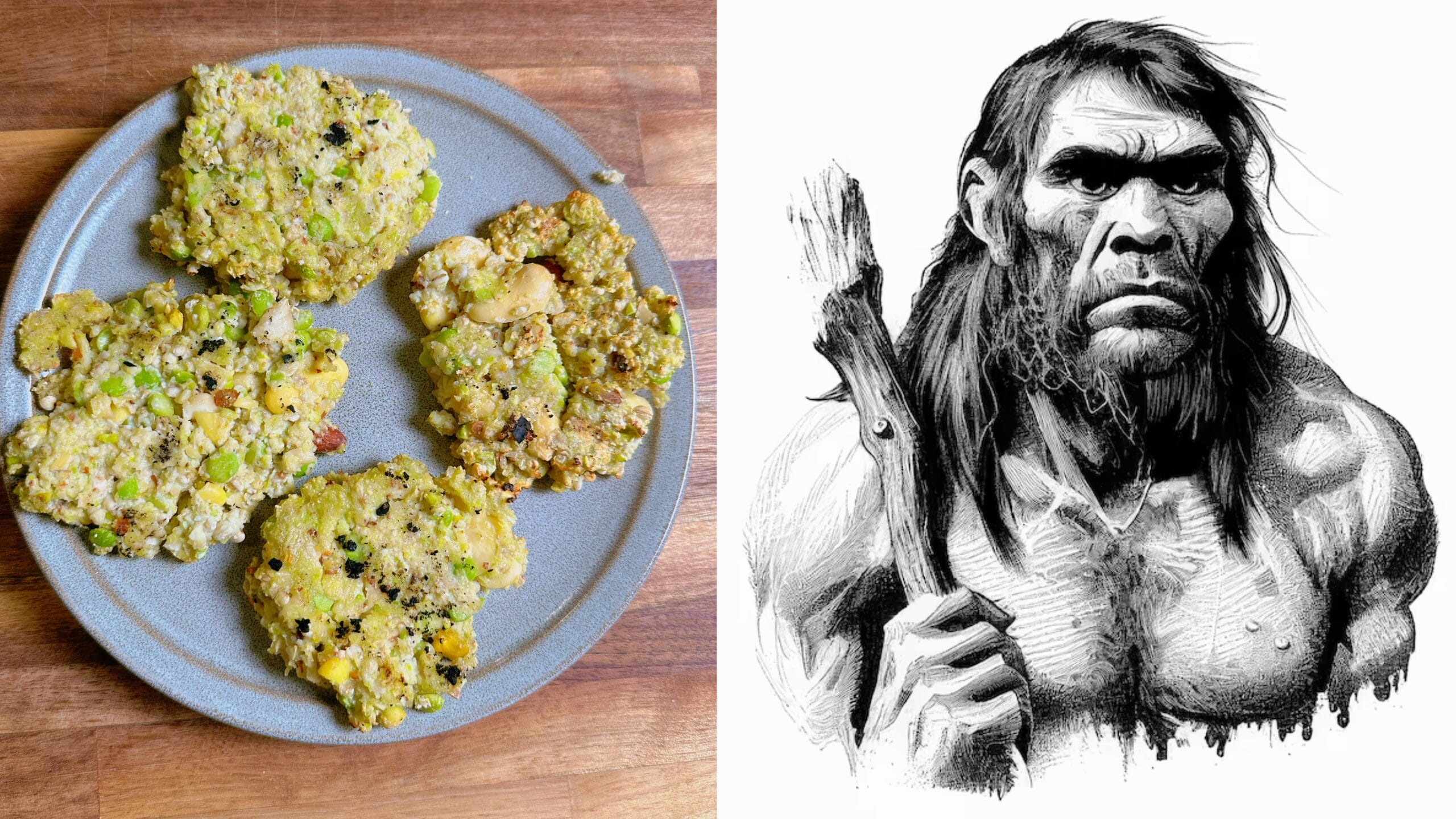
Everything you think you know about how prehistoric humans ate is about to get significantly more complicated. The image of the Neanderthal as a raw meat-gnawing, club-wielding brute who survived entirely on whatever he could kill and tear apart with his hands is one of the most persistent myths in popular prehistory. Paleoanthropologists have been dismantling it for decades. A 2022 peer-reviewed study published in the journal Antiquity finished the job.
I made the recipe, or the closest possible modern reconstruction of what archaeologists found burned into the floor of a cave in Iraqi Kurdistan 70,000 years ago. Fava beans, wheat berries, lentils, almonds, pistachios and mustard seeds, soaked, crushed, formed into round cakes and grilled over fire.
If I were a Neanderthal, I would rather be reaching for the roasted mammoth leg. But the story behind what archaeologists found and what it means for our understanding of prehistoric human intelligence is genuinely extraordinary and is the reason this episode exists. Here is the full story.
The Discovery: What Was Found at Shanidar Cave
Next week
I cook these before I write them. Some of it never makes the post.
The failures, the source documents, the version that actually tasted good. That part goes out by email, and next week’s is already on the stove.
 Written and cooked by Donnie
Shanidar Cave sits in the Zagros Mountains of Iraqi Kurdistan and is one of the most significant archaeological sites in the world for understanding Neanderthal behaviour. It is already famous for the Shanidar IV burial, a Neanderthal skeleton discovered in 1960 that appeared to have been buried with flowers, the first documented evidence of Neanderthal ritual burial. The cave has produced some of the most important evidence for Neanderthal cognitive complexity ever recovered.
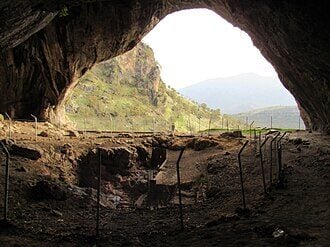
In 2022, a team led by Dr Ceren Kabukcu, an archaeobotanical scientist at the University of Liverpool, and Professor Chris Hunt, an expert in cultural paleoecology at Liverpool John Moores University, published a study in the journal Antiquity documenting their analysis of charred food remains from Shanidar Cave. The study also examined plant remains from Franchthi Cave in Greece. Their findings changed the way prehistorians understand Neanderthal cooking.
At Shanidar Cave, the researchers studied plant remains from approximately 70,000 years ago, when the space was inhabited by Neanderthals, and from around 40,000 years ago, when it was home to early modern humans. Scanning electron microscope images of the charred remains revealed something extraordinary. The Neanderthal layer at Shanidar contained food fragments made from multiple combined ingredients that had been processed in multiple steps before cooking.
The specific ingredients identified in the charred remains from the Neanderthal layer included wild lentils, wild peas, bitter vetch, wild grass seeds, wild mustard and terebinth, which is the wild pistachio. The Shanidar Cave Project, the official research project based at the site, confirmed directly that Shanidar Cave Neanderthals were cooking food made from wild lentils, peas and grains some 70,000 years ago. The ingredients had been pounded before they were cooked to remove some of the bitter-tasting outer seed coats and make them easier to digest.
This is not a single charred seed accidentally dropped in a fire. This is a compound food preparation, multiple ingredients deliberately combined, processed to improve their palatability, and cooked together. As Professor Hunt told the Guardian: our findings are the first real indication of complex cooking, and thus of food culture, among Neanderthals.
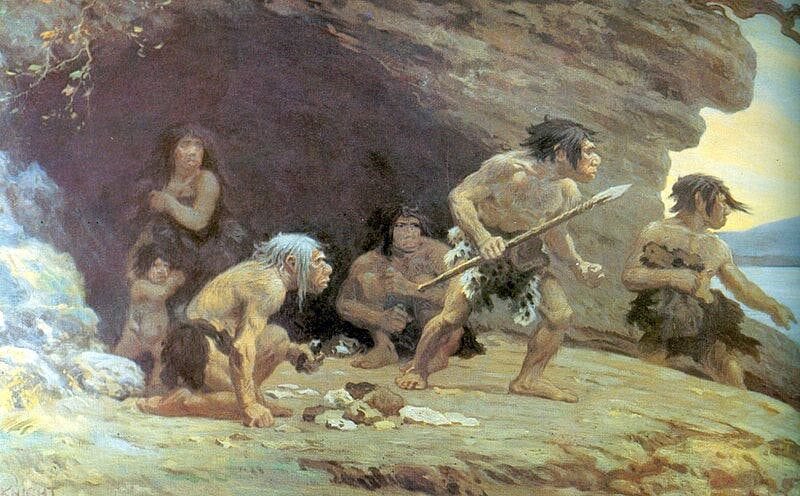
The study concluded that wild nuts, peas, vetch, grasses and pulses like beans or lentils were often combined, and at times wild mustard was added. To make the plants more palatable, pulses, which have a naturally bitter taste, were soaked, coarsely ground or pounded with stones to remove their husks. The people who lived in these caves added the seeds to a mixture that was heated up with water during grinding, pounding or mashing of soaked seeds.
What the charred remains from Shanidar represent is the earliest known direct evidence of Palaeolithic plant cookery in Southwest Asia. A 70,000 year old recipe, preserved by accident in the ashes of a Neanderthal hearth.
The Myth of the Meat-Only Caveman
The popular image of the Neanderthal as a strictly carnivorous apex predator who survived entirely on large game is one of the more persistent myths in popular prehistory, and it is definitively contradicted by the archaeological record.
The evidence that Neanderthals ate significant quantities of plant foods has been accumulating for decades before the Shanidar 2022 study provided the most direct proof yet. Previous studies found food residues trapped in tartar on the teeth of Neanderthals from Europe and southwest Asia which show they cooked and ate grasses and tubers such as wild barley, and medicinal plants. Analysis of dental calculus from the Shanidar 3 skeleton found starch consistent with barley and phytoliths from date palm. Kebara Cave in Israel produced evidence of charred pulse seeds in a Mousterian archaeological context associated with Neanderthal remains. Plant residues found on grinding or pounding tools from the European later Palaeolithic suggest early modern humans, and potentially Neanderthals sharing similar environments, crushed and processed wild grass seeds.

This does not mean Neanderthals were vegetarians or even primarily plant eaters. They were not. The Shanidar Cave Project documentation is explicit about what the primary evidence shows: the main species hunted by both Neanderthals and Palaeolithic modern humans was the extremely agile ibex. Bone assemblages at Neanderthal sites across Europe show consistent evidence of large game hunting, including mammoth, woolly rhinoceros, cave bear, horse and bison. Isotope analysis of Neanderthal bone collagen from multiple sites shows a diet heavily weighted toward animal protein, broadly comparable to top predators in the same ecosystems.
The accurate picture is that Neanderthals were primarily hunters who supplemented their meat-heavy diet with gathered plant foods, and who were considerably more sophisticated in their preparation of those plant foods than anyone previously assumed. They were not eating raw plants or simply chewing grass seeds directly. They were soaking, grinding, combining, and cooking plant ingredients in deliberate multi-step preparations that demonstrate cognitive planning and culinary intent.
The myth of the strict meat-eating caveman was never accurate. The 2022 Shanidar study established definitively that the Neanderthal was also, in the most ancient possible sense of the word, a cook.
What Neanderthal Cooking Actually Looked Like
Understanding the specific techniques the Shanidar Cave researchers identified matters for appreciating both the sophistication of what they found and the recipe reconstruction I attempted.
The soaking and pounding steps documented in the Shanidar remains are not incidental. Pulses, the category that includes lentils, peas and beans, contain lectins and phytic acid in their outer seed coats that are both bitter-tasting and difficult to digest without processing. Modern humans remove these through soaking, which hydrates the seeds and activates enzymes that break down the problematic compounds, and through mechanical processing like grinding or pounding, which physically removes the outer husk. The fact that Neanderthals were doing the same thing 70,000 years ago demonstrates that they had accumulated empirical knowledge about how to improve the digestibility and palatability of food over generations.
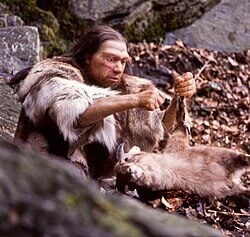
The Shanidar Cave Project makes one additional observation that is genuinely wonderful. While noting that the Neanderthals did not remove the bitter parts completely, the researchers suggest they might have actually liked the bitter taste. A 70,000 year old flavour preference. The fact that we can make that observation from charred remains in a cave in Iraqi Kurdistan is one of the more extraordinary things in food history.
The mixture of soaked, pounded pulses and grass seeds was then heated with water, producing something that resembled a thick paste or cake that was cooked directly over or near fire. The charred food fragments recovered by the Kabukcu team are the burned remnants of exactly this process, the Neanderthal equivalent of burning your dinner, preserved for 70,000 years by the same fire that cooked them.
My Rating and Brutally Honest Assessment
I need to be honest, the Neanderthal bean cake is one of the least enjoyable things I have made for this channel, and I have made the D-ration chocolate bar, the Spartan black broth and the ancient Greek kykeon barley water. This recipe managed 1.3 out of 10.
The issue is salt. Or more precisely, the complete and total absence of it. A combination of fava beans, lentils, wheat berries, almonds, pistachios and mustard seeds, soaked, crushed and grilled over fire, tastes exactly like what it is. Crushed, slightly charred legumes and nuts, unseasoned, without any of the flavour development that salt, acid, fat or aromatic spicing would provide. The mustard seeds add a faint bitterness that is the most distinctive flavour note in the entire preparation, which Neanderthals may have enjoyed but which I found difficult.
The texture is dense, slightly gritty from the incompletely ground grain and legume husks, and requires significant effort to chew. It sits heavily in the stomach in a way that suggests substantial caloric density, which was presumably the entire point from a survival perspective.
If I were a Neanderthal facing an Iraqi Kurdish winter in the Zagros Mountains with the alternative being a freshly killed ibex roasting over the fire, I would not be reaching for the bean cake. I would be at the ibex. Every time.
The historical and archaeological significance of what this food represents is a 10 out of 10. The flavour is a 0. Both things can be true simultaneously.
Rating: 0 / 10
The mammoth leg would have been better.
The Recipe: Neanderthal Bean and Pulse Cakes
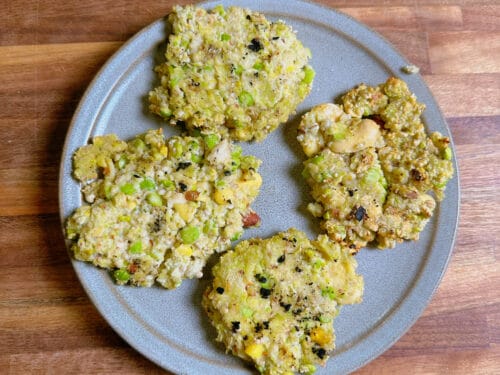
Neanderthal Bean and Pulse Cakes

Don’t lose this one.
I’ll email it to you so it’s waiting when you’re ready to cook.
Ingredients
Instructions
Notes
- The absence of salt is the defining characteristic of this recipe from a palatability perspective and it is historically accurate. There is no evidence of salt processing at the Neanderthal layer of Shanidar Cave. Salt extraction and processing is a technology that develops considerably later in human prehistory. Eating this recipe as documented gives you the most direct possible experience of what was wrong with prehistoric food, which is everything that salt fixes.
- The soaking step is genuinely important beyond historical accuracy. Unsoaked fava beans and lentils will not crush to a workable consistency and will produce a gritty, dry cake that falls apart on the grill. Soaking overnight produces a workable paste that holds together adequately during cooking.
- The charcoal grill produces a meaningfully better result than a gas grill or pan due to the smoky character it imparts to the exterior crust. Fire was the Neanderthal’s only cooking technology and its specific flavour contribution to the finished cake is the most historically accurate element of the entire preparation.

Much fun to read. Thanks for trying it for me….