
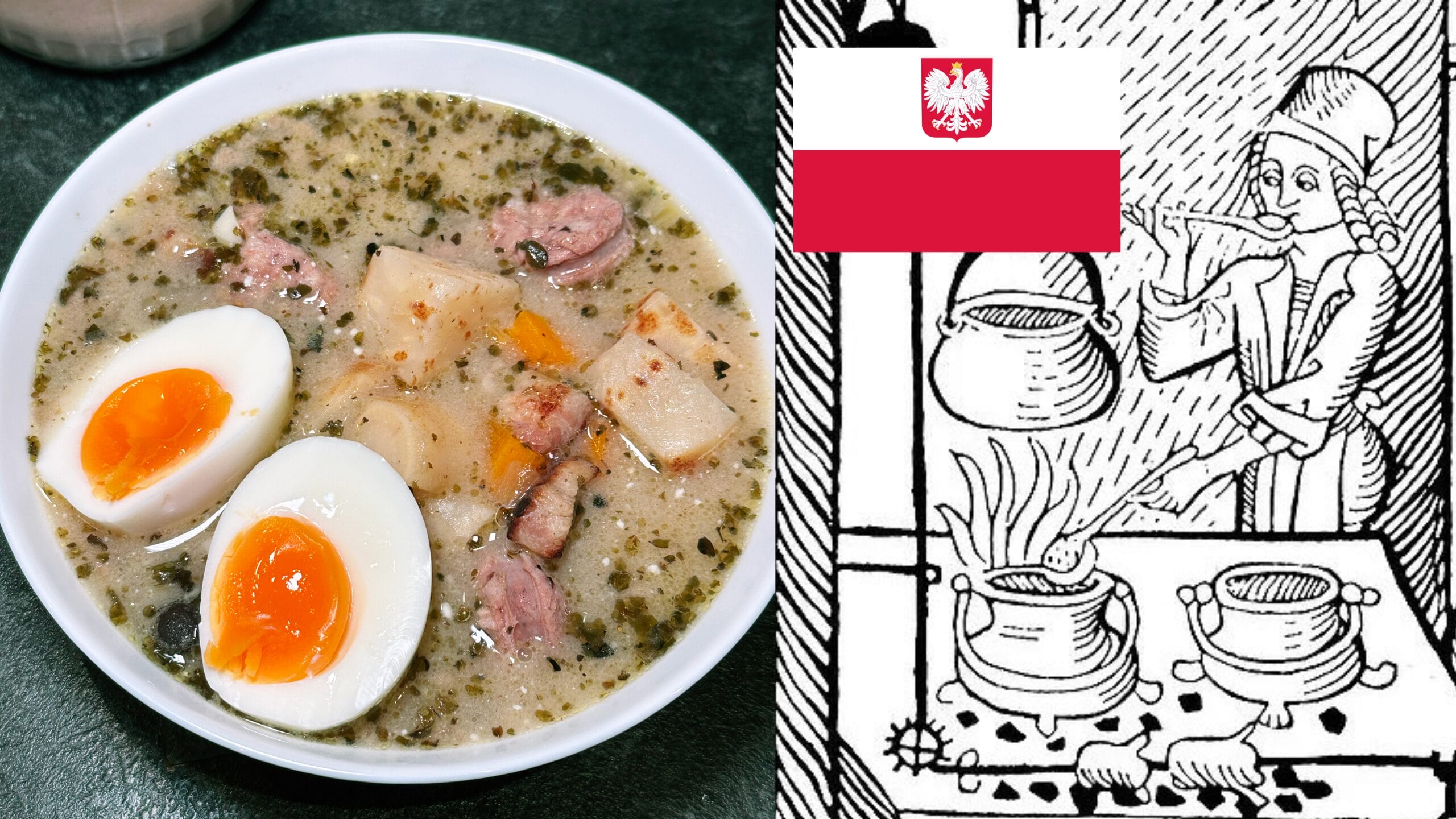
The Eats History Project Begins With Poland’s Greatest Soup
The Eats History Project is officially underway! After years of building this channel from a kitchen in Arizona, recreating historical recipes from books and manuscripts and archaeological reports, the next chapter has begun. I am in Krakow, Poland, for August, the first stop on a multi-year journey documenting traditional and historical recipes in the places where they were actually made, eaten and lived. The concept is simple. The ambition is significant. The first recipe could not be more appropriate.
I arrived jet-lagged and disoriented after a long flight from Phoenix, dropped my bags, and immediately started my rye starter because I knew it would take three days to ferment. Three days later, I walked to the Stary Kleparz market to pick up my ingredients, practiced my hellos and thank yous, and got my first real look at what Krakow cooks with.
There is no better recipe to launch the Eats History Project than żurek. It is the oldest described soup in Polish cuisine and used to be the national dish of Poland. It is made from a fermented rye starter that takes days to develop. It is served with white sausage, smoked bacon, and hard-boiled eggs in a preparation that has been eaten continuously in Poland since the medieval period. It is one of the best soups I have ever eaten.
Next week
I cook these before I write them. Some of it never makes the post.
The failures, the source documents, the version that actually tasted good. That part goes out by email, and next week’s is already on the stove.
 Written and cooked by Donnie
Here is the full story.
Stary Kleparz: Shopping Where Krakow Has Shopped for 700 Years
Before getting into the history of the soup, the market where I gathered my ingredients deserves its own section because it is one of the most extraordinary food markets in Central Europe and most people visiting Krakow walk past it without knowing what they are looking at.
Five minutes walk north of the Rynek Główny, just beyond the Planty gardens and the Barbican, the city changes register. The tourist infrastructure of the Old Town falls away, and you arrive at a covered market square that has been doing the same thing since the 14th century: selling food to the people of Krakow. Stary Kleparz, Old Kleparz, is the oldest continuously operating market in Krakow and one of the oldest in Poland. The Kleparz district was founded in the 12th century around the Church of St. Florian, to which the relics of the patron saint of firefighters were brought from Italy. During the reign of King Casimir, the settlement was granted city rights under German law in 1366. It was incorporated into the city of Krakow in 1791, but the market kept its name, its location, and its function.
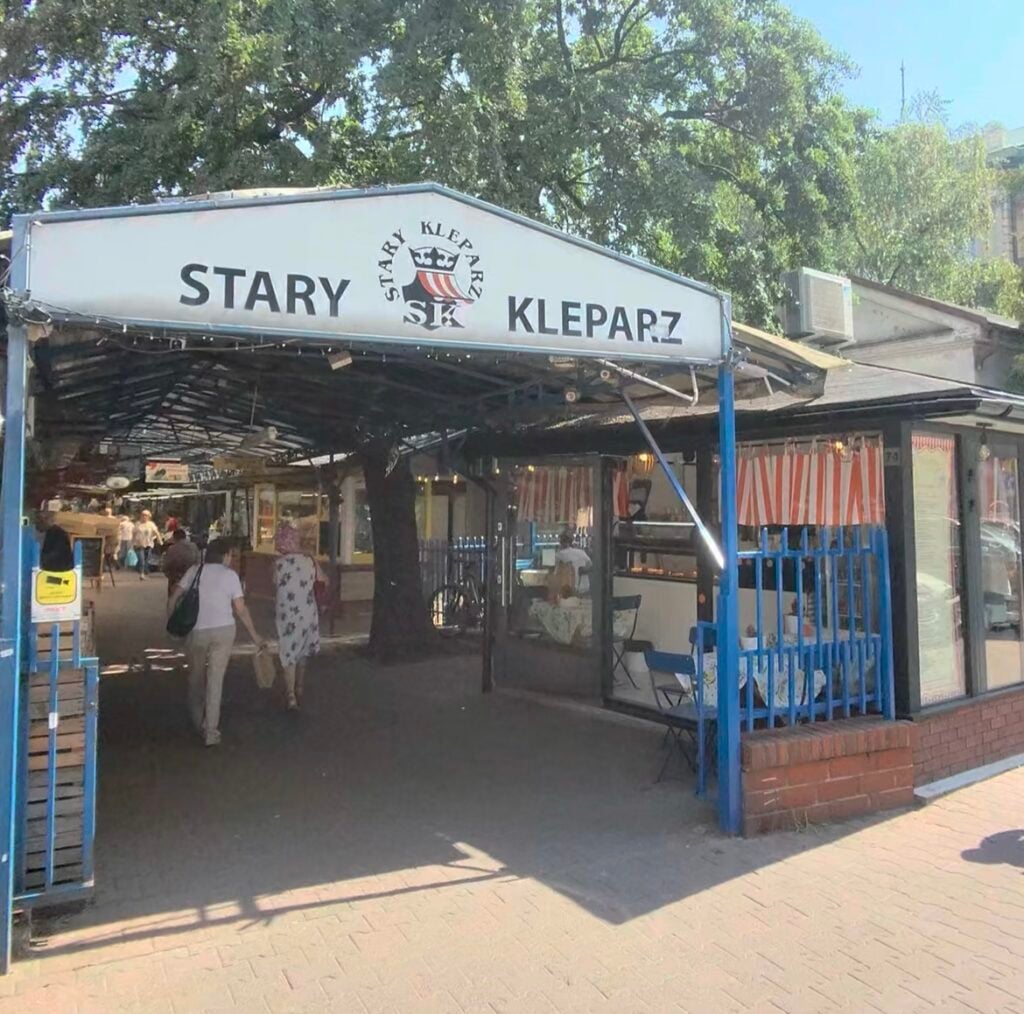
The medieval Kleparz market dealt primarily in horses, livestock, grain, and goods brought in from the countryside. The horse market in particular was famous. Kleparz was where you came to buy a horse in medieval Poland. Today you come for Tatra cheeses, fresh bread, seasonal vegetables and cuts of meat from local producers who have been selling at the same stalls for generations. The name Kleparz comes from the Polish word klepać meaning to bargain, and you can still negotiate prices today exactly as merchants did seven centuries ago, provided you can speak enough Polish to try.
The communist period gave Stary Kleparz a specific and historically important role. During communist times, Stary Kleparz became famous as one of the few places where people could find goods that were otherwise unavailable. The market that had survived fires, wars, partitions, Habsburg occupation and two World Wars became, under communism, one of the most important informal supply networks in the city. People came here for what the state shops could not provide.
I came for smoked bacon, white Polish sausage, root vegetables, marjoram and rye flour. I left with all of those things and a significant amount of pointing, nodding, and the specific satisfaction of buying food in a place that has been selling food continuously for over 600 years.
The First Written Mentions: A Soup as Old as Medieval Poland
The first mentions of żurek can be found in the 13th century under the name sūr, sauer in modern German, meaning sour. It seems that the Polish term żur appeared in literature around the 15th century. Initially, the dish was considered the basic food of poor people living in the countryside, but with time it became a favourite also among courtiers.
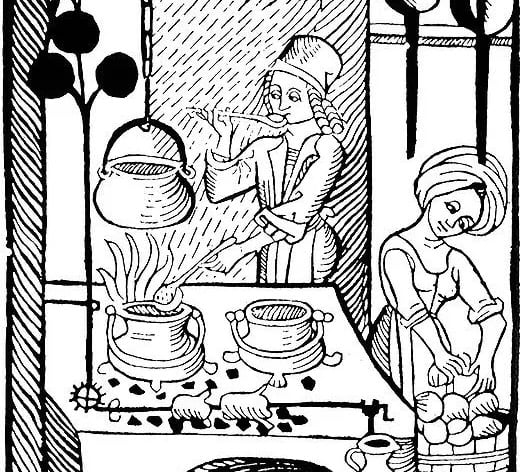
The naming history is revealing. The German word sūr predating the Polish term żur confirms that the soup was known in the multilingual, multicultural medieval Polish state that absorbed German, Jewish, Ruthenian and Hungarian communities alongside ethnic Poles. The name the dish was eventually given in Polish was borrowed from a German word meaning sour, which tells you exactly what was considered the soup’s defining characteristic to those who first described it.
Historical records mention sour rye soups in Poland as early as the 16th century, though the tradition almost certainly predates written documentation. In a time before refrigeration, fermenting grain was a way to extend its usefulness and create variety in the diet. The sour liquid that developed when rye flour sat in water was too valuable to discard, so practical Polish cooks turned it into soup.
The academic authority on this question is Maria Dembińska’s Food and Drink in Medieval Poland, the scholarly reference work on Polish medieval food culture. According to Dembińska, many Polish peasants used to keep, until quite recently, a ceramic pot especially for making zakwas, the sour base for żurek. The pot was not washed, which allowed the fermentation from the previous batch to act as starter for the next. This is the ceramic pot equivalent of a sourdough starter passed down through generations. The unwashed pot was the technology. Every subsequent batch benefited from the accumulated microbial culture of every previous one.
Polish archaeologists have uncovered a number of such pots in medieval finds in Poland, providing material evidence for the longevity of this tradition. The soup is not only documented in texts. It is documented in the ground.
There is also a founding legend that sits alongside the historical record, and it is worth including because it captures something true about the soup even if it is not literally accurate. The most popular legend tells of an innkeeper from Poznań who made a bet with a visitor. According to the terms of the bet, the innkeeper had to prepare the worst soup he could think of. He put sausage trimmings, garlic, bread leaven, old mushrooms, and vegetables in a pot, poured boiling water over it, and served it to the stranger. To the innkeeper’s surprise, the soup turned out to be incredibly delicious, and he lost his bet. A soup invented as a deliberate failure that accidentally became one of the great dishes of Polish cuisine. As origin stories go, it has a particular charm.
The Art and Science of Fermented Soup
Żurek belongs to a family of sour soups that developed across Eastern Europe. What distinguishes żurek is its use of fermented rye as the souring agent rather than beets, sorrel, or added vinegar. This technique likely developed during the medieval period when rye was the dominant grain in Poland and fermentation was a practical necessity for preservation. The sour liquid that developed when rye flour sat in water was too valuable to discard, so practical Polish cooks turned it into soup.
The fermentation science behind zakwas, the sour rye starter that gives żurek its characteristic tang, is the same fundamental biology that underlies all fermented foods. Wild lactic acid bacteria present on the rye flour and in the ambient environment begin to convert the starches in the flour into lactic acid when kept at room temperature with adequate moisture. The acidification that results is what produces the sour flavour and what preserved the preparation from spoilage before refrigeration existed.
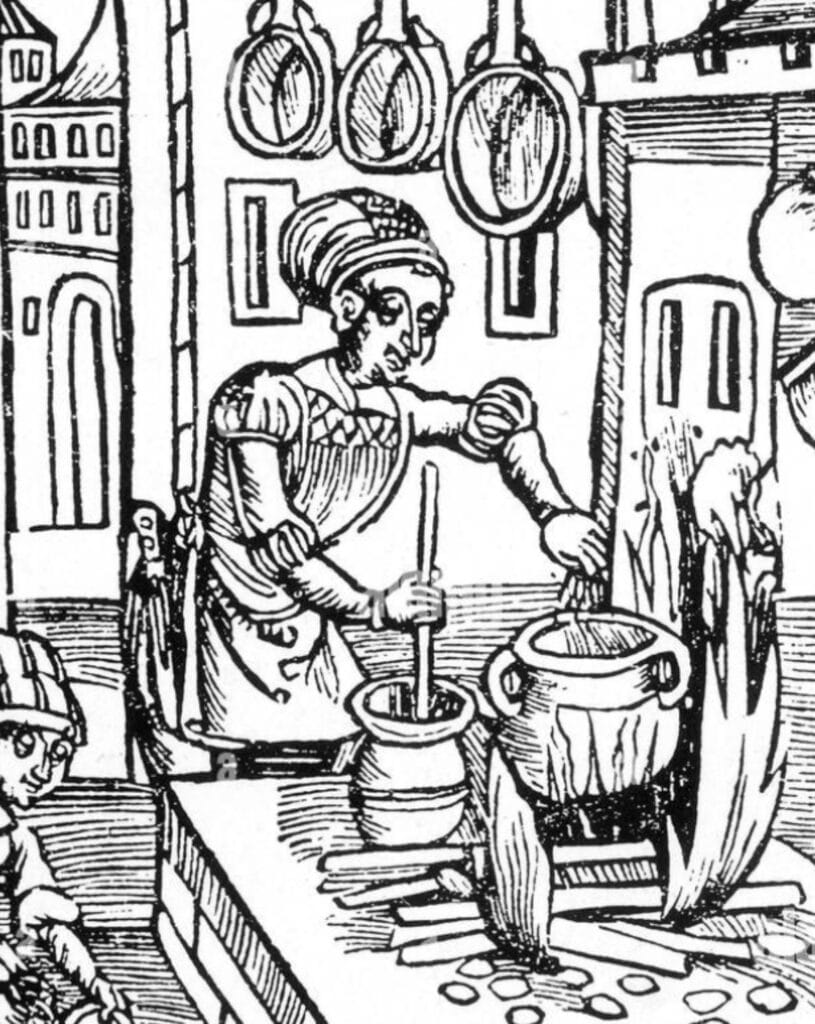
Żurek has documented probiotic properties. Rye sourdough contains beneficial lactobacilli that improve digestive system function and strengthen the immune system. The Polish peasants who kept their unwashed zakwas pots for generations did not know about lactic acid bacteria. They understood, through accumulated practical observation, that the sour starter produced a soup that was nourishing, that kept them well through winter, and that tasted unlike anything else. The science arrived centuries after the practice.
The specific character of rye fermentation is distinct from wheat sourdough fermentation. Rye contains more pentosans, a type of complex carbohydrate, and less gluten than wheat. The fermentation of rye produces a more deeply sour, more complex flavour with earthy and slightly mineral notes that wheat fermentation does not produce. The particular tang of żurek, that quality that is immediately identifiable and completely unlike any other soup in any other tradition, comes from this specific chemistry of rye fermentation. It cannot be replicated with vinegar, lemon juice or any other souring agent. The three-day fermentation is not a tradition to be preserved for sentimental reasons. It is the process that produces the specific flavour and the probiotic content that define the dish.
From Peasant Pot to National Icon: How Żurek Became Poland’s Soup
The history of żurek is deeply rooted in Polish culture, dating back to medieval times. Originally, it was eaten during Lent as a filling yet meatless dish in its basic form. Today, it is particularly associated with Easter celebrations, though it is enjoyed year-round across Poland.
The Lenten connection is critical to understanding how żurek moved from peasant poverty food to national symbol. During Lent, the forty-day period of fasting and abstinence before Easter, meat was prohibited for observant Catholics across Poland. Żurek in its basic form, made with only the fermented rye starter, vegetable broth, garlic and marjoram, was one of the few satisfying, filling preparations that met Lenten restrictions. It was eaten constantly throughout Lent because it was one of the only hot, nourishing, substantive things that could be. By the end of Lent, żurek had become so associated with deprivation and sacrifice that its symbolic meaning was embedded in the culture in ways that transcended its culinary function.
When Lent was over, on Good Friday evening or Great Saturday morning, young people organised a pageant, with songs and short playful poems, as a symbolic goodbye and revenge to the obnoxious dishes. The herring was usually hanged on a tree, and the pot of żurek was buried in the ground. A soup so culturally significant that its symbolic burial marked the end of the season of fasting. That is the measure of a dish that has truly become part of a people’s cultural identity.
The Easter version, served with the addition of white sausage and hard-boiled eggs, represents the return of meat and abundance after weeks of deprivation. Żurek has a thick consistency and a sour, slight milky flavour. Served with a slice of bread or in a loaf of bread, it is a perfect one-pot meal. The bread bowl presentation, still found in restaurants across Krakow, adds another layer of meaning. The bread that was itself fermented, like the soup it contains, serving as both vessel and accompaniment. Poland is a country renowned for its soup culture, and żurek sits at the apex of that tradition. It is simultaneously the oldest, the most distinctively Polish, and the most technically demanding of the great Polish soups.
My Rating & Review
The three-day fermentation is the decision that separates żurek from every other soup I have made for this channel. By the time the zakwas is ready and the soup is assembled, you have invested something in this preparation that you do not invest in anything you can make in an hour. That investment is present in the finished bowl in a way that is genuinely difficult to describe but immediately apparent when you taste it.
Let me describe what żurek actually tastes like for those who have never encountered it. The base of the soup is a deeply complex, sour broth that is unlike any other soup base I have tasted. The fermented rye starter gives it a tangy, slightly earthy, faintly mineral quality that is warm rather than sharp, persistent rather than aggressive. It tastes sour in the way that a good sourdough bread smells sour, which is to say that the sourness is layered and rounded rather than one-dimensional. The marjoram, which is the essential żurek spice and the one that cannot be substituted, adds a warm, slightly floral herbal note that sits perfectly against the rye sourness. The garlic is present but integrated, contributing depth without announcing itself.
Into this extraordinary sour broth goes smoked bacon that has rendered its fat and flavour into the base from the beginning, a biała kiełbasa poached gently in the broth until just cooked through and then sliced into thick rounds, root vegetables that have softened into the liquid and contributed their sweetness as a counterpoint to the sour rye, and a hard-boiled egg placed at the bottom of the bowl so that every spoonful carries a piece of the creamy, rich yolk into the sour broth. The cream stirred in at the end rounds everything, adding a smooth richness that makes the transition from the first sharp sip to the deeply satisfying whole bowl feel completely inevitable.
It is 9.7 out of 10. I made it in an apartment in Krakow from ingredients I bought at a market that has been selling food continuously since the 14th century. I used a rye starter that I mixed as soon as my luggage was down and my jet lag was still in full effect. It was worth every hour of waiting.
Rating: 9.6 / 10
The Recipe: Traditional Polish Żurek
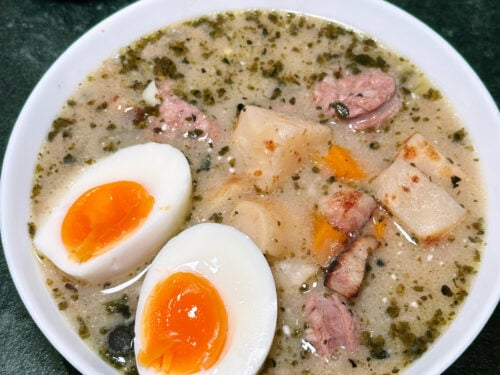
Traditional Polish Żurek

Don’t lose this one.
I’ll email it to you so it’s waiting when you’re ready to cook.
Ingredients
Instructions
Notes
- The three-day fermentation of the zakwas is the most important technical element of this recipe and cannot be abbreviated. A zakwas fermented for only 24 hours will produce a mildly sour soup. Three days produces the deeply complex, layered sourness that defines authentic żurek. The difference is significant and immediately apparent.
- Marjoram is not oregano. They are related but completely different herbs with different flavour profiles. The marjoram called for in żurek has a warmer, sweeter, more floral quality than oregano. Substituting oregano produces a soup that tastes Mediterranean rather than Polish. Dried marjoram is available at Polish delicatessens, at most European grocery stores and increasingly at well-stocked supermarkets.
- Biała kiełbasa, Polish raw white sausage, is the specifically documented traditional sausage for żurek. It is available at Polish delicatessens worldwide and from online Polish food retailers. If genuinely unavailable, a mild bratwurst or fresh pork sausage is a functional substitute, but the specific garlic and marjoram seasoning of biała kiełbasa is what integrates so perfectly with the marjoram in the soup.

Turned out great, though a little less sour than I expected; I suspect I should have given my starter an additional day. I also added mushrooms and they were a big hit.