Most food history requires educated guesswork. You find a recipe in a manuscript, you translate it, you make reasonable assumptions about the ingredients that have changed or disappeared over the centuries, and you reconstruct something that is probably close to the original. Probably. The meal I made this week requires almost none of that guesswork. Because this meal was analysed in a laboratory.
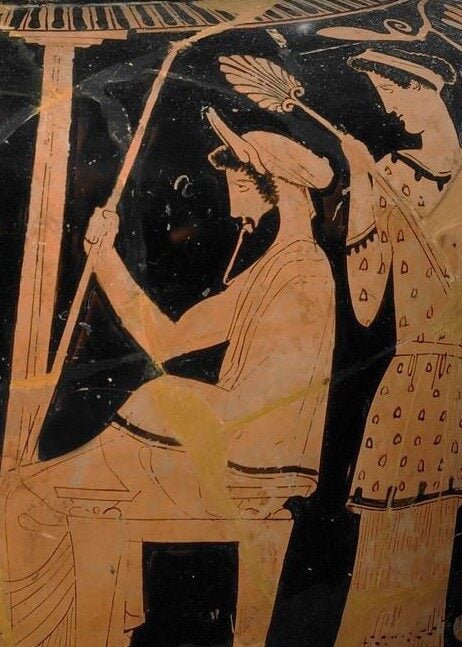
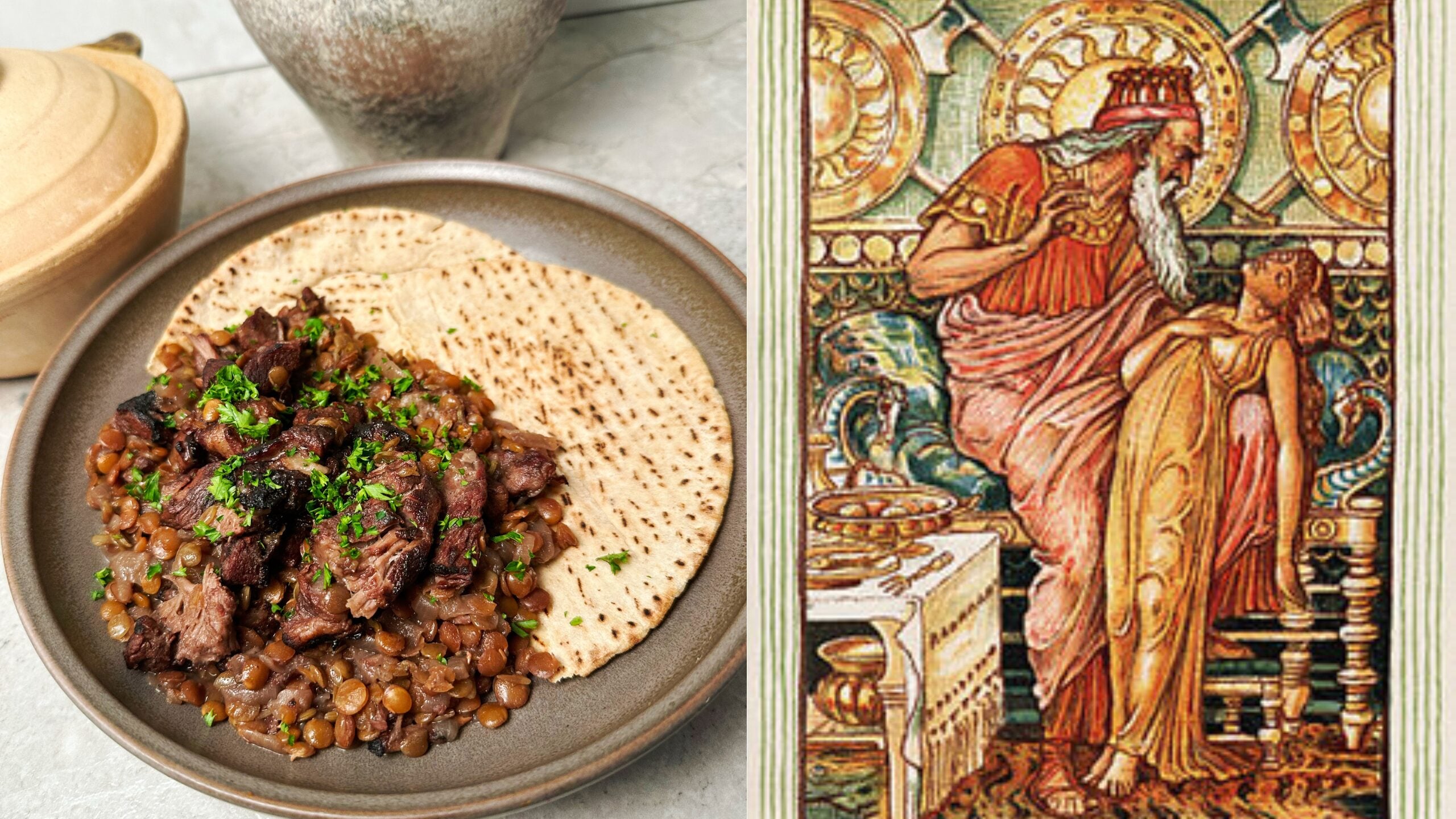
The feast of the real King Midas, served at his funeral in Gordion in central Turkey around 700 BC, is the most scientifically documented ancient meal in history. The food residue was preserved in bronze vessels for nearly three thousand years in an airtight tomb. It was scraped out by archaeologists, sent to a laboratory, and run through some of the most sophisticated chemical analysis equipment in the world. The menu came back with extraordinary precision. Barbecued lamb or goat. Lentils. Olive oil. Honey. Wine. Anise and fennel. And a mixed fermented beverage of wine, beer and mead served from bronze cauldrons into individual drinking bowls for approximately one hundred mourners.
I made the stew. It is an 8.4 out of 10 and genuinely one of the better things I have cooked for this channel, not because it is the most complex or the most refined but because of what it is. This is as close as any living person has come to tasting the food of 700 BC Phrygia. That is worth something independent of how it tastes. And it tastes very good.
The Discovery: How Scientists Read a 2,700 Year Old Menu
The tomb was first excavated by a team from the University of Pennsylvania Museum of Archaeology and Anthropology in 1957 at the ancient Phrygian capital of Gordion in central Turkey, a site now known as Yassıhöyük near modern Ankara. Inside they found what remains the largest Iron Age drinking set ever discovered: 157 bronze vessels including cauldrons, jugs, bowls and serving equipment, along with five pounds of preserved organic residue that had survived in the essentially airtight cedar and juniper wood chamber for nearly three millennia.
Next week
I cook these before I write them. Some of it never makes the post.
The failures, the source documents, the version that actually tasted good. That part goes out by email, and next week’s is already on the stove.
 Written and cooked by Donnie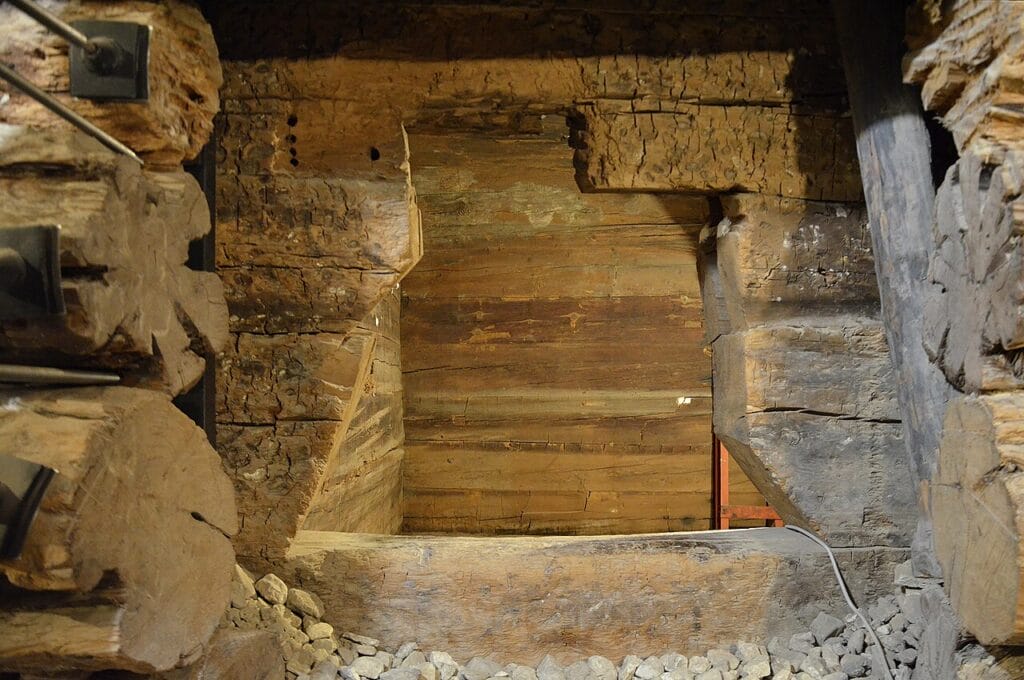
The tomb itself was extraordinary. Built from massive cedar and juniper logs fitted together without nails, the inner chamber had created a seal so effective that the organic material inside had desiccated rather than rotted, preserving it in a form that was scientifically analysable two thousand years later. The bronze vessels, some of the finest metalwork from the ancient world, were decorated with ram and lion heads and represented a level of craftsmanship and wealth consistent with a royal burial of significant importance.
For forty years the residues sat in storage at the Penn Museum, catalogued but not fully analysed. Then in the 1990s archaeochemist Dr Patrick McGovern, director of the Biomolecular Archaeology Laboratory at the Penn Museum, began applying the full arsenal of modern analytical chemistry to those ancient scraps. The techniques he used included infrared spectroscopy, liquid chromatography, mass spectrometry and gas chromatography. Each technique identifies specific chemical compounds in the residue and cross-references them against known chemical signatures of food substances.
The results, published in the journal Nature on December 23, 1999, were extraordinary in their precision. The fatty acids and cholesterol profile confirmed sheep or goat. Polycyclic aromatic hydrocarbons, the specific chemical compounds produced by cooking meat over an open fire, confirmed the meat had been barbecued before being added to the stew. A specific plant steroid fingerprint identified lentils. Anisic acid confirmed anise or fennel. Elaidic acid confirmed olive oil. The presence of calcium oxalate from grape skins and the chemical signatures of honey and barley fermentation confirmed the mixed beverage of wine, mead and beer.
McGovern did not stop at analysis. He used the chemical profile to reconstruct the actual beverage and partnered with Dogfish Head Craft Brewery in Delaware to produce it commercially. The beer, called Midas Touch, uses Muscat grapes, thyme honey, barley and saffron, tinted golden from the saffron residue McGovern identified in the bronze cups. It is still available today. A peer-reviewed, scientifically reconstructed drink from the funerary feast of King Midas is on the shelf at your local bottle shop. This fact never stops being remarkable.
On September 23, 2000, the Penn Museum held a replica feast using McGovern’s analysis as the blueprint. Scholars, archaeologists and guests were served the reconstructed meal in an approximation of the original context. It was the first time anyone had eaten a version of this food in roughly 2,700 years. The recipe I am using is built on that reconstruction.
What the Discovery Tells Us: Food, Power and the Ancient World
The Midas feast is not just a food history curiosity. It is a window into how the ancient world understood the relationship between food, power, community and death.
The tomb is almost certainly that of King Midas, though the identification is based on circumstantial and contextual evidence rather than a direct inscription. The Greek legend of King Midas with his golden touch was based on a real Phrygian king known to the Greeks as Midas, who ruled from Gordion in the late 8th and early 7th centuries BC and was documented in Assyrian records as a contemporary of Sargon II. The tomb at Gordion dates to approximately 740 to 700 BC and is consistent with a royal burial of the period. Whether or not it is definitively the legendary Midas, it is the tomb of someone extraordinarily powerful.
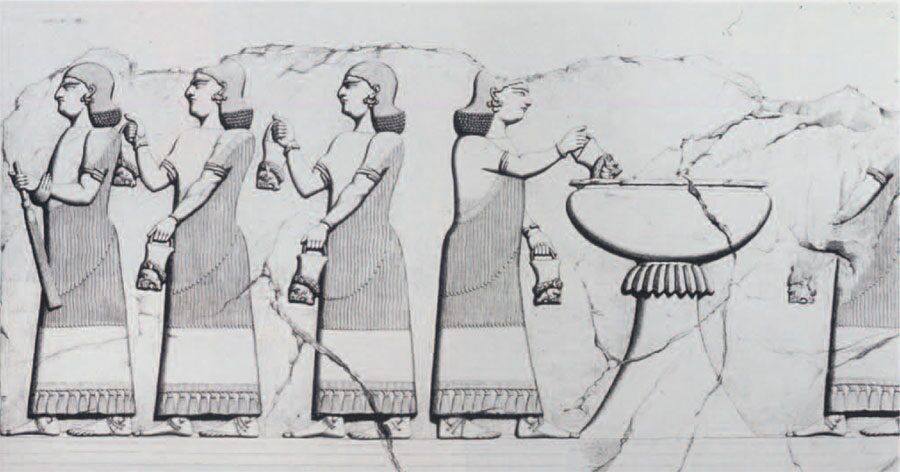
The food choices tell us several things simultaneously. The presence of imported olive oil in a region where olive trees do not grow confirms the feast was deliberately stocked with luxury ingredients. Olive oil at Gordion in 700 BC was not a casual pantry item. It was a statement of wealth and connection to the broader Mediterranean trade network. The honey, the wine, the lentils prepared with imported spices, all speak to a feast that was specifically designed to honour the dead with the finest available provisions.
The quantity of drinking vessels and the approximately one hundred portion sizes suggested by the number of individual bowls indicates a communal feast rather than a private ceremony. One hundred people gathered to mourn a king, eat a shared meal and drink a shared beverage from the same cauldrons. The food was not just sustenance. It was the physical mechanism of collective grief, community solidarity and respect for the dead. The mourners eating the same meal from the same vessels were participating in a ritual that converted private loss into shared experience. This is not fundamentally different from the food served at a funeral reception today. The specific dishes have changed. The purpose has not.
McGovern noted one additional detail that deepens the picture. Olive trees do not grow near Gordion. The olive oil in this feast was imported, probably from the Aegean coast or from further Mediterranean trading partners. That import implies a supply chain, a trade relationship, and a deliberate choice to use a foreign luxury ingredient for a burial meal. Someone decided that this feast was important enough to import olive oil for. The distance that oil travelled to reach the table of King Midas’s mourners is invisible in the chemical analysis but present in the logic of it. The best available ingredients, from wherever they could be obtained, for a king who deserved nothing less.
My Rating
I was honestly not sure what to expect from this one. Ancient recipes reconstructed from chemical residue analysis have a tendency to produce something technically interesting and gastronomically modest. The Spartan black broth was fascinating to make and very difficult to enjoy. The Mongolian borts (jerky) was historically compelling and essentially unpalatable to a modern palate. The Midas feast is neither of those things.
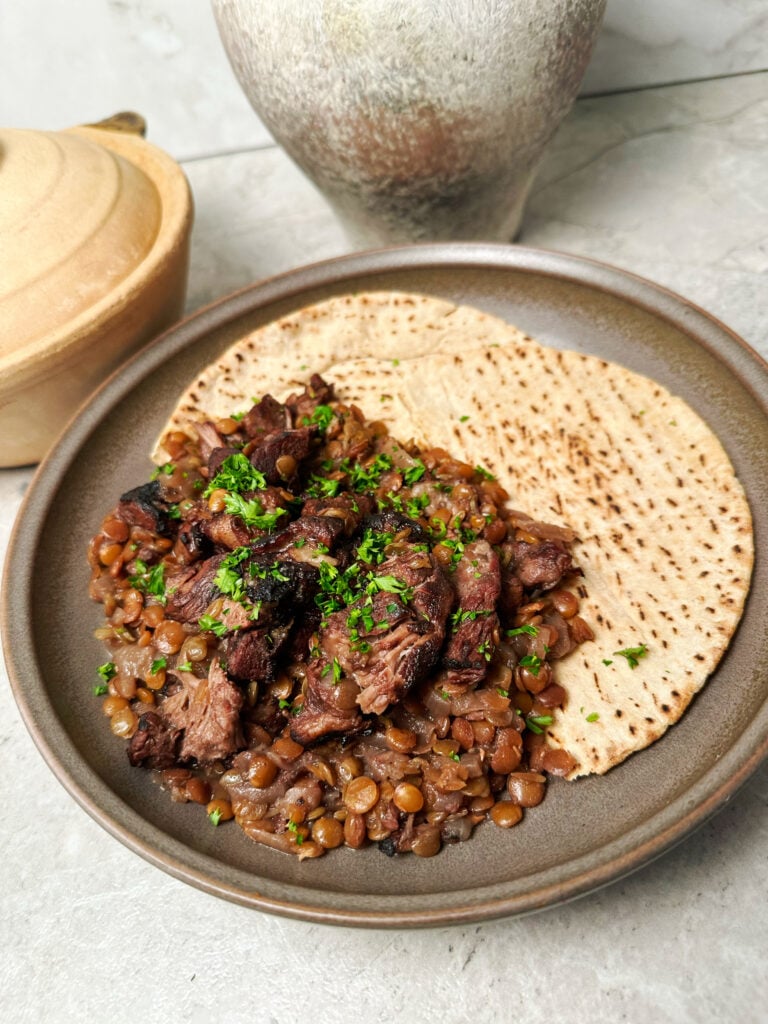
Pre-barbecuing the lamb with the wine and honey marinade before adding it to the lentil stew is a decision that makes complete culinary sense independently of any historical context. The char from the grill adds a complexity to the braised stew that you cannot replicate by any other method. The anise and fennel, which I was uncertain about, integrate into the stew over the cooking time in a way that reads as warmly herbal rather than aggressively liquorice-flavoured. The honey adds a background sweetness that rounds out the acidity of the wine without making the dish overtly sweet. The lentils dissolve partially into the broth and thicken it into something genuinely satisfying.
This is a meal that fits the modern palate without significant translation. It is a well-constructed braised lamb and lentil stew with interesting spicing and a historical provenance of extraordinary significance. You could serve it at a dinner party without the context and it would be received as a very good lamb stew. With the context, it is one of the most interesting meals on this channel.
Source: “The Funerary Banquet of ‘King Midas’.” Expedition Magazine 42, no. 1 (March, 2000): -. Accessed May 12, 2026. https://www.penn.museum/sites/expedition/the-funerary-banquet-of-king-midas/
Rating: 8.4 / 10
The Recipe: King Midas’s Funerary Feast
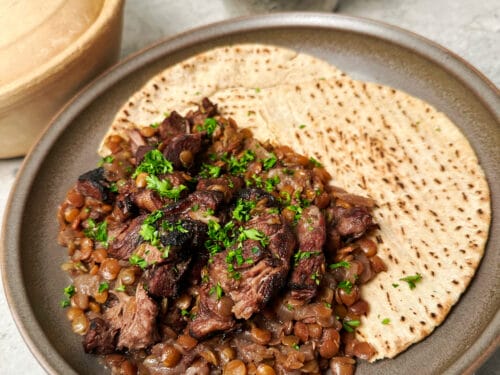
The Funerary Feast of King Midas: Barbecued Lamb & Lentil Stew

Don’t lose this one.
I’ll email it to you so it’s waiting when you’re ready to cook.
Ingredients
Instructions
Notes
- The charcoal barbecue step is what separates this from a standard lamb and lentil stew. The polycyclic aromatic hydrocarbons are not just a chemical detail. They produce a specific smoky, complex depth in the finished stew that cannot be replicated by browning in a pan. Use a charcoal grill if at all possible. A gas grill produces a lesser but acceptable result. A cast iron pan over high heat is a last resort.
- Raw honey is worth using here. The floral quality of raw unfiltered honey is more complex than processed honey and contributes a noticeable difference to the finished stew. It is also more historically accurate. Processed commercial honey did not exist in 700 BC Phrygia.
- For the drink alongside: Dogfish Head Midas Touch beer is the scientifically reconstructed beverage from this exact feast, commercially available at most specialty beer retailers and online. Serving the stew with a glass of Midas Touch is the closest possible approximation of the complete Gordion funerary feast experience available to a person in the 21st century. It is worth doing.