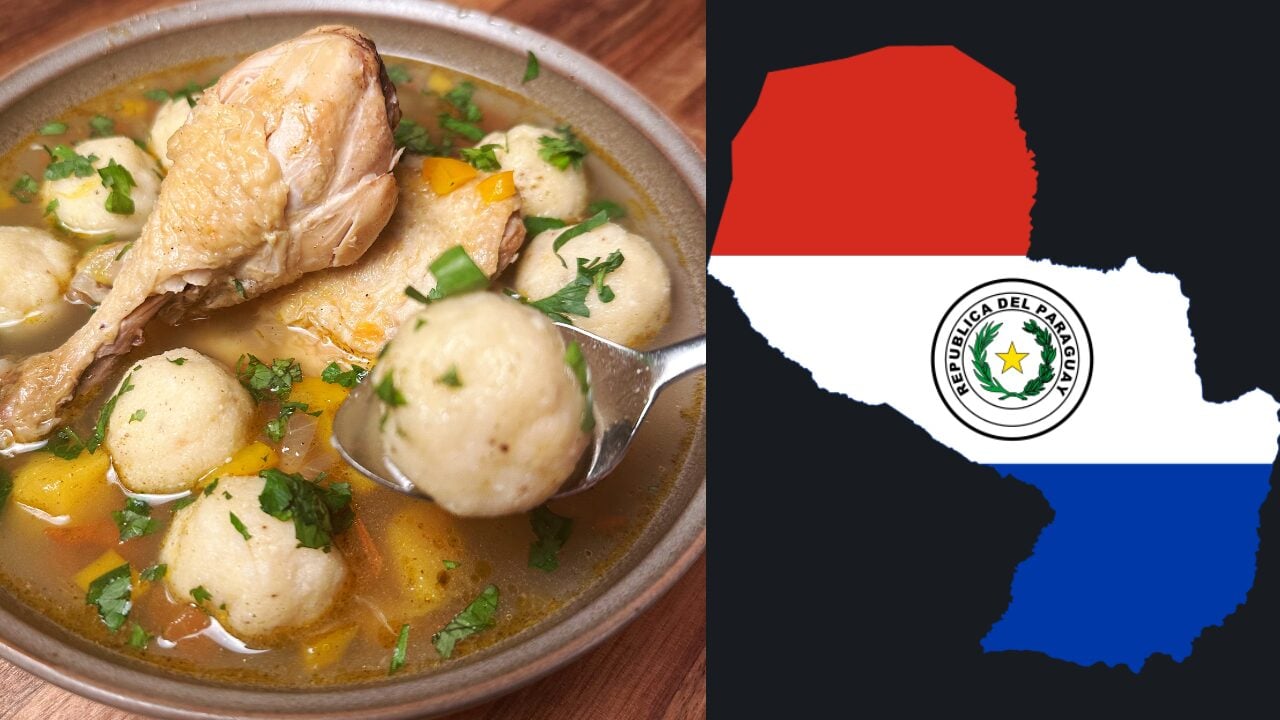
There are certain dishes that taste like a country. Not because they are flashy or complicated, but because they carry generations in a single spoonful. Vori Vori is that dish for Paraguay. It is humble. It is hearty. It is deeply rooted in the land. And yet, when you begin to peel back the layers, you realize this simple soup tells a story of Indigenous resilience, colonial influence, war, survival, and national identity.
If you’re enjoying my work, consider picking up an e-cookbook at Eats History Shop, now 40% Off!

At first glance, it looks like chicken soup with corn dumplings. But that description barely scratches the surface. The little golden spheres floating in the broth are not just dumplings. They are maize, language, and history rolled into one. When I started researching Vori Vori, I quickly realized I wasn’t just making soup. I was stepping into one of South America’s most enduring culinary traditions.
Today, Vori Vori is considered a national treasure in Paraguay. It is served in homes, restaurants, and celebrations. And recently, TasteAtlas ranked it among the best soups in the world, cementing what Paraguayans have known for centuries. This is not just comfort food. It is cultural identity in a bowl.
Next week
I cook these before I write them. Some of it never makes the post.
The failures, the source documents, the version that actually tasted good. That part goes out by email, and next week’s is already on the stove.
 Written and cooked by Donnie
The Origins of the Soup
Vori Vori predates Paraguay as a nation. Its roots stretch back to the Guaraní people, who inhabited what is now Paraguay, northeastern Argentina, and parts of southern Brazil long before European arrival. Their diet centered on maize and cassava, both staples of their agricultural system. Corn in particular was foundational. It was versatile, nourishing, and adaptable to broths and stews.
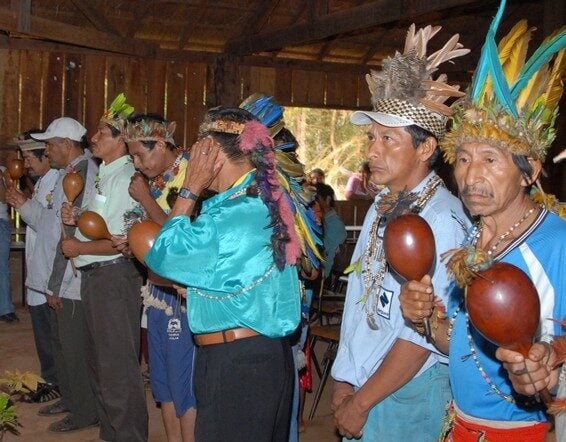
The technique of forming small cornmeal dumplings and cooking them in liquid fits perfectly within Indigenous food systems. It was practical. It stretched resources. It created a thick, sustaining broth from simple ingredients. In a world without modern refrigeration or imported goods, this method made sense. It was food built around the land.
The name itself tells the story of its origins. In Guaraní, repetition indicates the plural. “Vori” means little ball. “Vori Vori” means little balls. Linguistically, the word evolved from the Spanish “bolita.” Indigenous speakers adapted it into “borita,” which eventually became “bori” or “vori.” Even the name is a blend of cultures. Language and food intertwined.
From its earliest form, Vori Vori was not elaborate. It was maize, broth, and what could be gathered or raised locally.
Spanish Influence and Cultural Blending
When Spanish colonization expanded into the region and Jesuit missions took root in the 17th and 18th centuries, new ingredients entered Guaraní life. Cattle were introduced. Dairy production followed. European-style fresh cheese became available. And this is where Vori Vori began to evolve.
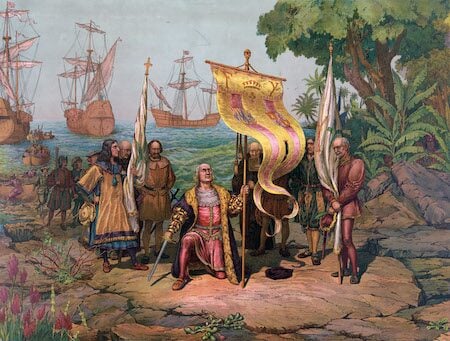
The addition of fresh cheese to the cornmeal dumplings likely emerged from this cultural exchange. Indigenous maize-based broths combined with Spanish dairy practices, and something uniquely Paraguayan formed. This was not replacement. It was fusion through necessity and proximity.
Jesuit missions were complex places of cultural negotiation. They were not simply religious outposts. They were agricultural centers and hubs of economic and social mixing. Indigenous techniques met European livestock and farming systems. In food, that blending is visible and tangible.
Vori Vori is a perfect example of how colonial contact reshaped cuisine without erasing its roots. It remained maize-centered and Indigenous in structure, but enriched by cheese and later chicken. It became a hybrid that represented the new society forming in the region.
Vori Vori and the War of the Triple Alliance
The 19th century was devastating for Paraguay. Between 1864 and 1870, the War of the Triple Alliance pitted Paraguay against Argentina, Brazil, and Uruguay. The conflict left the country economically and demographically shattered. Food scarcity became a defining reality.

In times of war, cuisine simplifies and intensifies. Meals must be filling, calorie-dense, and practical. Vori Vori fit that need perfectly. A broth fortified with chicken and enriched with cornmeal and cheese dumplings provided protein, carbohydrates, and sustenance in a single pot. It was adaptable and built from ingredients that could be sourced locally.
Soldiers required strength and endurance. Families required survival. This soup met both needs. It was not extravagant. It was dependable. And during a time when the nation itself was fighting for survival, dependable food mattered.
Its association with this period helped solidify its identity as more than just a dish. It became tied to resilience. To recovery. To continuity. In a country rebuilding itself after catastrophic loss, Vori Vori remained.
An Icon of Paraguayan Cuisine Today
Today, Vori Vori de Gallina is the most popular version of the dish. While variations exist with squash, rice, milk, or oil, the heart of the soup remains the same: a rich broth and those unmistakable corn and cheese dumplings.
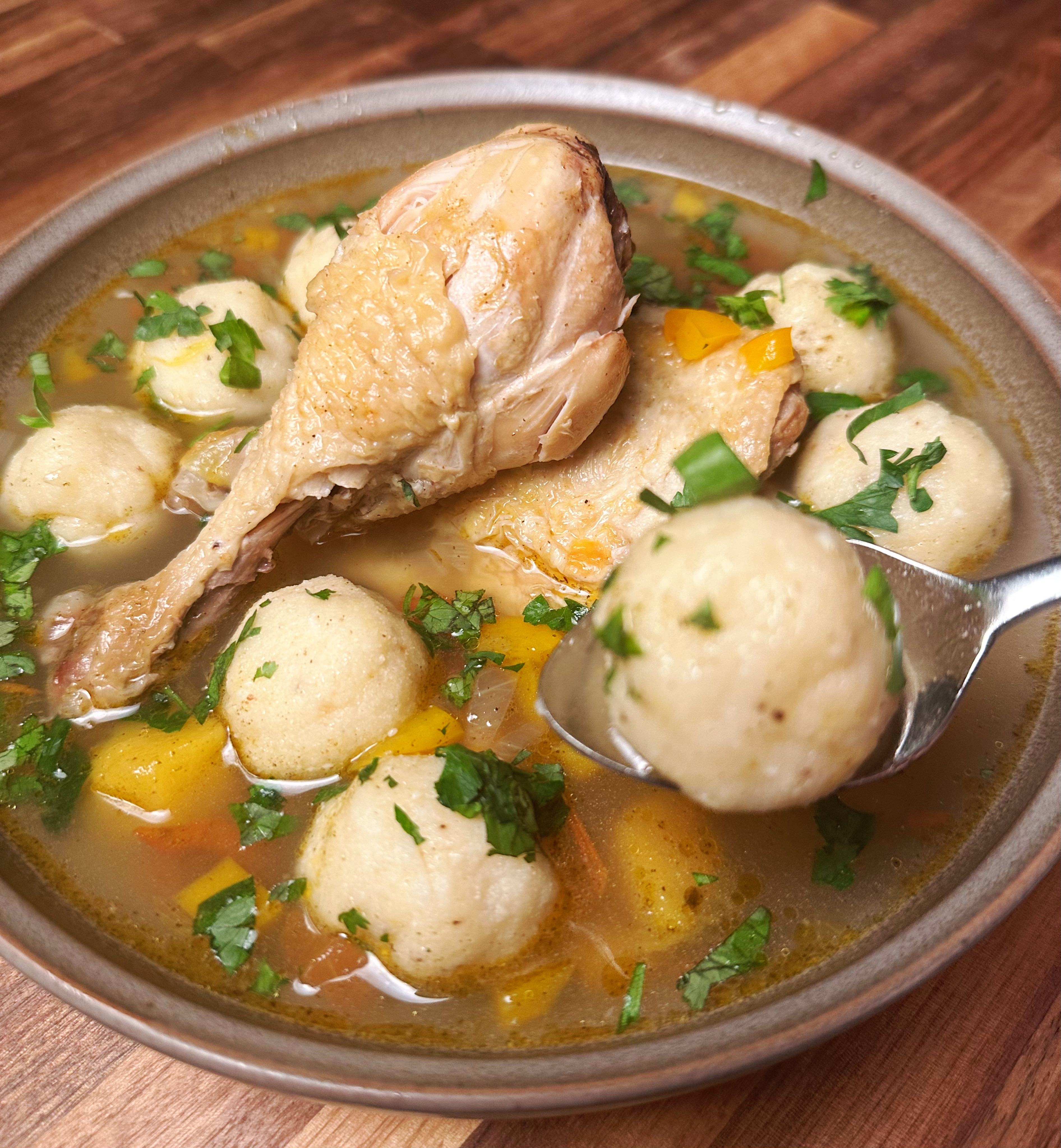
Taste Atlas recently ranked Vori Vori as one of the best soups in the world. That recognition speaks to how deeply loved it is beyond Paraguay’s borders. But for Paraguayans, it never needed global validation. It has always been iconic.
When you sit down with a bowl of Vori Vori, you taste layers of history. Indigenous maize agriculture. Spanish dairy influence. 19th-century resilience. Modern pride. It is thick, comforting, slightly sweet from the corn and squash, savory from the broth and herbs, and deeply satisfying.
And that is why it endures. It is not trendy. It is not theatrical. It is simply honest.
Vori Vori de Gallina Recipe
Vori Vori

Don’t lose this one.
I’ll email it to you so it’s waiting when you’re ready to cook.
Ingredients
Instructions
Notes
- Use fine cornmeal, not coarse: The texture of the dumplings depends on this. Coarse cornmeal will make them gritty and crumbly. Fine cornmeal gives you that soft, cohesive interior. I used white cornmeal, like harina de maiz.
- Add broth slowly to the dumpling mixture: You want a moldable dough, not sticky and not dry. Too much liquid and they’ll fall apart. Too little and they’ll be dense.
- Don’t rush the broth: Let the chicken simmer gently. This isn’t a 30-minute soup. The longer simmer extracts flavor and creates the depth that makes this dish truly iconic.