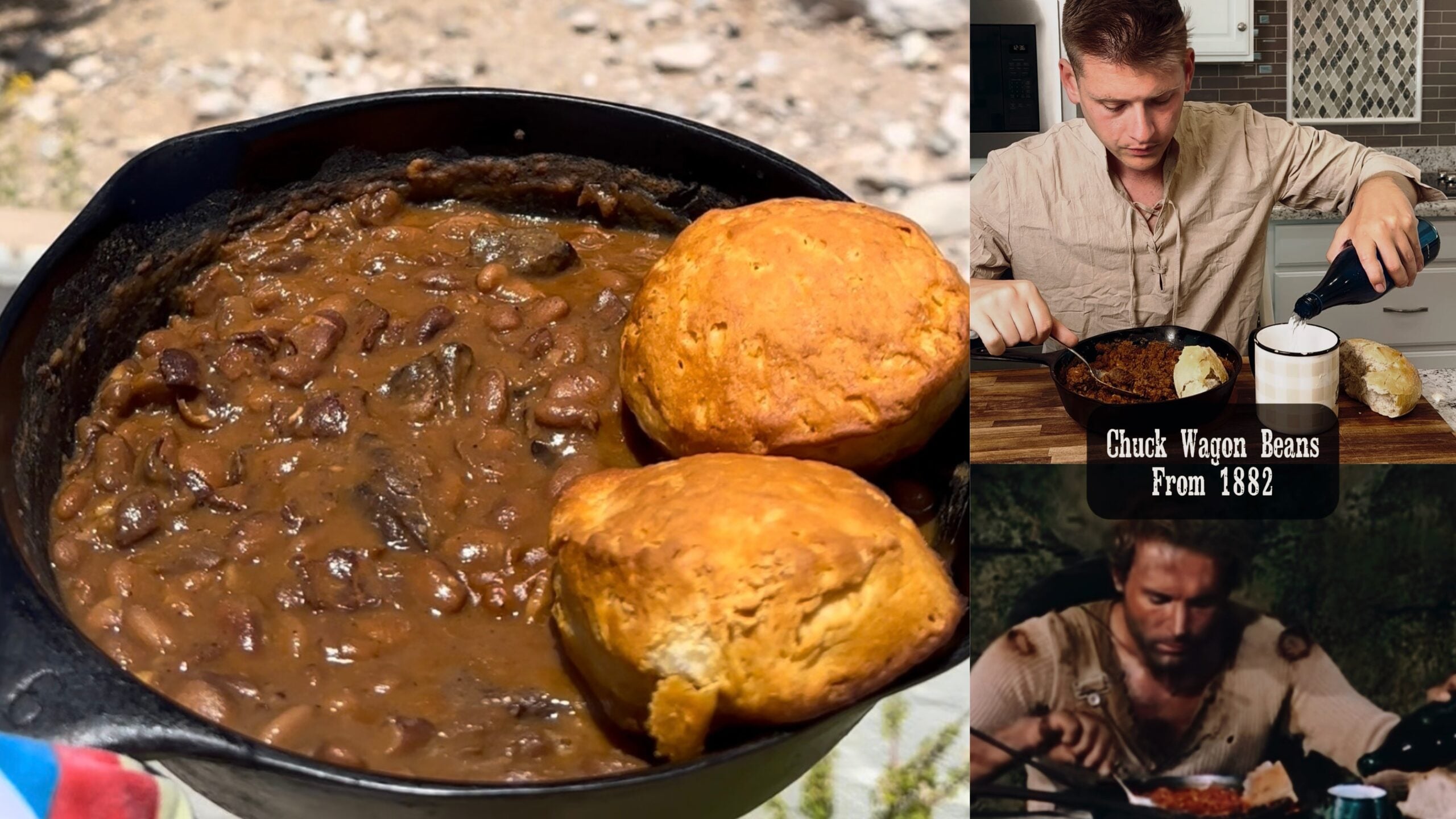
Today was an awesome day for Eats History. I got to hop on ABC 15’s Sonoran Living this morning to talk a little about the channel, America’s 250th coming up, and cook up some history live on TV. And when it came time to pick a dish to represent Arizona’s early days, there was no better choice than a true chuckwagon recipe straight from the territorial era. Simple, hearty, and built for survival, this is about as Arizona as it gets.
The Source
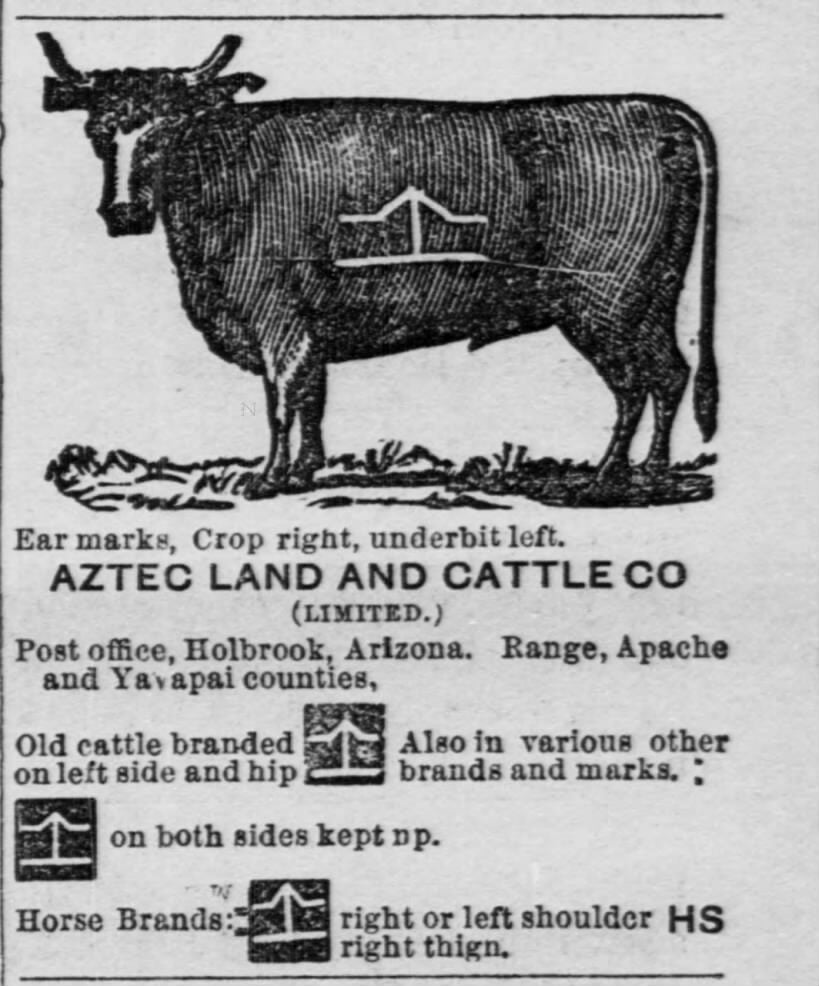
This recipe is pulled together from the real ingredient lists used by outfits like the Hashknife, run by the Aztec Land and Cattle Company out of Holbrook, Arizona Territory, starting in the 1880s. At its peak, the Hashknife was one of the largest cattle operations in North America, running tens of thousands of head across roughly a million acres of northern Arizona. To keep an operation that size fed, two separate chuck wagons rolled alongside the herds, one covering the eastern range and one the west, rolling kitchens that had to survive weeks on the trail with zero refrigeration and zero grocery stores in sight.
The chuck wagon itself wasn’t even invented in Arizona. The credit usually goes to Texas cattleman Charles Goodnight, who in 1866 took an old Army surplus Studebaker wagon and bolted a hinged “chuck box” onto the back of it, complete with drawers and shelves for spices, tools, and supplies, and a flat worktable that folded down when it was time to cook. Underneath sat the “boot,” a deep storage box for the all-important cast iron Dutch ovens. By the time outfits like the Hashknife were running cattle through Arizona Territory two decades later, this design had become standard equipment on basically every serious cattle operation in the American West.
I also leaned on firsthand accounts from the men who actually cooked on these outfits, almost universally nicknamed “Cookie.” Cookie’s official title undersells the job entirely. He was the second-highest ranking man on the entire operation, just below the trail boss, and his actual responsibilities went far beyond the stove. Firsthand accounts describe him doubling as barber, banker, doctor, dentist, letter writer, and referee whenever tempers flared in camp, which on a five-month cattle drive, happened plenty. He was up hours before anyone else, often around three in the morning, grinding coffee and pinching off a piece of his precious sourdough starter to start the day’s biscuits. He had to be at the next camp, sometimes miles ahead, with a hot meal ready before the exhausted crew rode in. A bad cook could break the morale of an entire outfit. A good one earned double the pay of a regular hand and the kind of loyalty that meant nobody outside the crew was ever allowed to insult him without consequence.
Next week
I cook these before I write them. Some of it never makes the post.
The failures, the source documents, the version that actually tasted good. That part goes out by email, and next week’s is already on the stove.
 Written and cooked by Donnie
Why Cattle Herding Was a Rough Life
It’s easy to romanticize this era, the open range, the campfire, the cowboy riding into the sunset. The reality was brutal. Cowboys were up before sunrise, in the saddle almost immediately, and a single day could mean covering 20 miles or more across rough canyons, thick brush, and unpredictable weather on horseback, with no real days off during a roundup. Injuries were common, and real medical help could be days away. On an outfit the size of the Hashknife, with terrain rough enough that cattle would disappear into deep canyons for years and come out “wild as deer,” the work was relentless and genuinely dangerous.
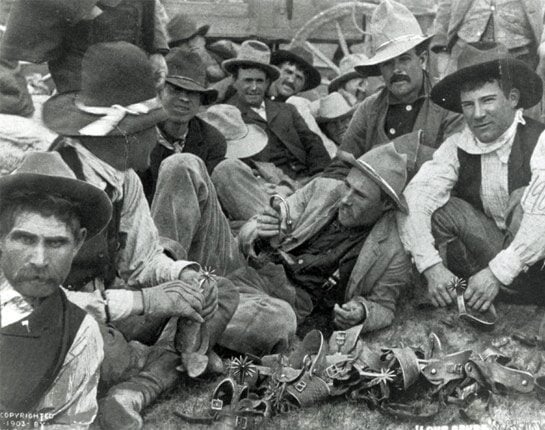
The food reflects exactly how hard that life was. There was no real variety, and there couldn’t be. Chuck wagons stocked provisions meant to last thirty days or more between supply points, which meant everything carried had to survive weeks of jostling in the heat without spoiling. Dried beans were the backbone of the operation because they were lightweight, kept for months, and required nothing but water and time. Beef was never in short supply, for obvious reasons, and salt pork or bacon rounded things out because the salt content kept it from going bad on the trail. Biscuits were the one piece of comfort a cowboy could count on every single day, made fresh from a sourdough starter the cook kept alive and protected, sometimes literally clutching the crock against his own body on cold nights so the culture wouldn’t die. This wasn’t a meal built for flavor first. It was a meal built for survival, fueling men through brutal days on some of the harshest land in the country.
The Rating
This one earns its place. The beans pick up a deep, smoky richness from the bacon and a touch of sweetness from the molasses, the beef gets a beautiful crust from the sear before braising down fork-tender in the bean liquid, and the biscuits are everything a good biscuit should be, flaky, buttery, and perfect for soaking up the juices at the bottom of the skillet. It’s not a complicated dish, but every component earns its spot on the plate. A true taste of the trail.
And I have to give a quick shoutout, while I was stirring that pot of beans, I couldn’t resist throwing in a little Terence Hill impression from They Call Me Trinity, the iconic bean-eating scene. If you know, you know. If you don’t, go watch it immediately, then come back and make this dish.
Rating: 7.7/10
The Recipe
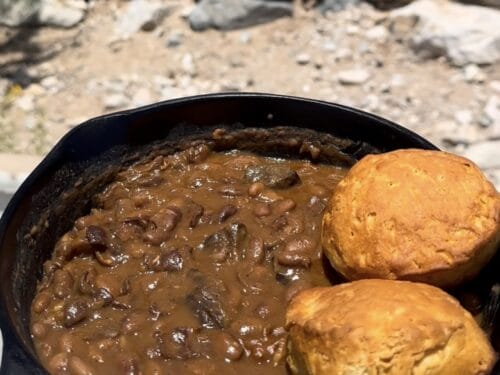
Chuckwagon Beans, Beef, and Biscuits

Don’t lose this one.
I’ll email it to you so it’s waiting when you’re ready to cook.
Ingredients
Instructions
Notes
- Soak your beans the night before. Dried pinto beans need a full overnight soak to cook properly in the simmer time listed. Skipping this step will significantly extend your cook time.
- Don’t skip the sear on the beef. That deep brown crust is where most of the flavor in this dish comes from, take the time to get a real sear before braising.
- This dish is even better the next day. Like most bean and beef dishes, the flavors deepen significantly overnight, so don’t be afraid to make it ahead and reheat.