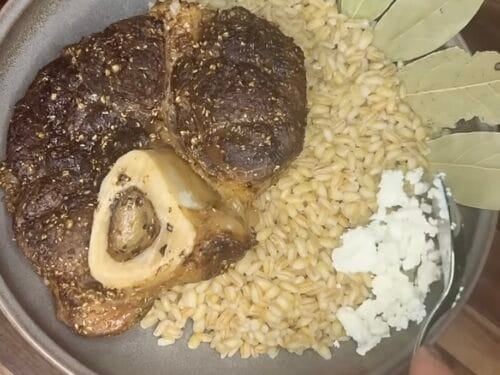

Thigh-Roasted Beef with Barley & Laurel is a single-serving dish inspired by ancient Greek sacrificial rituals to Zeus. It features a seared and slow-roasted beef shank (symbolizing the fat-wrapped thighbone burned for the gods), served over a bed of tender pearl barley—a staple grain in Greek offerings. The meat is infused with salt and coriander seeds, evoking sacred herbs used in ritual cooking.
Prep Time 15 minutesmins
Cook Time 1 hourhr
Ingredients
For the Meat:
2lbsbeef shank bone-inthigh meat, ideally
2tbspolive oil
1tspsea salt
1tspcrushed coriander seeds
For the Barley:
1cupbarley groatsor pearl barley
2cupswater
1tbspolive oil
Pinchof salt
Optional:
Red wine for servingas was customary in libation feasts
Smoked salt or hardwood chips for open-flame cookingfor authentic char
Instructions
Prepare the Beef (Thigh Tribute Style):
* Rub the beef with olive oil, salt, coriander, and crushed bay leaf.
* Traditionally, the thigh bone would be burned as an offering. To recreate the ritual symbolically, you may wrap a cleaned bone or small piece of marrow bone in parchment and bay leaves and set it near the grill while cooking — a respectful nod to the ancient rite.
Roast the Meat:
* Grill or roast the beef over an open flame or hot coals, turning every 10 minutes, until deeply browned and tender (approx. 35–45 minutes, depending on thickness).
* Baste with olive oil occasionally. Optional: add a piece of wood to the grill to create a smoky aroma, as the ancient Greeks associated burnt offerings with the rising scent pleasing the gods.
Cook the Barley:
* In a pot, combine barley, water, olive oil, and salt.
* Simmer uncovered for 25–30 minutes until the barley is tender and water absorbed.
* Fluff and drizzle with a little extra olive oil to finish.
Serve the Meal:
* Plate sliced roasted beef over barley with laurel garnish.
* Pour a symbolic libation of red wine in honor of Zeus before eating (a small amount spilled on the ground, as was custom).
* Eat outdoors if possible, as sacrificial meals were usually held in open courtyards or temple precincts.
Video
Notes
The dish is simple yet powerful, reflecting the bold, natural flavors of ancient Greek cuisine: olive oil, bay leaf, barley, and fire.
The focus is on the ritual act, not elaborate spicing. The aroma of roasted meat and laurel alone was considered sacred.
Communal dining, with everyone sharing from large platters, was essential to reinforcing civic and spiritual unity.