From Mount Olympus to smoky altars across the ancient Greek world, Zeus was the undisputed king of the gods. His thunderbolts could split mountains, but even he needed offerings. Among the most sacred of these was a ritual feast: the fat-wrapped thigh of a bull, burned on the altar while mortals dined on the rest. This wasn’t just dinner—it was divine diplomacy.
In this post, we recreate a dish inspired by Greek sacrificial rites, blending slow-roasted beef with barley and laurel in a tribute to the gods. Whether you’re curious about the flavors of Olympus or simply want a rustic, satisfying meal with mythological roots, this one’s for you.
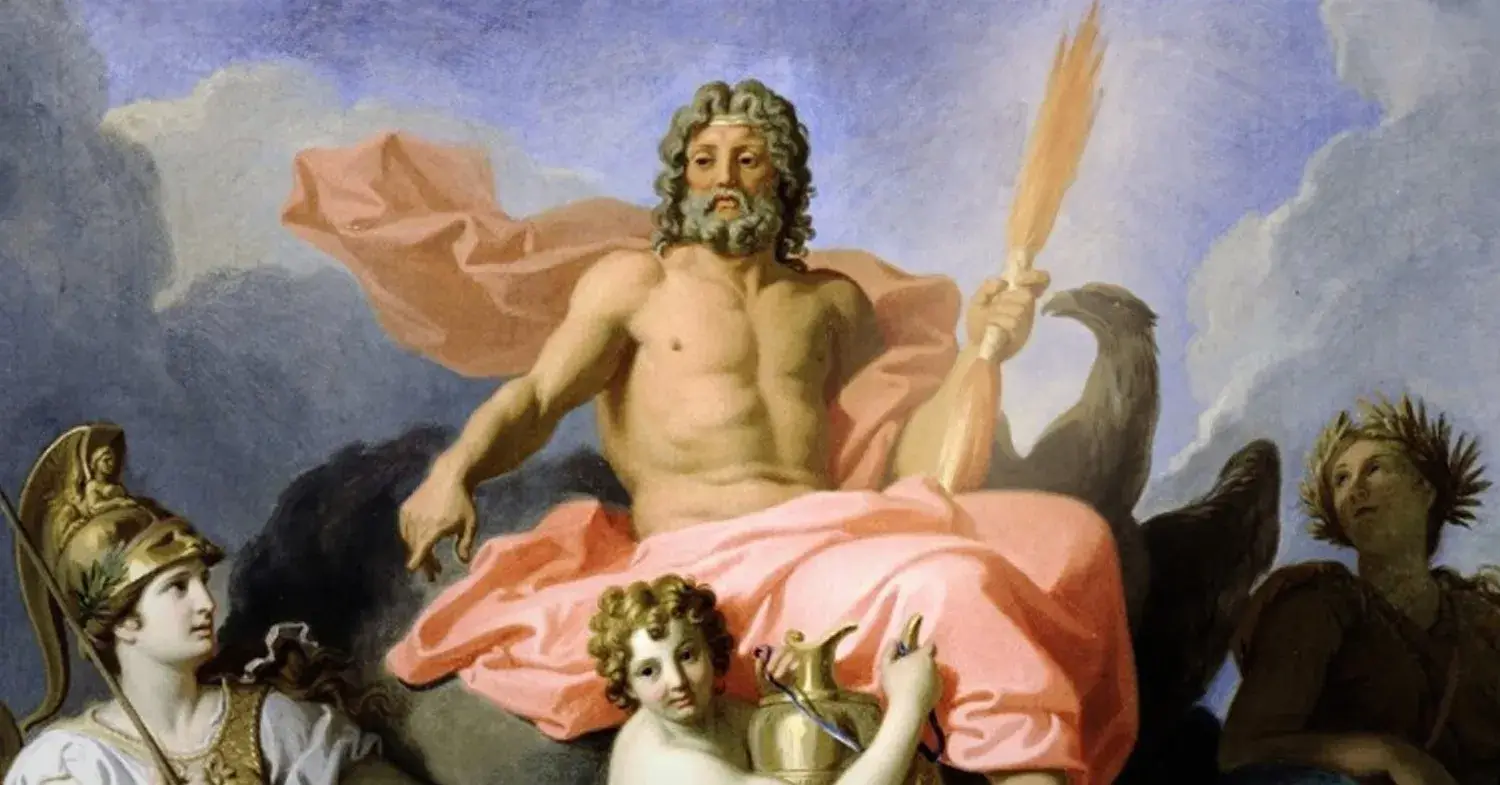
Zeus: God of Sky, Thunder, and Justice

Zeus, son of Cronus and Rhea, overthrew the Titans and established himself as ruler of Olympus. He governed law, order, oaths, and weather. From storming Troy to appearing in the form of bulls, eagles, or golden showers (classic Zeus), he was as much feared as he was revered.
Worship of Zeus included libations, animal sacrifices, and burned offerings, especially the mēroû kreas Zēníon (the “god’s portion of meat”). The most honored parts—fat-wrapped thigh bones—were placed on the altar and burned for Zeus, while humans consumed the rest in a sacred shared meal.
Next week
I cook these before I write them. Some of it never makes the post.
The failures, the source documents, the version that actually tasted good. That part goes out by email, and next week’s is already on the stove.
 Written and cooked by Donnie
The Myth of Prometheus and the First Sacrifice
The origin of Zeus’s preference for the thighbone offering comes from a foundational Greek myth involving the Titan Prometheus. According to Hesiod’s Theogony, Prometheus was a cunning trickster who sought to favor mankind. He slaughtered an ox and divided it into two parts: one pile of edible meat hidden in the ox’s stomach lining, and another pile of bare bones covered in glistening fat.
He then offered Zeus the choice. Enticed by the luxurious fat, Zeus chose the deceptive pile of bones—realizing too late he’d been tricked. Enraged, Zeus punished Prometheus by binding him to a rock and sending an eagle to eat his liver each day. But the choice stood: from that moment forward, the gods received only the thigh bones and fat, burned on altars, while mortals ate the meat.
This act not only established the practice of sacrificial division but also symbolized humans keeping the fruits of labor while honoring the divine with appearances and essence—fat, bone, and flame.
The Olympic Festival Sacrifice
The Olympic Games, held every four years at the sanctuary of Zeus at Olympia, were more than athletic contests—they were religious festivals honoring Zeus. On the third day of the games, a massive hecatomb (sacrifice of 100 cattle) took place at the Altar of Zeus, made not of stone but of packed ash and burnt bones from centuries of sacrifices.
Priests and athletes processed solemnly to the altar, where the best parts—especially the thigh bones wrapped in fat—were burned for Zeus. The rest of the meat was cooked and distributed among citizens, athletes, and dignitaries in a communal feast of piety and power. This ritual wasn’t just sacred—it was unifying, linking city-states under one god, one fire, and one table.
Recreating this dish today pays homage to both the mythic origin of sacrifice and the very real fires that once burned at Olympia, casting smoke to the heavens and signaling devotion to the thunder god above.
The Dish: A Sacrificial Feast for the Gods
While we won’t be tossing bones into fire, we’re recreating the spirit of the dish: a thick cut of beef (like osso buco or shank) slow-roasted after a sear, served with barley and laurel to mirror ancient Greek ingredients. This is a one-plate ode to Olympus—satisfying, symbolic, and steeped in myth.
Recipe: Thigh-Roasted Beef with Barley & Laurel
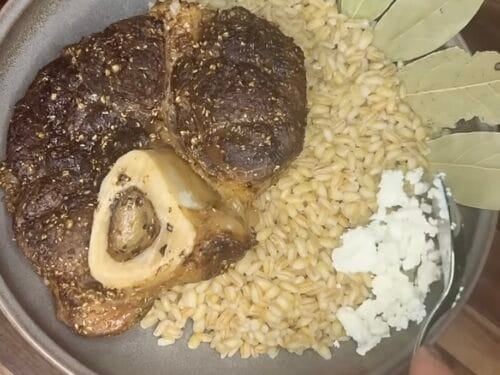
Zeus’s Sacrificial Ox Thigh

Don’t lose this one.
I’ll email it to you so it’s waiting when you’re ready to cook.
Ingredients
Instructions

Notes
- The dish is simple yet powerful, reflecting the bold, natural flavors of ancient Greek cuisine: olive oil, bay leaf, barley, and fire.
- The focus is on the ritual act, not elaborate spicing. The aroma of roasted meat and laurel alone was considered sacred.
- Communal dining, with everyone sharing from large platters, was essential to reinforcing civic and spiritual unity.