It is a billion degrees outside. If you are anywhere in the United States or Europe right now, you do not need me to tell you that the dog days of summer have arrived in full force and staying anywhere near a hot stove feels like a form of punishment. This is the moment Tuscany has been preparing you for.
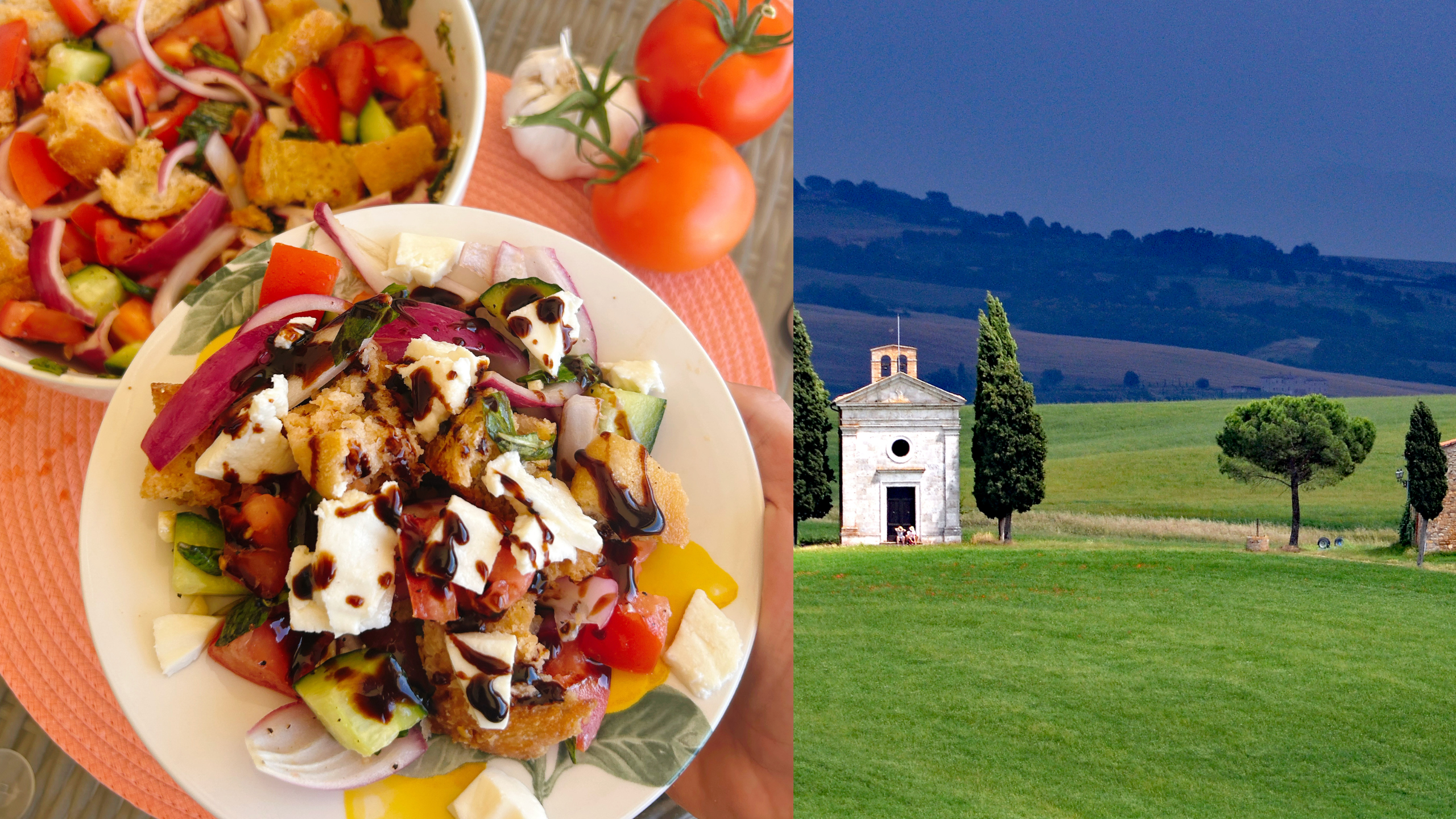
Panzanella is the answer to every hot summer day you have ever suffered through. A Tuscan bread salad of ripe tomatoes, cucumber, red onion and basil, tossed with stale bread that has been crisped in olive oil until golden and left to soak up a sharp red wine vinegar dressing until everything comes together into something that is simultaneously refreshing, filling and absolutely beautiful on the plate. It requires no oven beyond ten minutes of bread crisping. It gets better the longer it sits in the refrigerator. It is exactly what summer food should be.
I rated it 9.1 out of 10 and I would eat it weekly from June through September without complaint. Here is the full story of where it came from and how to make it.
The Origins: A Peasant Dish Praised by Renaissance Artists
Panzanella’s history is older than most people expect and considerably more literary. The dish traces its documented origins to 14th century Tuscany, where Giovanni Boccaccio, the great Florentine poet and author of The Decameron, first described something he called pan lavato, literally washed bread, a simple preparation of soaked bread with onions that represents the earliest known literary reference to the concept behind panzanella. Boccaccio was writing around 1353 and the dish he described was a peasant staple, a practical solution to the problem of stale bread that Tuscan farmhouses produced in abundance since bread was only baked once a week in communal ovens and every loaf had to last the entire household until the next baking day.

The most celebrated Renaissance endorsement came from Agnolo di Cosimo, known to history as Bronzino, the prominent Florentine Mannerist painter at the Medici court and one of the most significant artists of 16th century Italy. In his burlesque poem In lode delle cipolle, In Praise of Onions, Bronzino wrote with genuine enthusiasm about a summer salad of stale bread soaked in oil and vinegar with chopped onions, purslane, cucumber and herbs. His exact words, preserved in the poem, describe the dish as transporting: but whoever wants to pass over the stars with melody, adds oil and vinegar and dunks the bread and eats a tirapelle, a salad of chopped onion with porcellanetta and cucumber, if you consider that a little basil and rocket have been added. A Renaissance master painter, court artist to the Medici, writing poetry about bread salad. The dish earned its admirers at every level of Florentine society.

The name panzanella is believed to be a portmanteau of pane, the Italian word for bread, and zanella, a deep plate or soup tureen. An alternative etymology traces it to panzana, a term for a popular dish made from wet bread. Either way the name carries the dish’s peasant origins: bread, a bowl, and whatever the garden provided.
Crucially, Bronzino’s 16th century panzanella contained no tomatoes. Tomatoes arrived in Italy from the Americas in the same century but were not yet in widespread culinary use. The first Italian record of tomatoes dates to October 31, 1548, when the house steward of Cosimo de’ Medici wrote to the Medici private secretary confirming receipt of a basket of tomatoes from the duke’s estate at Torre del Gallo in Florence. Even after that documented arrival, tomatoes remained ornamental and medically suspect for over a century in most of Europe. The version of panzanella that Bronzino was praising was built on bread, onion, vinegar, oil and whatever greens the garden provided.
From Peasant Table to Royal Table: How Panzanella Evolved
The most significant step in panzanella’s journey from farmhouse staple to celebrated dish came in 1865 when the statesman Bettino Ricasoli served a version of the salad to King Vittorio Emanuele II of Italy during a hunting trip at Ricasoli’s castle in Chianti. The version presented to the king was made with basil, white bread and tomatoes, the three components chosen deliberately to represent the colours of the newly unified Italian flag: green, white and red. This moment elevated panzanella from regional peasant food to something with national symbolism, served to the first king of a unified Italy in the hills of Tuscany that had been producing some version of the dish since Boccaccio was writing in the 1350s.
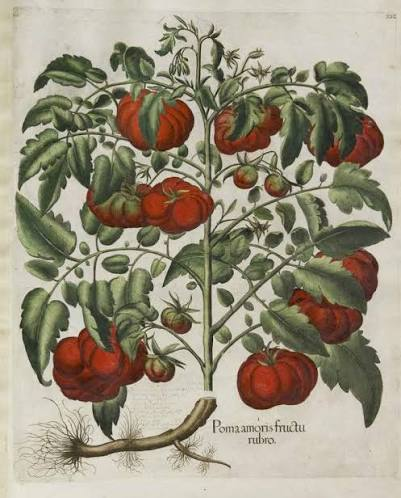
The tomato, once it became widely available in Italian cooking through the late 18th and 19th centuries, transformed panzanella completely. The juices that ripe summer tomatoes release into a dressing are exactly what a bread salad needs to rehydrate and flavour the stale bread without making it soggy. The sweet acidity of a peak-season tomato combined with red wine vinegar, good olive oil and salt produced a dressing that the bread absorbs completely, turning it into something that is simultaneously soft at its centre and slightly crisp at its edges. Tomatoes did not just join panzanella. They became its defining feature.
By the early 20th century the version most Italians recognise today, tomatoes, cucumber, red onion, basil, stale bread, oil and vinegar, had become standard across Tuscany. It remains almost entirely unchanged from what was being served a hundred years ago, which is one of the better arguments for the idea that certain dishes reach a point of perfect calibration and then simply stop evolving because there is nothing left to improve.
Why This is the Perfect Summer Antipasto
Panzanella works as an antipasto in the way that very few salads do, meaning it actually improves with time rather than wilting under a dressing like most leafy preparations. The one-hour minimum refrigeration period is not a suggestion. It is the step that transforms a collection of good ingredients into a unified dish where every component has absorbed something from every other component. The bread takes on the tomato juice and the dressing. The onion mellows in the acid. The cucumber stays cool and crunchy. The basil perfumes everything around it.
It is also, practically speaking, a dish that requires almost no cooking. The bread gets ten minutes in a pan with olive oil. Everything else is chopping, mixing and patience. On a day when turning on the oven feels unreasonable, panzanella does not ask much of you. It asks for the best tomatoes you can find at peak ripeness, good olive oil, a sharp red wine vinegar and bread that is stale enough to hold up under the dressing without dissolving into mush. Those four quality inputs produce a result that has been worth writing poetry about since the 16th century.
My Rating
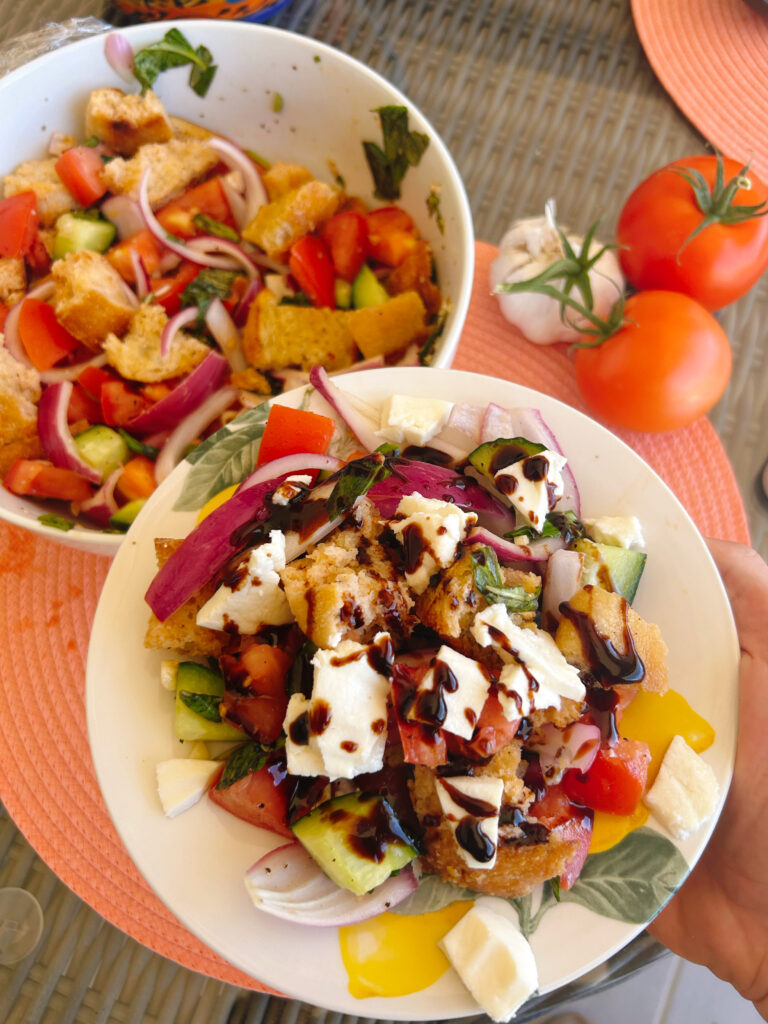
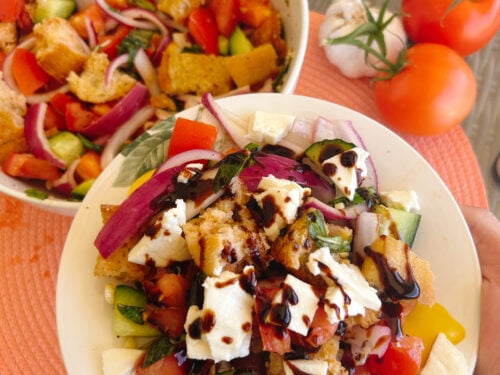
This is summer food at its absolute finest. The combination of the sharp, tomato-saturated vinegar dressing against the crisp-edged, soft-centred bread, the crunch of cucumber, the sweet heat of red onion and the anise note of fresh basil is one of the more perfectly balanced flavour combinations in Italian cooking. The mozzarella I added on top, drizzled with balsamic, is not traditional Tuscan panzanella and any purist from Florence will tell you so. It is, however, genuinely excellent and I do not apologise for it. The cold fresh cheese against the room temperature salad and the sweet-sharp balsamic is the right finishing touch for the version I made.
Make this with peak summer tomatoes. The dish is only as good as its tomatoes, and supermarket winter tomatoes will produce a meaningfully less impressive result than a genuine summer tomato at its ripest. This is a July and August salad and it knows it.
Rating: 9.1 / 10
The Recipe: Classic Tuscan Panzanella
Classic Tuscan Panzanella
Ingredients
Instructions
Notes
- The bread is the most important technical element of this recipe. It must be genuinely stale or dried in the oven before toasting. Fresh bread will turn to paste immediately upon contact with the dressing. Sourdough is particularly good because its denser crumb structure holds up better under the liquid than standard white bread. The chunks should be large, at least the size of a walnut, to give the bread a chance to be simultaneously soft at the centre and crisp at the edges after soaking.
- The mozzarella and balsamic are not traditional Tuscan panzanella and any purist will point this out. They are, however, excellent additions that complement the dish without compromising its essential character. Add them if you want them. Leave them out if you want the classic version. Both are correct depending on what you are trying to serve.
- This salad does not keep well beyond the day it is made. The bread will continue absorbing liquid overnight and will be soft throughout by the following morning. Make it the day you intend to serve it, and serve it cold with the rest time completed.