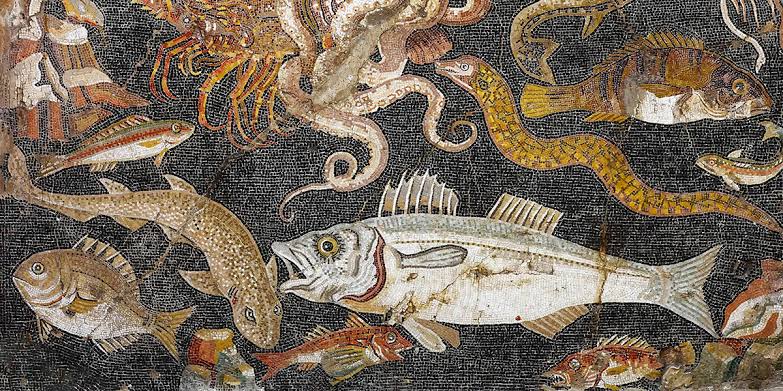
Imagine standing along the shores of the ancient Mediterranean, the air heavy with the scent of the sea and the chatter of bustling marketplaces. Fishermen pull in their catches, the most sought-after bream and bass glistening in the sunlight, ready to be transformed into something delicious.
This is the setting for a recipe crafted by one of the earliest food enthusiasts we know of, a man whose name is spoken with respect by those passionate about culinary history: Archestratus.
Today, we’re diving into a fish dish straight from ancient Greece, combining cheese, olive oil, and earthy cumin to create a dish both rustic and decadent.
Source of the Recipe
The recipe for this cheese-crusted fish comes to us through the writings of Athenaeus, who preserved the words of Archestratus in his 3rd-century CE work, Deipnosophistae (or The Banquet of the Learned).
Next week
I cook these before I write them. Some of it never makes the post.
The failures, the source documents, the version that actually tasted good. That part goes out by email, and next week’s is already on the stove.
 Written and cooked by Donnie
In one passage, Archestratus describes a method of preparing fish found in Carthage and Byzantium. “Once you have coated the fish with cheese and oil,” he advises, “hang it up in a hot clay oven and bake it through. Once done, sprinkle with cumin and salt, and drench it with divine grey-green oil.”
Archestratus: The First Food Critic
Archestratus, who lived in the 4th century BCE, was not just a poet but is often credited as the world’s first food critic. A traveler, he journeyed around the ancient Mediterranean, searching for the finest foods and recording his experiences with an unusual flair.
He treated food as a central part of the good life, praising the flavors of specific ingredients and critiquing substandard preparations. His writings reveal not just an appreciation for fine cuisine but a deep understanding of the ingredients and techniques that made them shine.
Through his poetic culinary guide, he encouraged people to seek out the best and to treat their meals as a form of art.
Seafood in the Ancient Mediterranean
Seafood was a staple in the diets of ancient Greeks and Romans. The warm, bountiful waters of the Mediterranean provided a wealth of options: from delicate white fish like bream and bass to heartier catches.
Fish was often prepared simply, with methods like grilling, baking, or drying, allowing the natural flavors of the sea to shine.
Salt, herbs, and olive oil were commonly used for seasoning, and in this dish, we see the unique addition of hard cheese as a crust, adding richness and depth to the fish’s flavor profile.
If you’re enjoying my work consider buying me a coffee :).
Ancient Greek Cheese-Crusted Fish Recipe:
Missing Ingredients? Get the complete shopping list for this recipe delivered via Instacart!
Ancient Greek Cheese-Crusted Fish

Don’t lose this one.
I’ll email it to you so it’s waiting when you’re ready to cook.
Ingredients
Instructions
Notes
- Cheese Choice: For authenticity, use a hard, salty cheese like Pecorino Romano. Parmesan also works well, though it provides a slightly milder flavor.
- Oven-Baked Alternative: If you don’t have a clay oven, a conventional oven at 400°F (200°C) will still give excellent results. For a crispier finish, use the broiler for the last 1-2 minutes.
- Serving Tip: Serve with a drizzle of extra olive oil and a side of flatbread or roasted vegetables to complete the ancient Mediterranean experience.