I have spent the last month living in Kraków, Poland, and in that time I have eaten more pierogi than I can count.
Late night pierogi at milk bars after a long day of filming. Pierogi at market stalls in the Stary Kleparz. Pierogi at the International Pierogi Festival in August, where I stood in line to try varieties from across the country and watched master pierogi makers fold hundreds of dumplings with a speed and precision that made my attempts look exactly like what they were. I attended pierogi making classes. I browsed every milk bar in the Kazimierz district. I ate pierogi z grzybami i kapustą, the mushroom and sauerkraut version, at a traditional restaurant in the old town. I found a place near the Wawel that made sweet pierogi stuffed with blueberries served with sugared sour cream, and I ate them three times in two weeks.
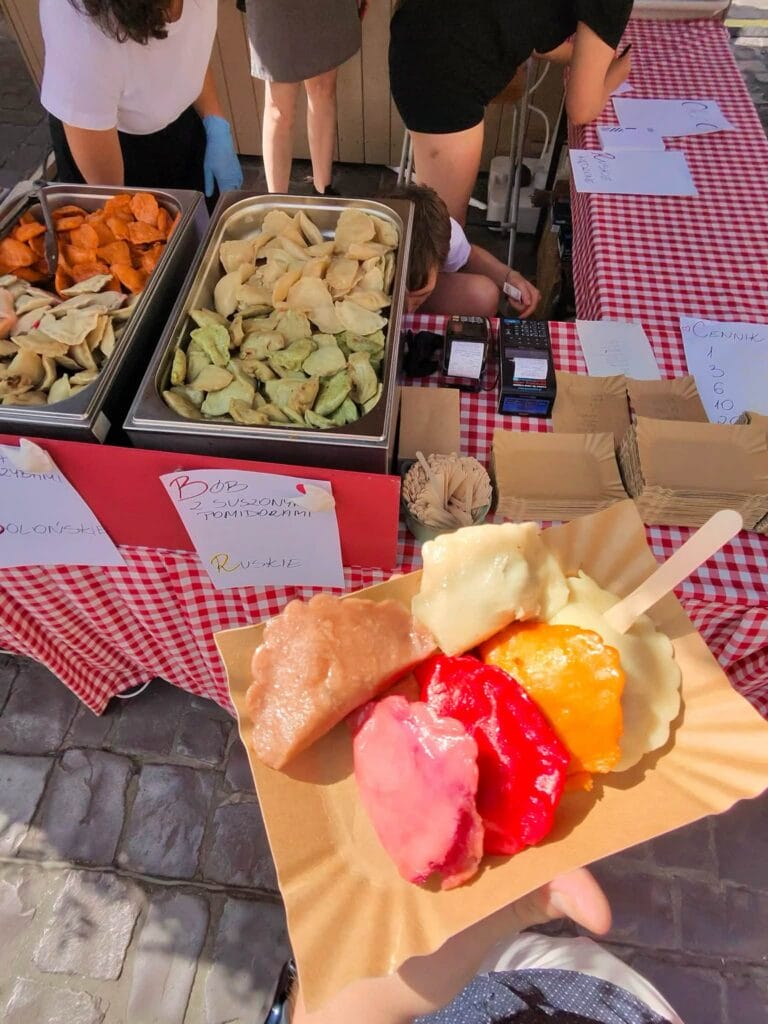
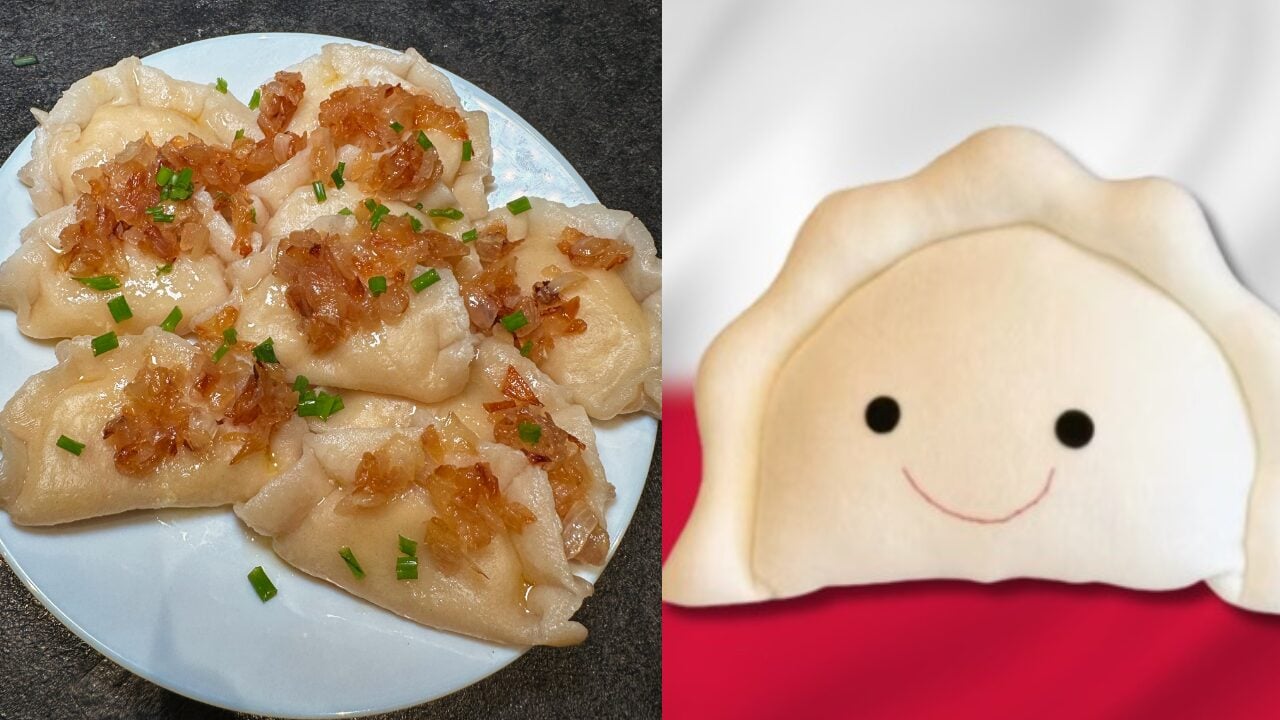
What I have learned is that there is no single pierogi. There are as many pierogi as there are Polish grandmothers, which is to say there are an infinite number of variations built on the same fundamental structure of dough and filling, and every family’s version is the correct version. What I am making this week is pierogi ruskie, the potato and farmers cheese version that is perhaps the most universally beloved of all the varieties, topped with caramelized onion and chives.
The Legend: Saint Hyacinth and His Pierogi
Next week
I cook these before I write them. Some of it never makes the post.
The failures, the source documents, the version that actually tasted good. That part goes out by email, and next week’s is already on the stove.
 Written and cooked by Donnie
No discussion of pierogi history is complete without the legend of Saint Hyacinth, who is so thoroughly intertwined with the pierogi origin story in Polish national culture that he is considered the dish’s patron saint.

The most widely told version of the legend places Saint Hyacinth, the 13th century Dominican friar Jacek Odrowąż, at the village of Kościelec in 1238. According to the legend, during his visit a devastating storm destroyed all the crops and threatened the local population with famine. Saint Hyacinth instructed everyone to pray, and by the next morning the crops had miraculously regrown. In gratitude, the people made pierogi from the newly restored harvest as an offering to the saint. A related version of the legend places the miracle at 1241, in the aftermath of the Tatar invasion of Poland, when Saint Hyacinth is said to have fed the starving people of Kraków with pierogi. Another version says that Saint Hyacinth discovered the recipe in Kyiv, in what was then Kievan Rus, and brought it to Poland.
The legendary connection between Saint Hyacinth and pierogi is so embedded in Polish culture that it produced one of the most commonly cited Polish expressions. The 16th century Krakowian Dominican priest Father Felix of Sieradz is attributed with the phrase Święty Jacku z pierogami, which translates as Saint Hyacinth with his pierogi, an expression used in moments of surprise or shock that is still used in Polish today.
The honest historical assessment of this legend requires noting something important. Our knowledge of Saint Hyacinth’s life comes primarily from the 14th century De vita miraculis sancti Jacchonis, The Miraculous Life of Saint Hyacinth, by Lector Stanislaus, which does not specifically mention pierogi. That detail appears to have been added through folk retellings of the tale in later centuries. The legend is culturally real and genuinely beloved. Whether it is historically accurate is a different question.
The Reality: Ukraine, the Silk Road and the Mongol Theory
Putting aside the Saint Hyacinth legend, where do pierogi actually come from? The honest answer, consistent across every serious food historian who has examined the question, is that the exact origin is untraceable and genuinely disputed. Pierogi are of untraceable origin and in many countries they are claimed to be original traditional food. What the evidence does suggest is a story considerably older and more geographically complex than any single legend can capture.
The most widely accepted scholarly position traces the dumpling concept itself to Asia. Archaeologists have uncovered evidence of dumplings being consumed and used in burial rites in China approximately 1,700 years ago. The dumpling, in its most fundamental form of a portion of dough wrapped around a filling and cooked in liquid, is one of the most universal and oldest culinary techniques in human history, appearing independently across multiple food traditions in a way that suggests it is a natural convergent solution to the problem of cooking small portions of filling in a portable, efficient form.
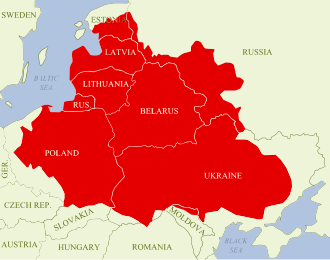
The specific pathway from Asian dumpling traditions to Central European pierogi most likely ran through the Turkic and Mongol nomadic cultures of the Central Asian steppe. These manti, the Turkic dumplings, spread from Central Asia to China, Korea, Japan and Vietnam through the Mongol Empire and the Ming Dynasty. At that point the dumpling really caught on in Asia. These Asian dumplings likely then travelled to Europe through trade, leading to the evolution of other stuffed pastas through the continent. The word pieróg itself, the singular of pierogi, might be tied to the Turkic word börek, which referred to a stuffed food, suggesting a linguistic connection that mirrors the culinary one.
The Mongol and Tatar invasions of Poland in 1240 to 1241, the same historical events that appear in the Saint Hyacinth legends, provide the most historically plausible direct mechanism for the introduction of dumpling traditions to Poland. The Mongol army that swept through Central and Eastern Europe in 1240 and 1241, sacking Kraków and reaching as far as the Adriatic coast, was an army whose food culture included stuffed dumplings. The cultural exchange of an invasion, however destructive, inevitably includes food. The appearance of both the legend and the food in the aftermath of the Mongol invasion is a correlation worth noting.
The Ukrainian connection is the most directly documented step in the chain. In Ukraine, pierogi are called varenyky and they are a national dish with a history as long and as disputed as Poland’s. The proximity of Ukrainian and Polish culinary traditions, the extensive cultural and political connections between Poland and Ukraine across the medieval period, and the specific legend of Saint Hyacinth returning from Kievan Rus with the recipe all point to the Ukrainian or more broadly Eastern Slavic world as the immediate predecessor of the specifically Polish pierogi tradition. Whether the dumpling arrived in Ukraine from further east, through Mongol contact or Silk Road trade, and whether it arrived in Poland from Ukraine or independently from similar sources, is a question the historical evidence cannot definitively resolve.
What can be said with confidence is that the word pierogi first appeared in Polish cookbooks and literature in the late 17th century, that the dish was certainly present in Polish food culture considerably before that written documentation, and that it has been a central and beloved element of Polish culinary identity ever since.
A Month of Pierogi: What I Learned in Kraków
The International Pierogi Festival in Kraków happens every August in the main market square, the Rynek Główny, and it is one of the more extraordinary food events I have attended for this channel. Makers from across Poland set up stalls offering varieties that range from the classic ruskie and the mushroom and sauerkraut version to regional specialties, experimental contemporary fillings and sweet versions that challenge the idea of what a pierogi can be.
What the festival made clear, and what a month of eating pierogi across Kraków’s milk bars and restaurants confirmed, is that the pierogi is not a fixed thing. It is a technique and a format that adapts to everything the Polish pantry can offer. The ruskie, potato and farmers cheese, is the most widely eaten and probably the most universally loved because the filling is rich and comforting in a way that transcends any particular regional preference. The grzyby i kapusta, mushroom and sauerkraut, is earthier and more complex, with the fermented sauerkraut adding a sourness that cuts beautifully through the richness of the dough. The meat versions vary by region and family. And the sweet pierogi, blueberries with sugared sour cream, or strawberries, or cherries, remind you that the same technique that produces a hearty winter dinner can also produce a summer dessert.
The milk bars, the bar mleczny that survived from the communist era as subsidised cafeterias offering simple Polish food at extremely low prices, are the most authentic environment for eating pierogi in Kraków. The clientele is local, elderly, working class and entirely without pretension. The pierogi are hand-made, simply served with butter and onion, and cost approximately what you would pay for a coffee at a tourist café. Sitting at a formica table in a milk bar in Kazimierz eating a plate of ruskie made by a woman who has been making them the same way for fifty years is the most direct connection available to what Polish food actually is, as opposed to what it is performed to be for visitors.
The pierogi making class confirmed what I had suspected from watching the milk bar cooks. The technique is everything. The dough must be the right consistency, pliable without being sticky, strong enough to hold the filling without tearing during boiling but thin enough to cook through completely. The folding and sealing is a skill that takes repetition to develop. My first attempts were uneven and some split during boiling. By the end of the class they were holding. The recipe I am giving you below is the result of all of that practice combined with the technique I observed in the class and at the festival.
My Rating and Honest Assessment
This is not a documented historical recipe with a primary source I can cite. It is Polish grandmother technique passed down orally through generations, standardised through the pierogi making class I attended and my own practice over the last month. I want to be honest about that distinction because this channel takes sourcing seriously and the honest framing of this recipe is that it represents a living oral culinary tradition rather than a documented historical preparation.
What I can tell you with complete confidence is that the result is extraordinary. The dough has a tenderness and a slight chew that no commercial pierogi can replicate. The filling of potato and twaróg, Polish farmers cheese, with caramelized onion mixed through it is deeply satisfying in the way that only very simple, very well-executed food is satisfying. The caramelized onion and butter served on top adds a sweetness and richness that takes the finished plate from good to genuinely great. The chives add colour and a mild onion freshness that cuts through the richness.
After a month of eating some of the best pierogi in Poland, making these at home and rating them 9.7 out of 10 is not hyperbole. The practice paid off. The technique is learnable. And the result is one of the best things I have made for this channel.
Rating: 9.7 / 10
The Recipe: Authentic Pierogi Ruskie
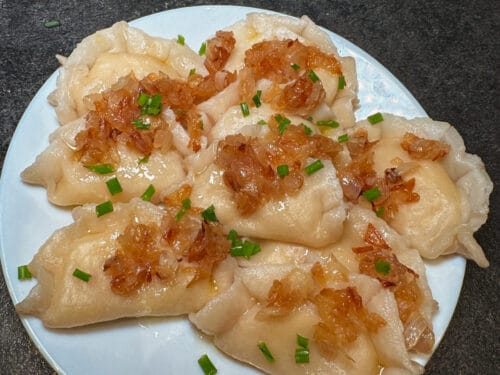
Authentic Pierogi Ruskie

Don’t lose this one.
I’ll email it to you so it’s waiting when you’re ready to cook.
Ingredients
Instructions
Notes
- The twaróg question deserves specific attention because it is the ingredient most likely to be unavailable outside Poland and Polish delicatessens. Twaróg is a dry, slightly acidic Polish farmers cheese made from cows milk with a crumbly, dense texture significantly drier than commercial ricotta. If you are using ricotta as a substitute, drain it overnight through a cheesecloth or fine mesh strainer to remove as much liquid as possible before using. The filling should be dry enough to hold its shape when pressed. If the filling is too wet the pierogi will be heavy and may split during boiling.
- The dough thickness matters significantly. Too thick and the pierogi are heavy and stodgy. Too thin and they split during boiling. Two millimetres, approximately the thickness of two stacked credit cards, is the correct target. A pasta machine set to the middle setting produces a reliable result if you find rolling by hand produces inconsistent thickness.
- Pierogi freeze very well before boiling. Arrange them on a baking sheet in a single layer and freeze until solid, then transfer to a freezer bag. Cook from frozen in boiling water for 5 to 6 minutes. This makes them an excellent make-ahead dish for a large group.
- The caramelized onion cannot be rushed or substituted. It is the element that makes the finished plate significantly better than the filling alone suggests it will be. Take the full 30 to 40 minutes over low heat. The resulting sweet, almost jammy onion, draped over butter-fried pierogi with fresh chives, is worth every minute.