
Before we talk about the food, we need to talk about the history. Because the lazy version of French WWII history, the one that gets recycled as a punchline in bad stand-up comedy and internet comments, has obscured a genuinely complex and genuinely tragic military story, and this channel is going to set the record straight.
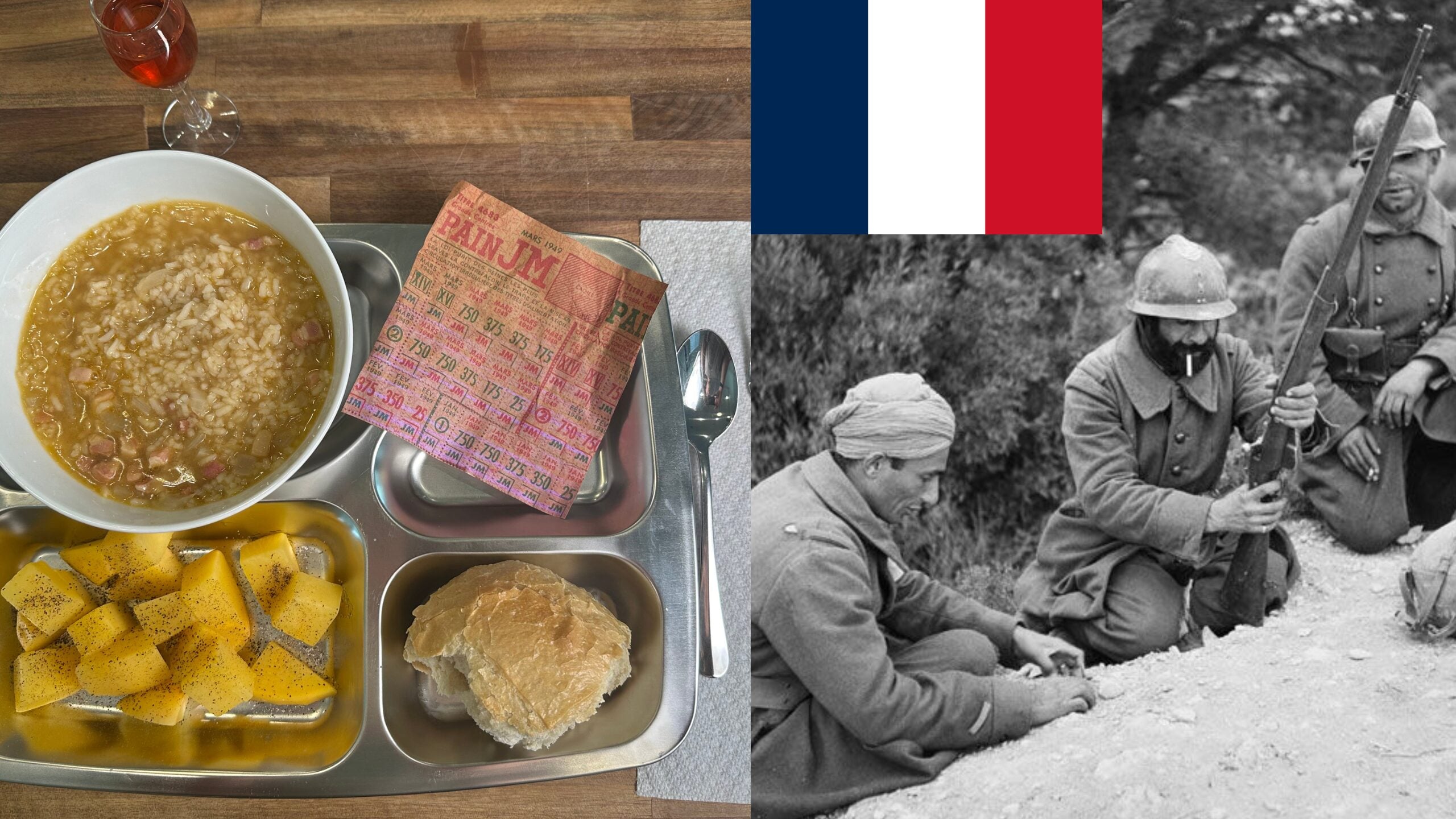
I made a French WW2 soldier’s meal this week. La soupe au lard et riz, rice soup with smoked bacon and onion. Les rutabagas bouillis, boiled rutabaga as a potato substitute. Du pain, French bread. Une ration de vin rouge, a shot of red wine. A ration card. This is the most enjoyable WW2 ration recreation I have made for this series and I rated it 8.3 out of 10. But first the history deserves to be told properly.
In Defense of France: Setting the Record Straight
The common historical shorthand that France simply waved the white flag in 1940 without putting up a meaningful fight is one of the more frustrating pieces of historical laziness in popular World War Two discourse. I am going to push back on it directly before we go anywhere else.
Next week
I cook these before I write them. Some of it never makes the post.
The failures, the source documents, the version that actually tasted good. That part goes out by email, and next week’s is already on the stove.
 Written and cooked by Donnie
France fell in six weeks in May and June 1940. The German offensive that achieved this was the most rapid and most decisive military victory in the history of European warfare up to that point and it was achieved through a combination of factors that had almost nothing to do with French fighting spirit and almost everything to do with strategic miscalculation and an extraordinarily innovative German operational plan.
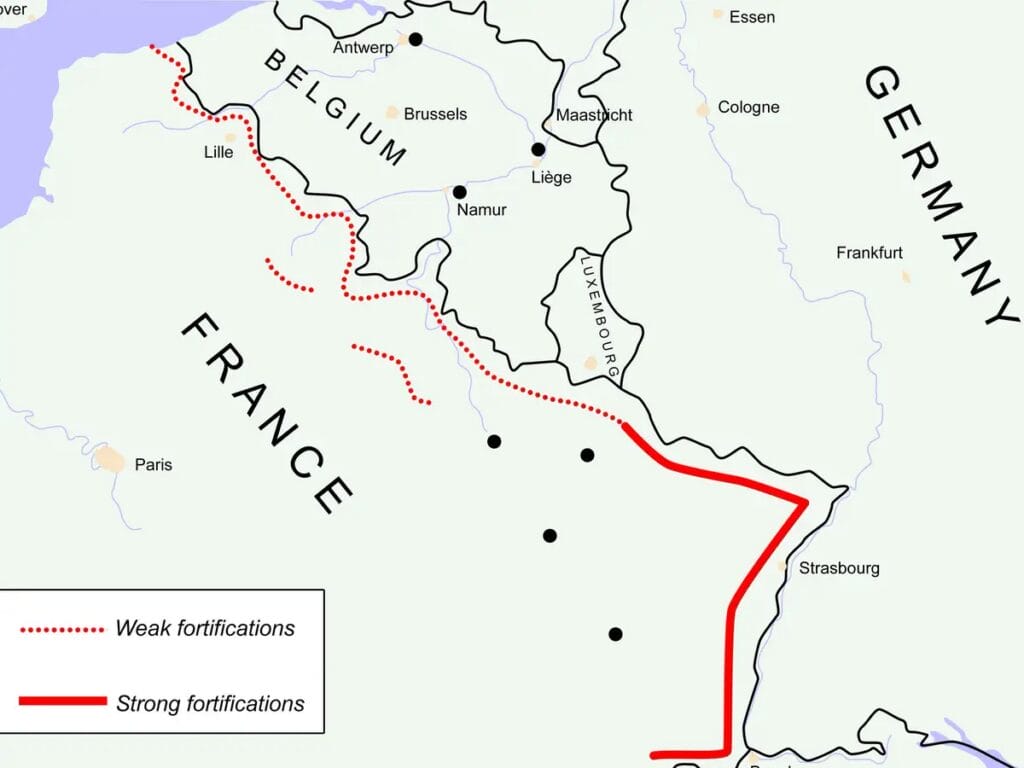
The Maginot Line, which is typically cited as evidence of French military complacency, was a rational response to the lessons of the First World War, in which France had lost 1.4 million soldiers killed defending its eastern border against German invasion. The Maginot Line worked. The German Army did not attempt to breach it. Instead, in the most decisive single operational decision of the campaign, German armour drove through the Ardennes forest, which French strategic planning had assessed as tank-impassable, and attacked through Belgium and into France from a direction the defensive doctrine had not anticipated.
Between May 10 and June 22 1940, France suffered approximately 90,000 soldiers killed and 200,000 wounded. Ninety thousand dead in six weeks. In the same period the British Expeditionary Force lost 68,000 killed, wounded or captured before being evacuated at Dunkirk. The idea that France did not fight is not a misrepresentation. It is a fabrication. France fought and was defeated by a combination of strategic surprise, operational innovation and the catastrophic failure of the Allied high command to respond adequately to a situation that changed faster than headquarters could process.
The France that fell in June 1940 had already been bled dry by the First World War. The generation of French officers commanding in 1940 had watched an entire generation of young men die between 1914 and 1918 in a war that killed 1.4 million French soldiers and wounded another 4 million out of a total male population of approximately 20 million. The institutional trauma of that loss shaped every military and political decision that followed it. Understanding why France fought the way it did in 1940 requires understanding what 1914 to 1918 did to the country that was supposed to fight it.
This channel exists to tell food history but it also exists to tell history accurately. The lazy French surrender joke does not belong here.
The Sources
The primary documented sources I used for this episode are:
The 151st Line Infantry Regiment’s detailed research on French military rations, which provides the most comprehensive surviving documentation of what French soldiers actually ate across both World Wars, including the specific French military food vocabulary that I have used throughout this post.
The peer-reviewed paper Food Rationing and the Black Market in France 1940 to 1944, published in the academic medical journal and available through PubMed, which documents that French food rationing was more stringent than that of any other Occupied country in Western Europe in the Second World War.
The Aspects of History documentation of rationing in Paris during the occupation, which provides the specific ration quantities issued to French civilians under the German occupation administration.
The Gastro Obscura account of les légumes oubliés, the forgotten vegetables of the occupation period, which documents the specific cultural stigma attached to rutabagas and topinambours in French food memory.
Cynthia Bertelsen’s France and the Food of War, which provides the most thorough literary account of the intersection between French food culture and the specific deprivations of the occupation period.
Pre-Occupation France: What the French Military Ate
The French military food tradition before the fall of France in 1940 was built on a concept that had no direct equivalent in any other army’s ration system. The mainstay of the French soldier’s meals was stew, which was always referred to as la soupe regardless of its ingredients or consistency. Alternately, a stewed casserole called ratatouille, or rata for short, would stand as the entrée. La soupe and rata were so prevalent in army life that the terms came to be used in a general sense to mean simply chow or grub.
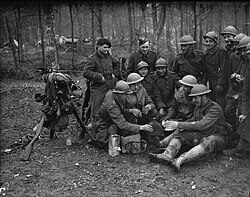
This linguistic detail is more significant than it might appear. The French military’s insistence on calling everything la soupe, whether it was a liquid broth, a rice stew or a thick casserole, reflected a specific culinary philosophy in which a hot, liquid preparation served from a communal pot was the proper form of a military meal. The French Army, unlike the American or British equivalents, did not develop individual ration packs until after the war. The French soldier’s food culture was collective, warm and French in a way that the K-ration, for all its engineering ingenuity, was not.
What went into la soupe was whatever was on hand. Generally, it was comprised of a meat base, beef or pork or simply lard, with a couple vegetables, beans or starches thrown in. Invariably this included some combination of white beans, potatoes, onions, cabbage, carrots, turnips and split peas. Rice frequently was used as a starch and to a lesser extent pasta, vermicelle, tapioca, macaroni and various small pastas.
The rice element is where the documented cultural friction in French military food comes in. Rice was a practical ration ingredient. It was shelf stable, calorically dense, easy to prepare in bulk and available at reasonable cost. The French Army used it extensively. The French soldier hated it. Rice carried a specific stigma in French military culture as inferior food, colonial food, the kind of thing that was issued when the proper French staples of bread, potatoes and proper meat were unavailable. The appearance of rice in la soupe was taken by soldiers as a sign that something had gone wrong with the supply system. That stigma is documented consistently across French military diaries and letters home from the First World War through the Second.
The wine ration, la ration de vin or le pinard in soldier’s slang, was a genuine and institutionalised feature of the French military diet in a way that had no equivalent in any other Allied army. Wine was issued daily to French soldiers as a standard component of the ration, typically a quarter-litre to a third of a litre per man per day, reflecting the central role of wine in French food culture and the military’s understanding that withholding something so culturally fundamental would be more damaging to morale than the logistical cost of providing it. The pinard was not excellent wine. It was whatever cheap red was available in bulk. But it was wine and it was issued and it was, by consistent soldier testimony, deeply appreciated.
The Occupation Ration System: When Everything Changed
The armistice of June 22, 1940, which ended French military resistance to the German invasion, immediately created a dual food system in France that would persist until liberation. The difference between pre-occupation and post-occupation French rations is the difference between adequacy and genuine hardship.
Rationing was established by the Occupiers almost immediately after the Fall of France. During the Phoney War, the French government had banned meat, sugar and alcohol on certain days, but the situation deteriorated sharply under the new system. The rations for an adult under the German occupation administration were: 350 grams of bread a day, 50 grams of cheese and 300 grams of meat a week, and 50 grams of rice, 250 grams of pasta, 200 grams of margarine and 500 grams of sugar a month.
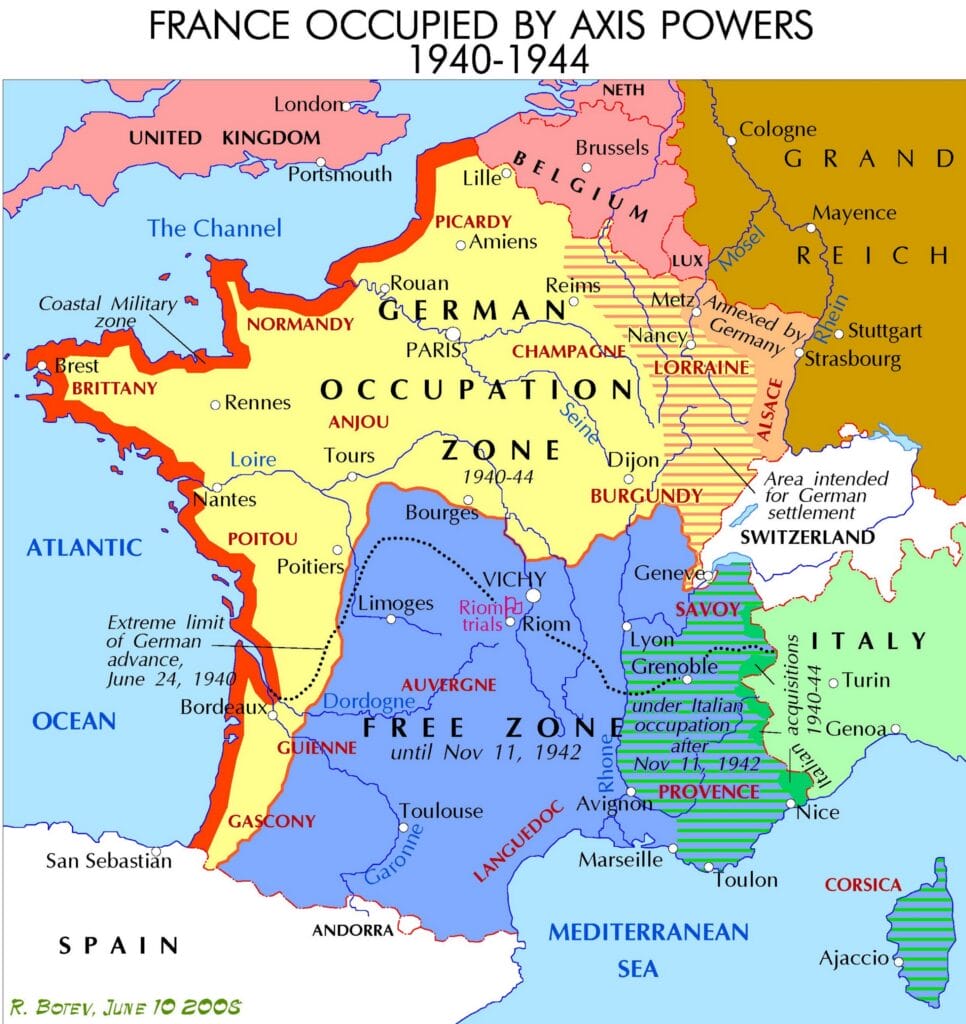
These quantities, which represent a daily caloric intake of approximately 1,200 calories against a requirement of 2,500, were made more severe by systematic German requisitioning of French agricultural production. In the summer of 1942, rations for French people were reduced by 12 per cent and higher food quotas for Germany were introduced: over 2 million tons of grain, 350,000 tons of meat, 300,000 tons of potatoes, 150,000 tons of vegetables, 300,000 tons of fruit and 600 million litres of wine were extracted from France to be shipped to Germany.
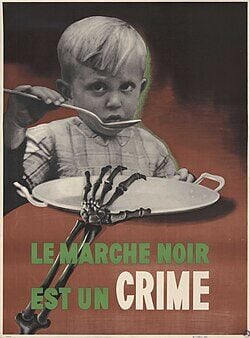
“Ils nous prennent tout, they are taking everything we have“, was a heartfelt complaint voiced by Parisians during the occupation. The Nazi authorities had set a punitive exchange rate of one Reichsmark to 20 Francs, which meant that German soldiers and traders could buy everything cheaply and ship it back to Germany. France was being systematically stripped of its food production to feed the country that was occupying it, while its civilian population was restricted to rations that could not sustain health.
French food rationing was more stringent than that of any other Occupied country in Western Europe in the Second World War, a fact documented in peer-reviewed academic literature and confirmed by the specific quantities of French agricultural production that were diverted to German use throughout the occupation period.
The Rutabaga: The Most Hated Vegetable in French History
The potato was the primary victim of the German requisitioning system. Potatoes were nutritionally significant, widely grown across France and easy to stockpile and transport, which made them a priority target for German food extraction. The result was a potato shortage that forced French civilians to turn to whatever root vegetables the Germans considered beneath requisitioning.
What they found was the rutabaga, le rutabaga in French, a large yellowish root vegetable that before the war was considered food for cattle. The French had not previously eaten rutabagas in any significant quantity and their association with animal fodder made them culturally humiliating in a way that even the other imposed deprivations were not. The topinambour, the Jerusalem artichoke, and le chou-rave, the kohlrabi, became similarly stigmatised substitute vegetables of the occupation period.
Fred Pouillot, owner of the Parisian culinary school Le Foodist, grew up in central France and to this day reports that his 86-year-old mother despises rutabagas. She said that topinambours, Jerusalem artichokes, were the only thing she remembers eating during the war that was good. But she has never cooked them again. It’s no surprise that the French, who survived off of these hardy vegetables for nine years since rationing of some foods lasted until 1949, could no longer bear the sight of them when rationing finally ended.
This is the specific food trauma of the French occupation experience. Not simply hunger, though there was genuine hunger. But the specific indignity, in a culture where food was considered one of the highest expressions of civilisation, of being reduced to boiling cattle feed as a potato substitute. The rutabaga on my tray this week is not simply a historical recreation. It is a document of one of the more subtle humiliations of the occupation.
My Rating
Of all the WW2 ration recreations I have made for this series, the French meal is the one I most genuinely enjoyed eating.
La soupe au lard et riz is genuinely good soup. The smoked bacon renders its fat into the broth base and that fat carries the flavour of everything that follows. The rice, stigmatised as it was by French soldiers who considered it inferior, actually provides exactly the body that the soup needs to be satisfying rather than merely liquid. The onion, slowly softened in the bacon fat before the water goes in, adds sweetness and depth. With good bread alongside it is a complete and genuinely warming meal.
Les rutabagas bouillis are not interesting and I will not pretend they are. Boiled rutabaga is exactly what it sounds like: a dense, slightly bitter root vegetable with a sulphurous edge that becomes milder with sufficient cooking. The French civilian population’s post-war aversion to them is completely understandable. Eating them now as a voluntary historical exercise is one thing. Eating them daily as the only available potato substitute for four years of occupation is another thing entirely and I have no wish to minimise the experience of anyone who did.
The pinard, the shot of rough red wine, is the component that completes the meal and that most clearly expresses the specifically French character of the ration system. Every other wartime army would have given their soldiers tea, or coffee, or nothing. The French army gave theirs wine. That institutional decision tells you something specific and entirely true about French food culture that nothing else in this series has communicated quite so efficiently.
Rating: 8.3 / 10
The soup specifically would be worth making again with no historical pretence required.
The Recipe: A French WW2 Soldier’s Meal
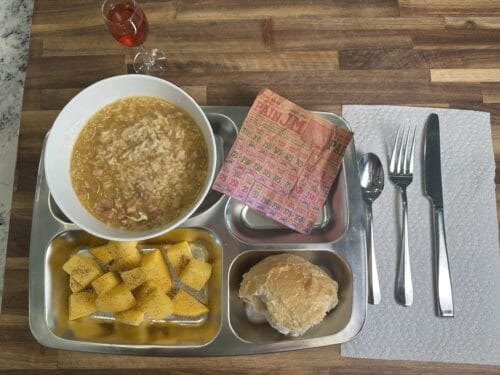
A French WW2 Soldier’s Meal

Don’t lose this one.
I’ll email it to you so it’s waiting when you’re ready to cook.
Ingredients
Instructions
Notes
- The rice stigma is real and documented but the soup is better with it than without it. The rice provides exactly the body that makes this a satisfying meal rather than a thin broth. French soldiers complained about it as inferior because they wanted potatoes. They were not wrong that potatoes would have been better. They were not entirely right that rice was a disgrace. In the soup, it works.
- Do not use good wine for the pinard. This is one of the few recipes on this channel where quality is specifically inappropriate. Cheap, rough, acidic red wine is the correct historical choice and produces the correct flavour in context. A rough table wine from any Southern European region is appropriate.
- The rutabaga improves significantly with more butter than historical accuracy permits. A generous amount of butter, a pinch of nutmeg and a good seasoning of salt and pepper produces boiled rutabaga that is actually worth eating. Historical accuracy produces boiled rutabaga that explains why an 86-year-old Frenchwoman has refused to cook it again for the last 75 years. Make both versions and decide which one you prefer. You already know which one she prefers.

Excellent history lesson! Thank you