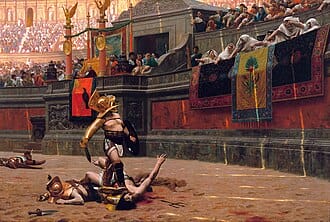
The image of the Roman gladiator is often one of a chiseled warrior, strong and agile, facing opponents in the bloody arenas of ancient Rome. But in reality, these warriors, known as “barley men,” were often heavier and more robust.
This weight was not due to lack of training but to their carefully managed diet, which included barley as a staple. Barley polenta, a simple, nourishing dish, was a favorite among gladiators and symbolized the fortitude they needed in battle. Inspired by Natural History by Pliny the Elder, let’s explore this ancient recipe and its significance in the gladiator diet.
The Origins of Barley in Gladiator Diets
The Roman historian and philosopher Pliny the Elder wrote extensively on the natural world, providing invaluable insights into the ancient Roman lifestyle.
In his monumental work, Naturalis Historia (Natural History), he refers to gladiators as “hordearii,” or “barley men,” noting the grain’s importance in their diet.
Next week
I cook these before I write them. Some of it never makes the post.
The failures, the source documents, the version that actually tasted good. That part goes out by email, and next week’s is already on the stove.
 Written and cooked by Donnie
Barley provided a substantial amount of calories and was highly valued for its ability to build body mass and endurance—essential traits for gladiators who needed both strength and padding to withstand wounds in the arena.
Why Gladiators Were Heavyset, Not Lean
Unlike our modern perceptions of lean warriors, gladiators were often intentionally heavier. This additional body mass wasn’t just for strength but served as a protective layer against cuts and superficial wounds.
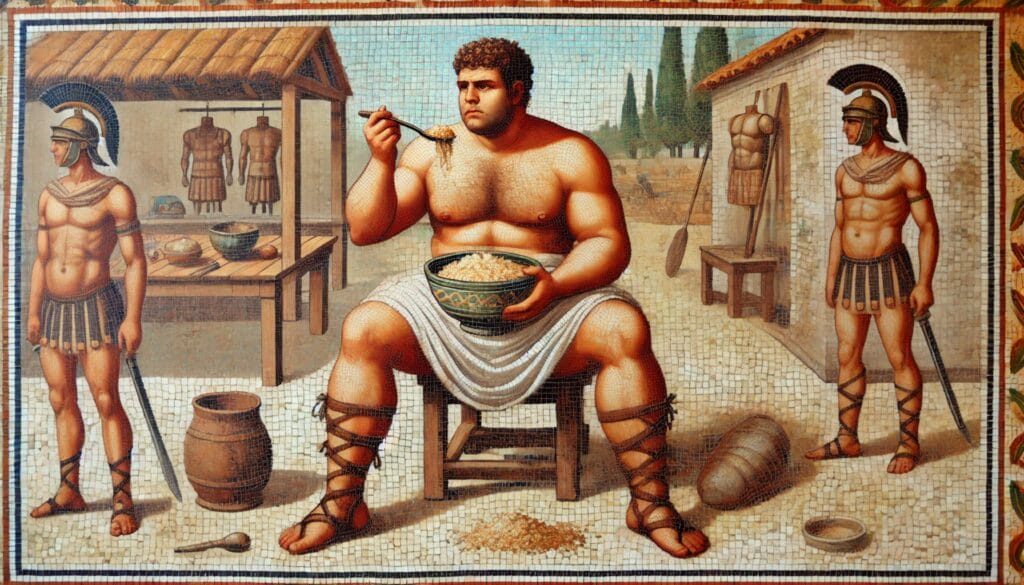
The added “padding” could lessen the impact of injuries without compromising a gladiator’s overall stamina and power. Barley, in combination with other simple grains and seeds, played a central role in achieving this effect. Its slower-digesting properties sustained energy and helped to build and maintain a robust physique.
Why Barley Was a Gladiator Staple
Barley was revered for its affordability and nutritional density, making it a perfect choice for gladiators who required both strength and stamina. The grain is rich in fiber, magnesium, and a modest amount of protein, while its complex carbohydrates provided lasting energy.
When combined with flax seeds, a great source of omega-3 fatty acids and fiber, and coriander for its digestive benefits, this “barley polenta” formed a complete meal. For gladiators, this meant prolonged endurance during fights and effective recovery afterward.
How to Make Gladiator-Style Barley Polenta:
Recreate this historic meal with the following recipe, adjusted with a modern twist by adding toppings such as peaches, walnuts, and honey for a touch of sweetness and texture. Here’s how you can make your own barley polenta:
If you’re enjoying my work, consider buying me a coffee 🙂

Barley Polenta (Polenta Hordeacea)

Don’t lose this one.
I’ll email it to you so it’s waiting when you’re ready to cook.
Ingredients
Instructions
Video
Notes
- Consistency: Stir continuously while cooking to avoid lumps and ensure a smooth texture. Adjust water as needed for a thinner or thicker consistency.
- Toppings Variation: Add savory toppings, like olive oil and herbs, if you prefer a less sweet option, similar to traditional polenta.
- Substitute Options: If ground barley is unavailable, you can use whole barley groats, but cook them longer or grind them in a food processor first for a similar texture.