A brutally honest look at the diets and working conditions of child laborers in the 19th century
Victorian Britain built its empire on coal, steel, and textile machinery, and much of that labor fell on the smallest shoulders. Children as young as five entered the mills before sunrise, working ten to fourteen hours a day in choking air that left their lungs scarred for life.
If you’re enjoying my work, consider purchasing one of my e-cookbooks, now 40% Off!

Social investigators like Henry Mayhew and Charles Booth documented their routines with heartbreaking precision, and parliamentary factory reports preserved the testimonies of children who lived on less food than a modern toddler. Eating like a Victorian child worker for a single day reveals the stark truth of what powered the Industrial Revolution. It was not steam. It was poverty.
Next week
I cook these before I write them. Some of it never makes the post.
The failures, the source documents, the version that actually tasted good. That part goes out by email, and next week’s is already on the stove.
 Written and cooked by Donnie
4:30 to 6:00 AM Breakfast: Water Porridge and Black Tea
A Victorian child’s day began long before the sun rose. Breakfast was eaten in cramped cellar dwellings, often shared by multiple families, where smoke from the communal fire drifted through every room. The meal was always the same. A small serving of “water porridge” made from half a cup of oats boiled in water with a pinch of salt. No milk, no sugar, and no butter. Workhouse dietary tables from the 1840s confirm that this was the standard morning ration for poor children across industrial cities.
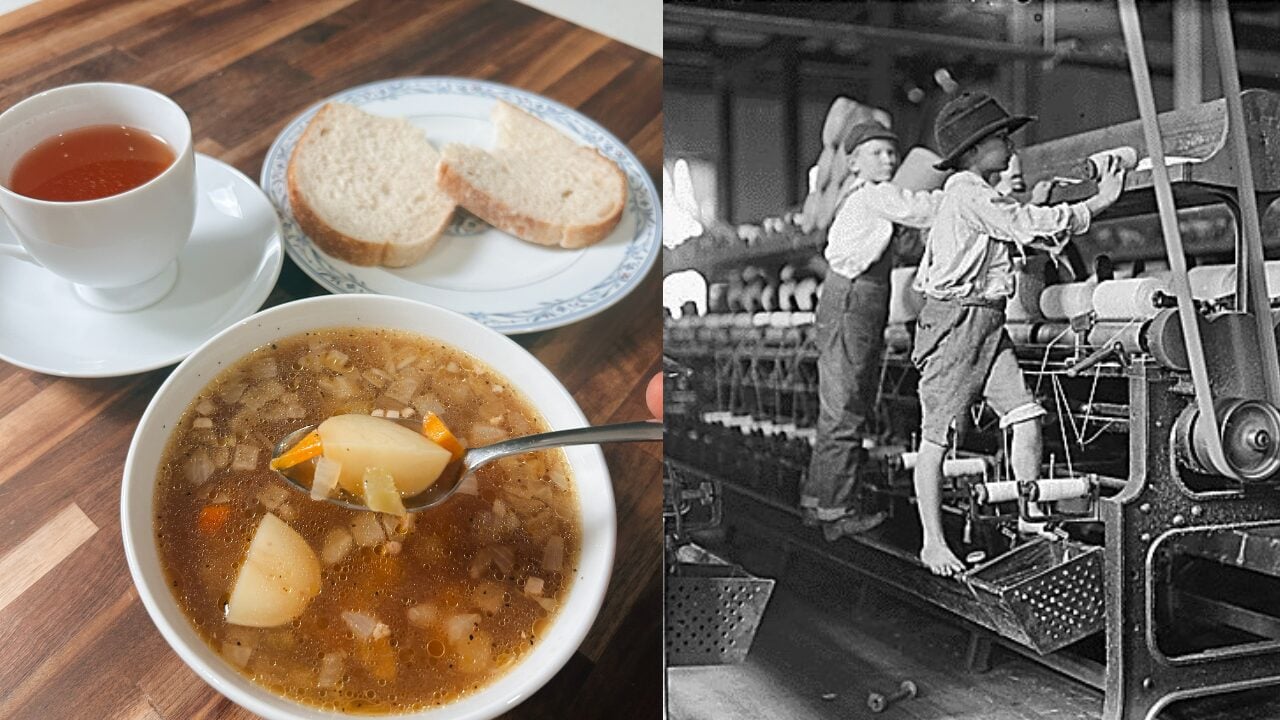
Alongside it came a cup of black tea. It was heavily watered down, often brewed from reused leaves that had been dried and steeped several times. Children drank tea not for flavor but because it kept them warm and dulled hunger. By five in the morning they were already walking through soot-covered streets on their way to factories that would consume the rest of their day.
The Factory Floor: Ten to Fourteen Hours of Dangerous Labor
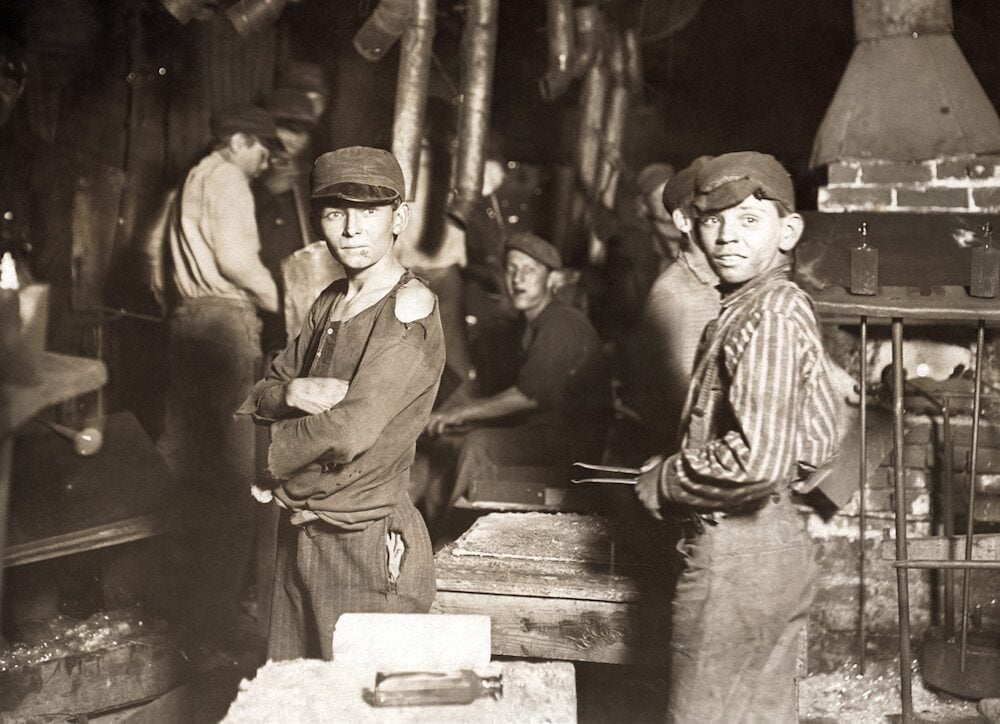
Inside textile mills, match factories, coal mines, and dock warehouses, the conditions were brutal. Children stood at machines surrounded by deafening noise, spinning dust, chemical fumes, and constant hazards. Inspectors recorded how cotton fluff filled the lungs of mill children, causing chronic coughs and early respiratory disease. In mines, children seated in the dark for twelve hours opened and closed ventilation doors called trap doors, and others dragged coal carts on all fours with chains strapped to their waists.
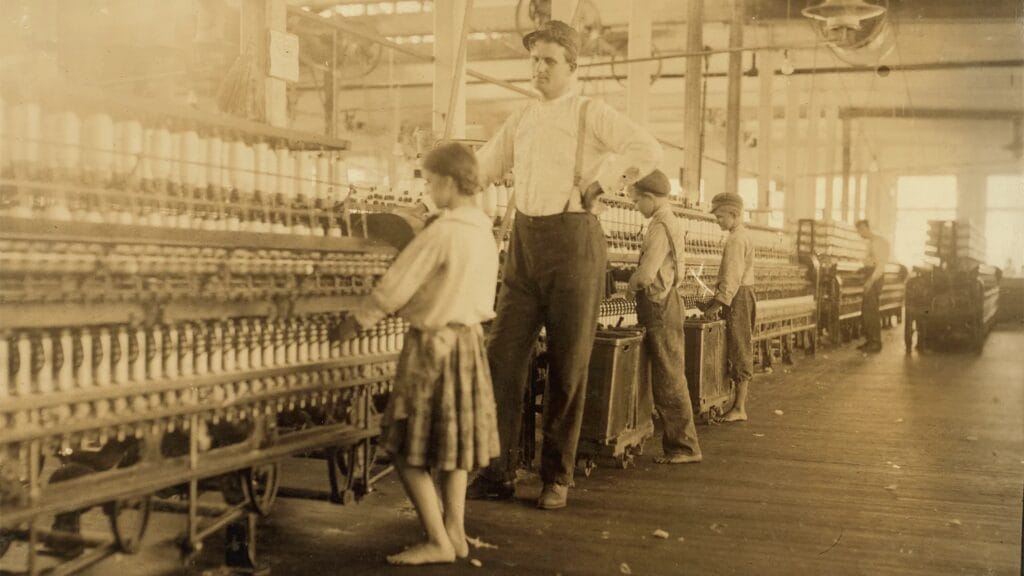
Accidents were expected. Parliamentary reports include dozens of testimonies from children whose fingers, hair, or limbs were caught in machinery. In match factories, young girls suffered from “phossy jaw,” a horrific condition caused by inhaling white phosphorus. It rotted the bone from the inside, producing a faint glow and a terrible smell. Victorian children lived with constant danger, with hunger as their companion.
Midday Meal: Stale Bread and Dripping Soup
Most factories allowed no official lunch break. Children ate standing at their machines, walking between tasks, or hiding from overseers. The most common midday meal was a slice of stale bread dipped in “dripping broth,” a thin soup made from the greasy leftovers of a Sunday roast. Henry Mayhew describes this vividly in his work on London’s poor, where children soaked crusts in broth to soften them because they lacked the strength to chew dry bread.
This liquid was so thin that poor families called it “pot liquor.” It carried minimal calories, and many children consumed less than one hundred calories at midday. Booth’s late nineteenth-century surveys confirm that this was often the only mid-shift nourishment for thousands of child workers. Nine hours into their day, the stomach was still nearly empty.
Evening Meal: Poor Man’s Scouse After a Fourteen Hour Day
Only after twelve to fourteen hours of labor did the primary meal appear. Dinner in a poor Victorian household was cheap, filling, and repetitive. The most common dish was a poor man’s scouse, a budget soup documented by Alexis Soyer in his 1845 book Shilling Cookery for the People. The technique was simple. Fry a small scrap of bacon in butter, add onions, carrots, celery, and potatoes, then simmer until the vegetables were soft. Meat was rare, often only a sliver used to flavor the pot.
Children received only a ladle or two of broth with a handful of softened vegetables. More stale bread stretched the meal, and a second cup of tea warmed the body before bed. It was not a meal designed for growth. It was a meal designed for survival.
Living on the Edge: Hunger, Exhaustion, and Survival
This diet produced chronic malnutrition. Children who grew up in factories were smaller, weaker, and sicker than rural children of the same age. Doctors reported stunted limbs, thin hair, hollow cheeks, and signs of starvation even among children who worked full time. Many slept in factory dormitories if they were orphans or paupers, and some factories hired men to hunt down runaways.
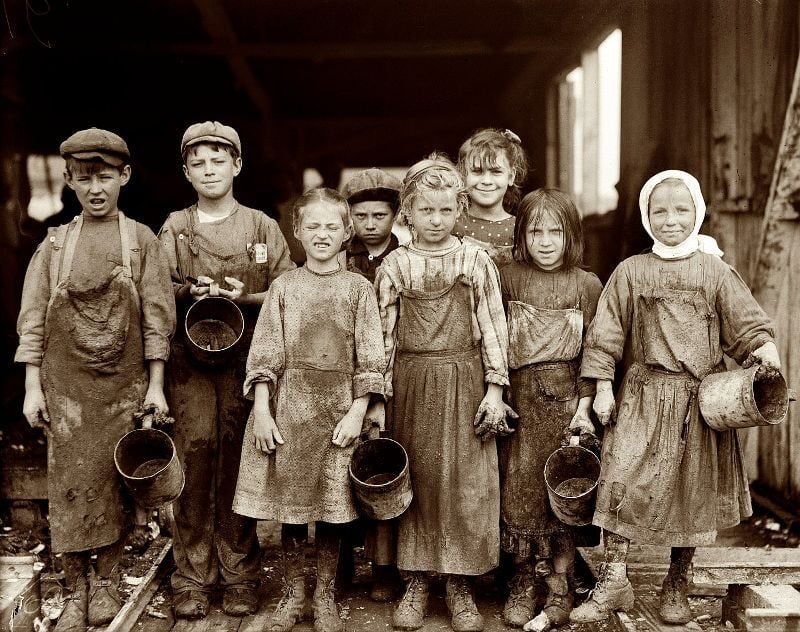
The average child consumed fewer than six hundred calories a day while burning more than three times that amount in physical labor. Eating like a Victorian child worker reveals the brutal truth. Food was not comfort. It was a ration calculated to keep a child alive just long enough to work again the next day.
The Victorian Child Worker Meal Plan (Recreation)

The Victorian Child Worker Meal (Recreation)

Don’t lose this one.
I’ll email it to you so it’s waiting when you’re ready to cook.
Ingredients
Instructions
Notes
- This meal is intentionally low-calorie and poorly seasoned to maintain historical accuracy. It is not meant to represent a healthy or balanced diet.
- Stale bread was the norm in Victorian slums because fresh bread was more expensive. Households bought bread a day or two old at a discount from bakeries.
- Poor man’s scouse varied widely, and in many homes, even the small bit of bacon was absent. Feel free to omit the meat entirely for an even more authentic historical recreation.