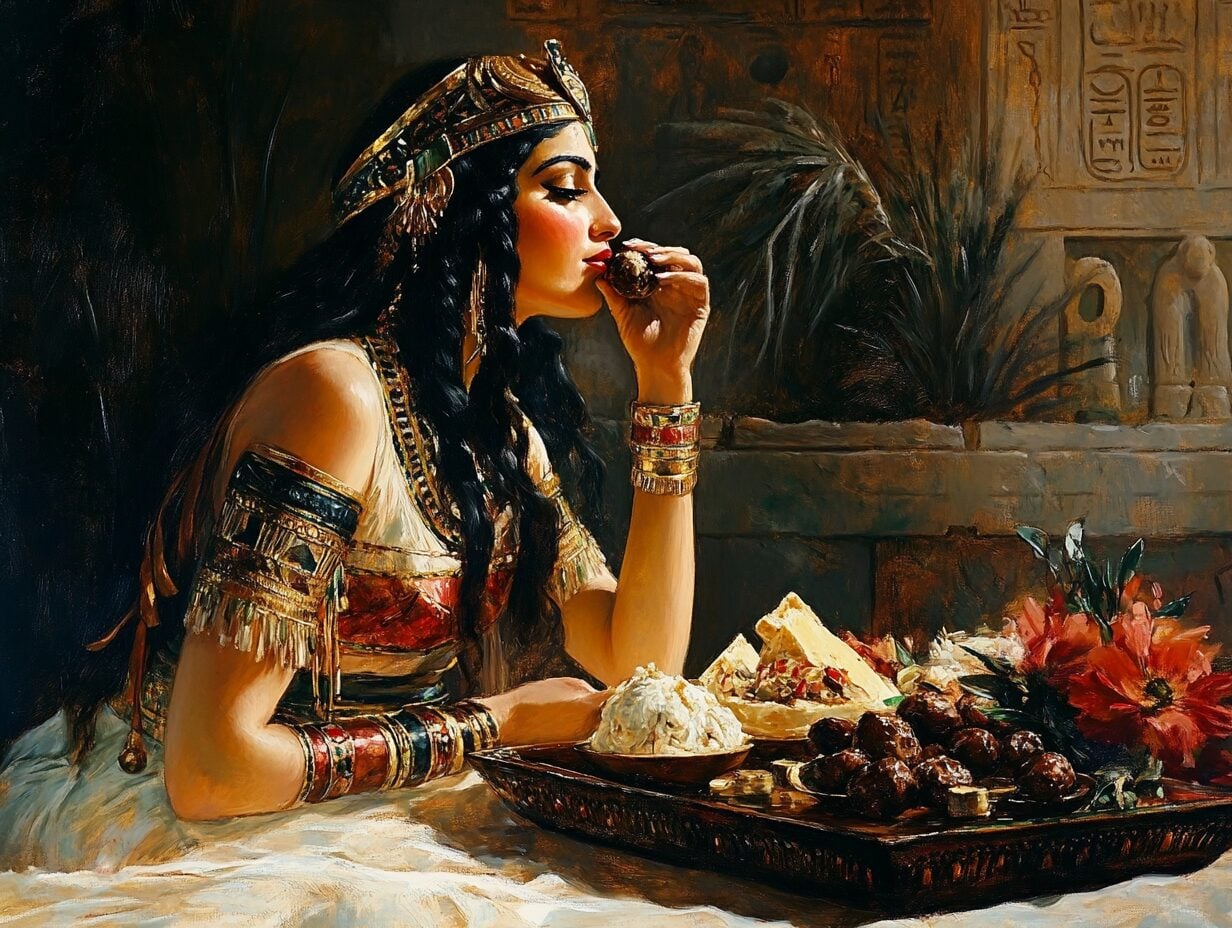
Cleopatra VII, last ruler of the Ptolemaic dynasty, presided over one of the most cosmopolitan courts in the ancient world. Her Alexandria was a fusion of Egyptian tradition, Hellenistic philosophy, Roman ambition, and Near Eastern luxury. This curated spread brings her world to your table, inspired by foods documented in historical texts, archaeological finds, and the cuisines of the cultures that shaped her reign.
Every dish is a carefully considered historical homage, a blend of flavor and fact, rich in symbolism and taste. Whether you’re a curious cook, a history lover, or simply in search of an extraordinary culinary experience, this platter tells the story of Cleopatra’s world through food.
Cleopatra: Queen of the Nile
Born in 69 BCE, Cleopatra was not just a symbol of seduction as she was portrayed in history; she was a polyglot, scholar, diplomat, and shrewd political strategist. Unlike her predecessors, she embraced her Egyptian identity, learning the language and adopting native customs. Her reign marked a final flourishing of pharaonic glory before Egypt fell under Roman rule.
She was a descendant of Ptolemy I Soter, one of Alexander the Great’s generals, and ruled Egypt as part of a Greco-Macedonian dynasty that had persisted for nearly three centuries. Yet Cleopatra stood apart by actively aligning herself with the native population, casting herself as the embodiment of the goddess Isis and appearing in traditional Egyptian garb in temple reliefs. Her charisma and intellect were her greatest tools of statecraft.
Next week
I cook these before I write them. Some of it never makes the post.
The failures, the source documents, the version that actually tasted good. That part goes out by email, and next week’s is already on the stove.
 Written and cooked by Donnie
Rise to Power
Cleopatra took the throne at 18 alongside her younger brother, Ptolemy XIII. After civil conflict and palace intrigue, she emerged as sole ruler with the help of Julius Caesar. Her intelligence and charisma helped her survive power struggles and maintain control of one of the ancient world’s wealthiest kingdoms.
Her dramatic meeting with Caesar, famously arriving rolled in a carpet, was just the beginning of a political alliance that secured her throne. By presenting herself as both Egyptian queen and Greco-Roman intellectual, Cleopatra commanded loyalty and awe from multiple worlds.
Caesar, Mark Antony & The Fall
Cleopatra’s alliances with Julius Caesar and later Mark Antony were both politically strategic and personally intimate. Together with Antony, she tried to carve out an eastern empire independent of Rome. But after their defeat at the Battle of Actium and the Roman conquest of Alexandria, both lovers died by suicide in 30 BCE. Egypt became a Roman province, and with Cleopatra’s death, the pharaonic era ended.
Their romance and political maneuvering were legendary even in their own time. Antony and Cleopatra’s court in Alexandria was described by Roman critics as decadent and foreign, but it was a hub of cultural sophistication. Their downfall marked not just the end of a dynasty, but the end of Egypt’s independence, a moment that reverberated through history, immortalized by Shakespeare and chroniclers alike.
Culinary Sources & Historical Backing
While no Egyptian cookbooks from Cleopatra’s time survive, dishes on this platter are supported by Roman texts (Apicius, Pliny), Hellenistic writers (Athenaeus), and Egyptian archaeology. Ingredients like emmer wheat, dates, barley, goat cheese, honey, cumin, and mint are documented in temple offerings, tombs, and trade records. This is a faithful reimagining of the flavors Cleopatra might have known, served with a modern touch of elegance.
References to luxurious banquets in Alexandria appear in the works of Athenaeus, while Apicius’s Roman recipes include versions of lamb meatballs and fruit-stuffed sweets. Ingredients like Nigella sativa and pomegranate molasses appear in ancient medicinal and culinary contexts, bridging Persian and Egyptian culinary worlds. The food on this platter may not be copied from a scroll, but it’s rooted deeply in a well-researched reconstruction of cross-cultural flavors.
A Taste of Multicultural Alexandria
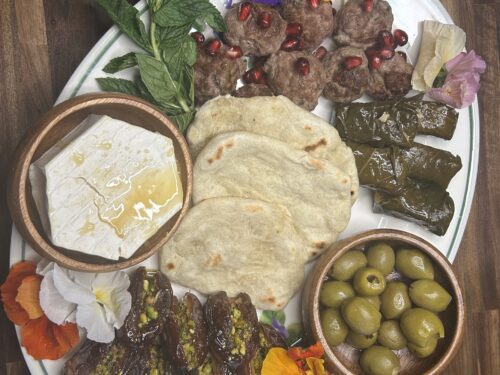
Each dish in this spread represents a different cultural thread:
- Emmer flatbread: the grain of the pharaohs
- Honeyed goat cheese: sacred temple food with Greek notes
- Stuffed dates: a sweet blend from Egypt and Mesopotamia
- Grape leaves with barley: a Greek staple seasoned with Levantine herbs
- Lamb meatballs: Roman-style isicia with Near Eastern spice
Alexandria under Cleopatra was a city where East met West, where Egyptian priests dined beside Macedonian scholars and Roman diplomats. This platter is designed to reflect that world—one of contrasts and harmonies. The result is a sensory journey through time, culture, and empire, unified by shared ingredients and overlapping culinary traditions.
The Egyptian Feast of Cleopatra: Recipe
If you’re enjoying my content, check out Eating With Empires, which is available now!
Cleopatra’s Feast

Don’t lose this one.
I’ll email it to you so it’s waiting when you’re ready to cook.
Ingredients
Instructions
Notes
- For a vegetarian version, skip the lamb meatballs and add more stuffed dates or a lentil-based dip.
- Emmer flour has a distinct nutty flavor—einkorn or spelt is a great substitute for modern kitchens.
- This platter is ideal for plating as a centerpiece, letting guests sample and build their own historical bite.