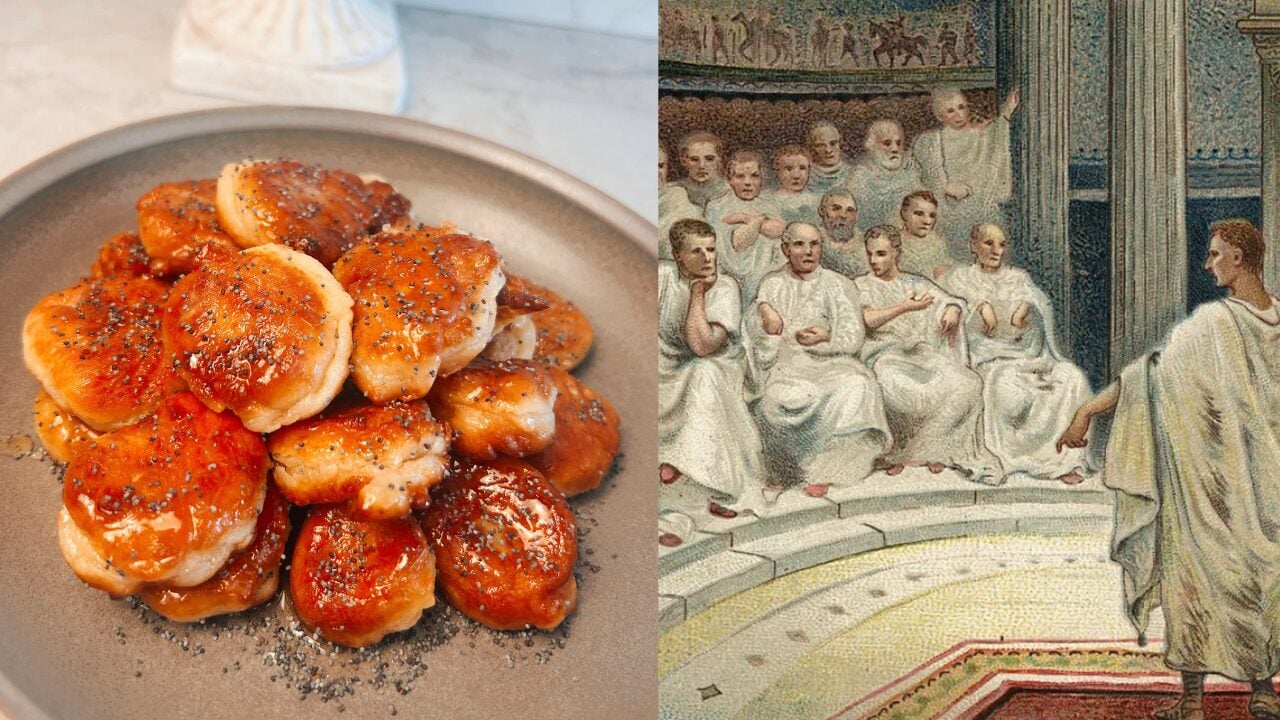
Imagine biting into a golden, crispy doughnut hole drizzled with honey—only this isn’t your average modern doughnut. These are globi, a sweet treat that dates back over 2,000 years to ancient Rome. Simple yet delicious, globi were made from cheese, flour, and honey, and fried to perfection.
If you’re enjoying my recipes, check out my e-cookbooks at Eats History Shop, now 40% Off!
They offer a taste of ancient history, with a blend of savory and sweet flavors that Romans once enjoyed at lavish feasts. Today, we’ll explore the origins of this unique Roman dessert, its place in society, and how you can recreate this ancient dish in your own kitchen.
The Dish: Globi Explained
Globi are essentially ancient Roman doughnut holes made from a mixture of cheese (often ricotta or fresh cheese) and flour, then fried in lard or oil. Once golden brown, they were coated in honey and sometimes sprinkled with poppy seeds, offering a balance of crunchy, soft, and sweet textures.
Next week
I cook these before I write them. Some of it never makes the post.
The failures, the source documents, the version that actually tasted good. That part goes out by email, and next week’s is already on the stove.
 Written and cooked by Donnie
These bite-sized treats were popular in Roman cuisine because they combined simplicity with indulgence—perfect for a festive occasion.
The dish’s most interesting aspect is its blend of flavors. Unlike the overly sweet desserts we’re accustomed to today, globi offered a subtle sweetness from honey and the creamy richness of cheese, creating a balanced taste that appealed to Roman palates.
The Origin of Globi: Cato’s De Agri Cultura
The earliest written record of globi comes from Cato the Elder in his agricultural treatise, De Agri Cultura (On Farming). Cato’s work, written around 160 BCE, is one of the oldest surviving pieces of Roman literature on farming and rural life. Globi appear in this text as part of a collection of simple, rustic recipes, designed for practical yet delicious cooking.
Cato’s version of globi was meant to be a humble dessert, relying on basic ingredients like cheese and honey, both of which were readily available to Romans at the time.
His recipe reflects the Roman practice of using food to demonstrate hospitality and the importance of balancing different flavors in a single dish.
When and Where Were Globi Eaten in Roman Society?
Globi were not an everyday dish; they were more likely to be enjoyed during special occasions, festivals, or banquets. In Roman society, sweet treats like globi would be served during the secunda mensa (the dessert course), following a feast.
The secunda mensa was an important part of the meal, signaling abundance and indulgence, especially for the wealthy. The dish’s fried, honey-coated exterior made it a desirable option for those looking to impress their guests with a rich, satisfying end to the meal.
While globi were especially popular among the elite, they were also enjoyed by middle-class Romans on special occasions, such as religious festivals or private celebrations.
Given the cost of ingredients like honey, these treats were considered a luxury and often reserved for moments of celebration or feasting.
Globi Recipe: How to Make Ancient Roman Doughnut Holes at Home
Now that you know the history behind this ancient Roman dessert, here’s how you can recreate globi in your own kitchen.

Globi

Don’t lose this one.
I’ll email it to you so it’s waiting when you’re ready to cook.
Ingredients
Instructions
Video
Notes
- Substitute for Garum: If garum is unavailable, you can use soy sauce or a small amount of fish sauce to replicate its umami flavor, or omit it for a purely sweet dish.
- Frying Tip: Make sure the oil is at the correct temperature (around 350°F) to avoid greasy doughnuts—too low and they will absorb oil, too high and they will burn quickly.
- Serving Suggestion: Globi are best served warm, straight after coating with honey, but they can also be reheated lightly to restore their crispy texture.