If you’ve ever wondered what fueled the builders of the Great Pyramid of Giza, I can tell you it wasn’t bacon and eggs. Their breakfast didn’t come with coffee or toast, but with flatbread, onions, honey, and beer. It sounds strange until you realize this simple meal powered some of the greatest architectural feats in human history.
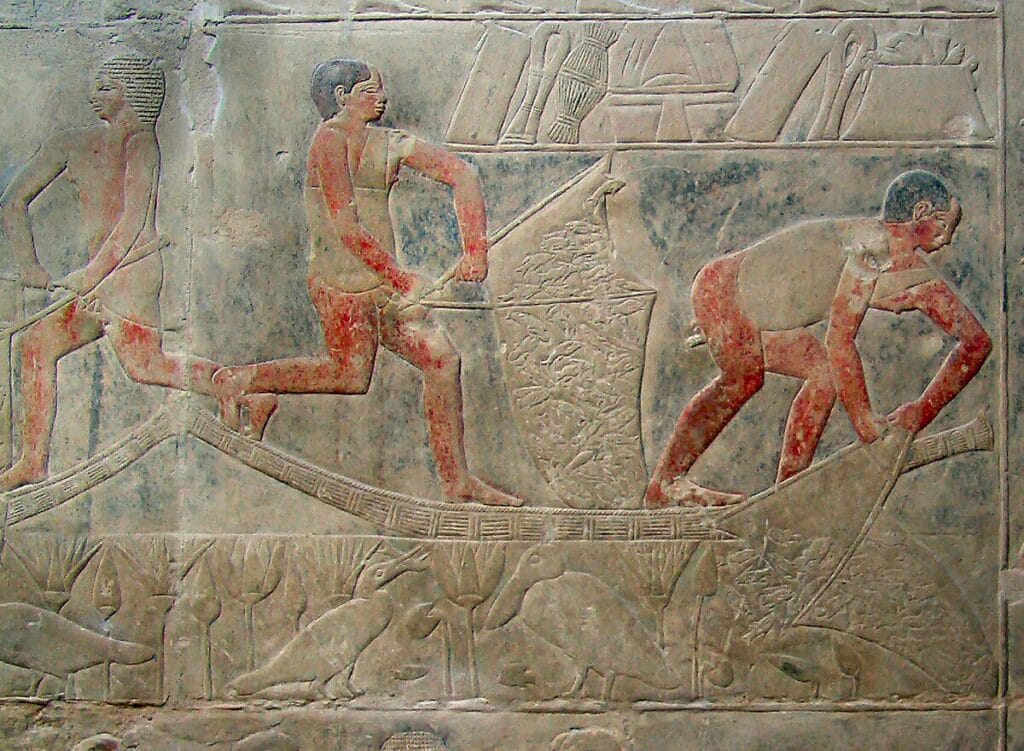
From the Tomb of Mereruka and other Old Kingdom inscriptions, we see clear depictions of rations being handed out to pyramid laborers—jugs of beer, piles of bread, onions, and fish. These weren’t slaves in chains but organized laborers, often skilled workers and common citizens who chose to serve the pharaoh instead of paying taxes. They received food, housing, and medical care for their efforts. So I decided to step into their sandals and see how it felt to eat like one of the workers who built the pyramids.
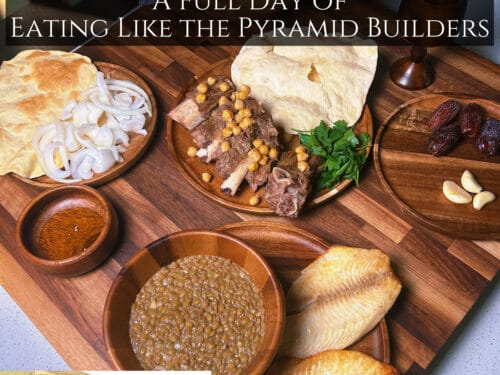
Breakfast – Flatbread, Onions, Honey, and Beer
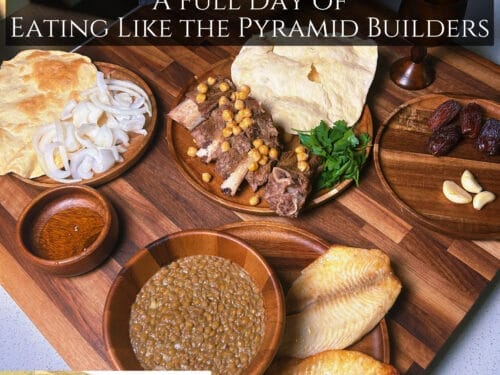
Breakfast was simple: flatbread made from emmer wheat, a raw onion, a drizzle of honey, and, yes, beer. It’s a bit carb heavy for my usual mornings, and the idea of a morning beer takes some getting used to, but surprisingly it works. The bread and honey gave me a rush of energy, the onion cleared my head, and the beer was surprisingly hydrating.
Ancient beer wasn’t like what we drink today. It was thick, mildly alcoholic, and full of calories—more like liquid bread. Archaeologists found that these workers were given up to several liters of beer per day, and along with their bread, this combo made up the foundation of their diet. It’s safe to say that by mid-morning, I was feeling alright.
Next week
I cook these before I write them. Some of it never makes the post.
The failures, the source documents, the version that actually tasted good. That part goes out by email, and next week’s is already on the stove.
 Written and cooked by Donnie
Snack – Dates and Garlic
For a quick snack, I grabbed what was easy and portable: dried dates and raw garlic. It’s not exactly a flavor pairing I’d recommend, but it makes sense. Dates are full of sugar and easy to transport, while garlic was valued for its medicinal properties. Ancient sources mention garlic and onions as rations distributed to workers, and even Herodotus wrote that they were considered essential to maintaining health and endurance.
It’s a funky combination, and I definitely brushed my teeth a lot that day, but it’s fascinating to think how something so simple—just two ingredients—could keep a workforce going under the Egyptian sun.
Lunch – Salted Tilapia and Lentil Stew
After a long morning of carrying imaginary limestone blocks with my “alien friends” (thanks, History Channel), I sat down for lunch: two salted tilapia fillets and a side of lentil soup made with garlic and salt.
This was my first real source of protein for the day, and it hit the spot. The lentils were warm and earthy, and the salted fish added just the right amount of flavor. Excavations at the workers’ village of Heit el-Ghurab show that Nile fish were salted, dried, and distributed to laborers, alongside lentils and peas. Historians estimate that the pyramid builders consumed around 3,000 to 4,000 calories a day, fueled by food like this. It was simple, filling, and surprisingly balanced.
Dinner – Lamb, Chickpeas, and Flatbread
By evening, the workers returned to their lodgings, where dinner might include meat for those who earned it. I finished my day with stewed lamb ribs, cooked bone-in and simmered with salt, cumin, and chickpeas, served with more flatbread and a cup of beer.
Archaeological digs at Giza have uncovered massive quantities of animal bones—mostly cattle, goats, and sheep—which shows that skilled laborers and overseers often ate meat. This wasn’t the diet of slaves but of a state-supported workforce. It was part reward, part necessity, and a reflection of how important these workers were to the pharaoh’s grand vision.
Life and Labor on the Giza Plateau
It’s strange to think of pyramid building as a government job, but that’s exactly what it was. These laborers lived in organized villages with bakeries, breweries, and kitchens. Their wages came in the form of food: bread, beer, onions, and fish. They even received medical care, something almost unheard of for most people in the ancient world. Inscriptions and archaeological finds from the Old Kingdom give us one of the clearest pictures of a structured, state-supported workforce anywhere in antiquity.
What I love about this is how it redefines our view of ancient Egypt. These weren’t faceless slaves but real people—craftsmen, bakers, brewers, and builders—who ate, worked, and celebrated together while creating one of the greatest monuments of human history.
Final Thoughts
So how did the day feel? Honestly, not bad. The breakfast was rough—flatbread, honey, and beer is a wild combo—but after that, the meals were solid. The tilapia and lentil stew were flavorful and satisfying, and the lamb with chickpeas was downright delicious.
The diet was rich in carbs and plant protein, with just enough fat and salt to keep energy high. It’s easy to see how these workers could spend entire days hauling stone blocks in the heat. Eating like this for a day reminded me how ancient diets were practical, sustaining, and more thought-out than most people realize.
8.4/10. A surprisingly balanced day of eating from one of history’s most fascinating workforces.
Recipe: The Diet of an Egyptian Pyramid Builder
The Diet of an Egyptian Pyramid Builder

Don’t lose this one.
I’ll email it to you so it’s waiting when you’re ready to cook.
Ingredients
Instructions
Notes
- Use emmer or whole wheat flour for an authentic nutty flavor in the flatbread, but modern all-purpose works fine in a pinch.
- The beer of ancient Egypt was thick, mildly alcoholic, and full of calories—if you want a substitute, try a malty, unfiltered ale or even a barley-based nonalcoholic brew.
- The lamb stew improves with time—let it rest after cooking so the chickpeas absorb the cumin broth and the meat stays tender.