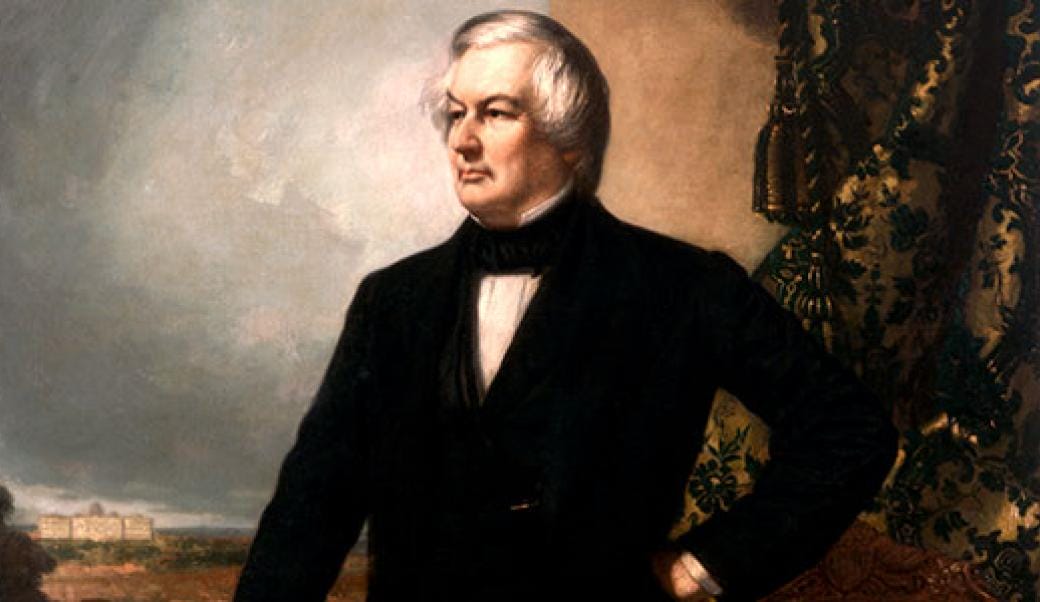
Millard Fillmore, the 13th President of the United States, may not be as widely recognized as some of his predecessors, but his contributions to the nation’s early years were significant.
Born into a modest farming family in upstate New York, Fillmore’s upbringing was rooted in the simplicity and hard work that characterized rural American life in the early 19th century. It is no surprise that his favorite food reflected these humble beginnings: a hearty one-pot beef stew.
Fillmore’s Early Life and Rise to the Presidency
Millard Fillmore was born on January 7, 1800, in a log cabin in Cayuga County, New York. Growing up in poverty, he worked on his family’s farm and apprenticed as a cloth maker before pursuing an education. Despite his humble beginnings, Fillmore’s ambition led him to study law and eventually enter politics.
Fillmore’s political career began in the New York State Assembly, and he later served in the U.S. House of Representatives. His work in Congress, particularly his involvement in the drafting of the Compromise of 1850, positioned him as a key figure in the Whig Party.
Next week
I cook these before I write them. Some of it never makes the post.
The failures, the source documents, the version that actually tasted good. That part goes out by email, and next week’s is already on the stove.
 Written and cooked by Donnie
When President Zachary Taylor unexpectedly died in 1850, Vice President Fillmore assumed the presidency during a tumultuous time in American history.
Presidency: Navigating a Nation on the Brink
Fillmore’s presidency (1850-1853) was marked by his efforts to maintain national unity amidst growing tensions over slavery. The Compromise of 1850, which he strongly supported, included measures like the Fugitive Slave Act and the admission of California as a free state.
While the Compromise temporarily eased sectional tensions, it also deepened divisions that would later lead to the Civil War.
During his presidency, Fillmore also oversaw significant domestic developments, including the opening of Japan to American trade with the Perry Expedition and the construction of the first transcontinental railroad route. However, his support for the Fugitive Slave Act and the enforcement of it led to a decline in his popularity, especially in the Northern states.
Despite the political challenges of his presidency, Fillmore remained grounded in his personal life. He was known for his modesty and practicality, traits that were reflected in his choice of food.
Fillmore’s Connection to One-Pot Beef Stew
Millard Fillmore’s favorite dish, one-pot beef stew, was a reflection of his simple, straightforward approach to life. As a man who grew up in a rural environment, Fillmore appreciated meals that were not only nourishing but also practical.
One-pot beef stew, with its tender chunks of beef, hearty vegetables, and rich broth, was a staple in the Fillmore household.
The dish’s preparation, which involves cooking all ingredients together in a single pot, was ideal for a busy man like Fillmore, who valued efficiency and resourcefulness. The ingredients—beef, potatoes, carrots, and onions—were readily available and affordable, making it a dish that was both economical and satisfying.
Recipe: Millard Fillmore’s One-Pot Beef Stew
This one-pot beef stew recipe is inspired by the traditional methods that would have been used in the 19th century, offering a taste of the comforting, nourishing meal that Millard Fillmore would have enjoyed.
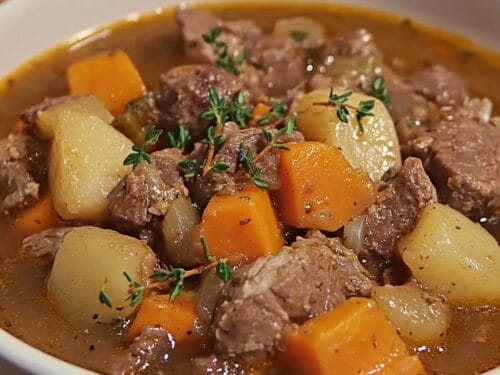
One Pot Beef Stew

Don’t lose this one.
I’ll email it to you so it’s waiting when you’re ready to cook.