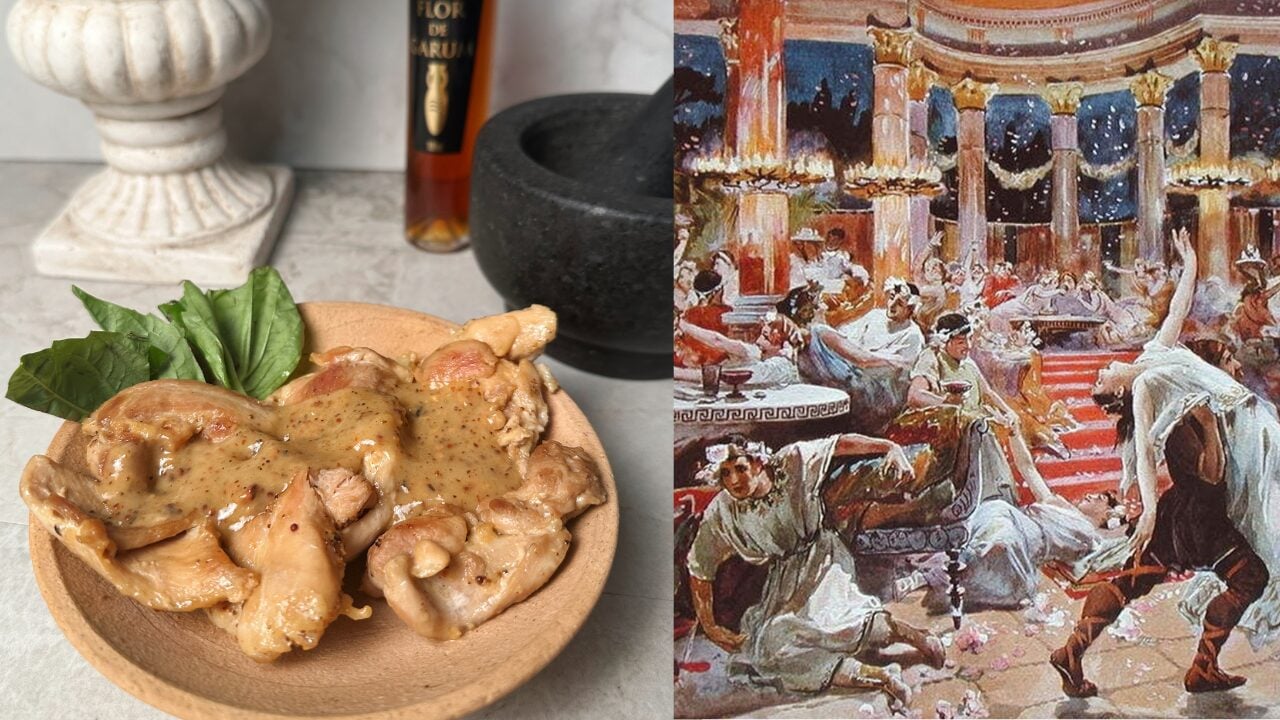
Step back in time and experience the flavors of ancient Rome with Parthian Chicken, or Pullum Particum, a dish that reflects Rome’s fascination with exotic tastes and the cultural influences they encountered during their empire’s expansion.
This Roman chicken recipe, featured in the famous cookbook De Re Coquinaria by Apicius, is an enticing blend of tender chicken thighs, aromatic leeks, red wine, and a medley of spices that transports us to the opulent feasts of Roman society.
Today, we explore not only the dish but the fascinating history that links it to one of Rome’s most formidable rivals, the Parthian Empire.
De Re Coquinaria by Apicius
Pullum Particum is a recipe recorded in the ancient Roman culinary collection known as De Re Coquinaria, attributed to Apicius, a famed Roman gourmand. The cookbook, compiled around the 4th or 5th century AD, contains hundreds of recipes that provide a glimpse into the sophisticated culinary practices of the Roman elite.
Next week
I cook these before I write them. Some of it never makes the post.
The failures, the source documents, the version that actually tasted good. That part goes out by email, and next week’s is already on the stove.
 Written and cooked by Donnie
Parthian Chicken gets its name from the Parthian Empire, a reference to the foreign, exotic spices used in the dish, evoking the flavors of the distant East.
Roman cuisine often borrowed from the cultures it encountered, incorporating spices and techniques that represented the wealth and reach of the empire.
Who Were the Parthians?
The Parthian Empire (247 BC – 224 AD) was a major power in ancient Persia, located in what is today Iran. The Parthians were known for their skilled horsemen and archers, as well as their extensive trade networks that connected the East and the West along the Silk Road.
They were formidable rivals of Rome, and their culture was seen as exotic and mysterious by the Romans, who both admired and feared their power.
The name “Parthian” in Pullum Particum is likely a nod to the spices and flavors associated with this distant land, which would have been seen as luxurious and adventurous for Roman diners.
Parthia’s Relationship with Rome
The relationship between Rome and Parthia was complex, marked by rivalry, diplomacy, and cultural exchange. The two empires were often at odds over control of territories in the Near East, particularly Armenia and Mesopotamia.
Despite their rivalry, there was a significant amount of trade between Rome and Parthia, with goods such as spices, silk, and precious metals flowing between the two empires.
These exchanges influenced Roman cuisine, and dishes like Parthian Chicken reflect the incorporation of exotic ingredients that came from or through Parthian lands.
The Battle of Carrhae
One of the most significant events in the history of Roman-Parthian relations was the Battle of Carrhae in 53 BC, where the Parthians dealt a crushing defeat to the Roman general Crassus.
This battle was one of the worst defeats Rome ever suffered and showcased the superior tactics and cavalry of the Parthian forces. The Parthians’ effective use of mounted archers and their famous “Parthian shot” — firing arrows while retreating — humiliated the Roman legions.
Despite the military conflicts, the cultural influence of Parthia persisted, especially in Roman cuisine, where dishes like Pullum Particum emerged as a culinary tribute to the flavors of their powerful eastern rivals.
Parthian Chicken Recipe:
Now that we’ve explored the rich history behind Parthian Chicken, let’s recreate this ancient dish in your own kitchen.
If you’re enjoying my content consider buying me a coffee 🙂
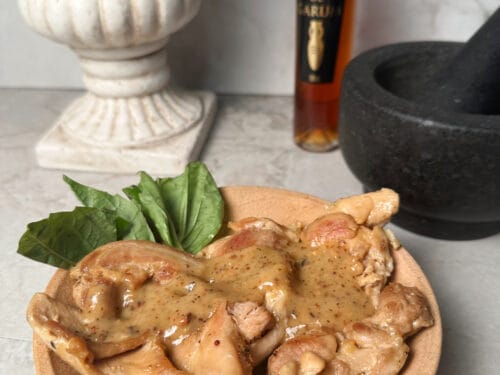
Parthian Chicken (Pullum Particum)

Don’t lose this one.
I’ll email it to you so it’s waiting when you’re ready to cook.
Ingredients
Instructions
Notes
- Long Pepper vs. Black Pepper: If you can find long pepper, use it. It is more complex and historically accurate. Black pepper works, but long pepper gives a sweeter, more resinous heat.
- Garum Quality Matters: Use a good Italian colatura di alici or high-quality fish sauce. Cheap fish sauce can overpower the dish. You want depth, not harsh saltiness.
- Bone-In vs Boneless: Bone-in thighs give better flavor and a more authentic braised texture. Boneless cooks faster and works well if filming or short on time.