In the twilight of the Romanov dynasty, one man captivated the Russian court like no other—Grigori Rasputin. A self-proclaimed mystic and healer, Rasputin emerged from the Siberian wilderness to become one of the most controversial and influential figures in imperial Russia. With his piercing gaze, unkempt beard, and hypnotic presence, he enchanted the Tsarina Alexandra, convincing her that he alone could save her hemophiliac son, Alexei.
His influence over the royal family bred resentment among the nobility, making him both an object of fascination and revulsion. It was at lavish feasts and secretive gatherings that Rasputin’s larger-than-life persona truly came to light—one such occasion being a decadent dinner party thrown in his honor, where his favorite dish, Selianka d’esturgeon, was served.
The Rise of Rasputin: A Holy Man or a Con Artist?
Rasputin arrived in St. Petersburg in the early 1900s, bringing with him an air of mysticism and a reputation for miraculous healing powers. His association with the royal family deepened when Tsarina Alexandra became convinced that he alone could stop Alexei’s deadly bleeding episodes. This unwavering faith gave Rasputin unprecedented access to the highest echelons of power, allowing him to influence political decisions, ministerial appointments, and even war strategy.
While the Tsar’s advisors saw him as a dangerous manipulator, others viewed him as a divine emissary. His presence at court was as intoxicating as it was unsettling, much like his erratic behavior and legendary appetites—both for indulgence and control.
Next week
I cook these before I write them. Some of it never makes the post.
The failures, the source documents, the version that actually tasted good. That part goes out by email, and next week’s is already on the stove.
 Written and cooked by Donnie
A Lavish Banquet for the Unruly Mystic

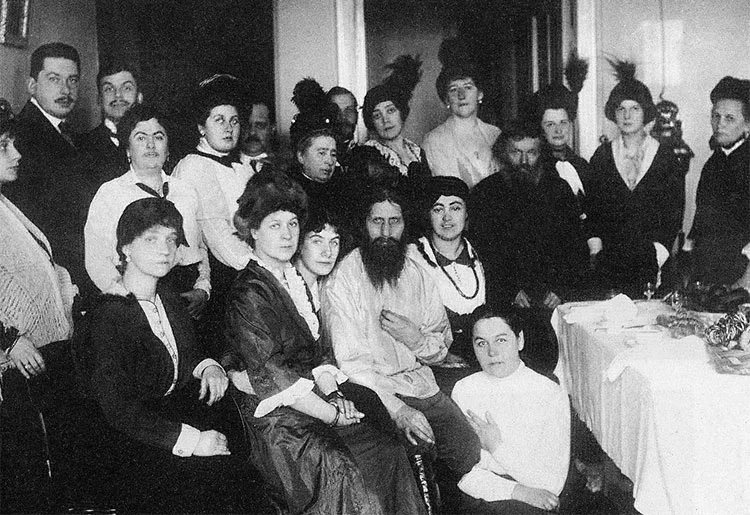
One evening, Rasputin was invited to an intimate yet extravagant dinner hosted by Princess X, an event orchestrated with exclusively female guests—”the beauty and power of feminine Russia.” The guest list consisted of influential women and their daughters, gathered to celebrate the enigmatic mystic’s influence.
Joseph Vecchi, a renowned restauranteur who managed the Astoria in St. Petersburg, was tasked with ensuring Rasputin’s arrival and departure remained discreet. The evening’s menu was an ode to imperial excess, featuring caviar, Borscht Petite Russienne, and L’Agneau Caucasienne à la Broche. Yet, among the opulent courses, one dish stood out as Rasputin’s particular favorite: Selianka d’esturgeon, a thick, hearty fish stew infused with pickled mushrooms, salted cucumbers, and black pepper—a meal that embodied the robust, earthy flavors of Russia.
Selianka d’Esturgeon: A Dish Fit for a Mad Monk
Selianka (or Solyanka) was a traditional Russian soup, enjoyed in many variations—made with meat, mushrooms, or fish. Rasputin’s preferred version was sturgeon-based, a luxurious and fatty fish commonly reserved for the aristocracy. According to Vecchi, the recipe was obtained from the court chef and prepared as follows: finely shredded cabbage was slow-cooked with onions, cooking apples, olive oil, and black pepper before being layered with floured and fried sturgeon.
The dish was finished with a garnish of salted cucumbers and pickled mushrooms, breadcrumbs were sprinkled over the top, and it was baked until golden brown. This rich, tangy, and slightly sour stew reflected Rasputin’s own contradictions—at once indulgent and deeply rooted in rustic tradition.
A Beast at the Table
Despite the elegance of the gathering, Rasputin’s table manners were abhorrent. As Vecchi recalled, he ate “like a beast,” using his long, talon-like fingers in place of cutlery, grabbing at his food with no regard for the distinguished ladies around him. His gluttonous display, marked by loud chewing and vulgar table habits, repelled even those who admired him.
Yet, Rasputin’s unchecked behavior was part of his mystique—his defiance of etiquette was an assertion of power, a reminder that he operated beyond the constraints of nobility and refinement. For all his supposed spiritualism, he reveled in earthly pleasures—food, drink, and the company of women.
The Murder of Rasputin: A Poisoned Feast

Rasputin’s unchecked influence over the Romanovs made him a target of conspiracy. By 1916, a faction of nobles, led by Prince Felix Yusupov, had resolved to eliminate him. Ironically, his final night mirrored the extravagant meals he once enjoyed—except this time, the feast was a trap.
Invited to Yusupov’s palace under false pretenses, Rasputin was served cyanide-laced cakes and poisoned wine. To the conspirators’ shock, he showed no immediate reaction. Panic set in as Rasputin refused to die, leading his assassins to shoot him multiple times, beat him, and finally throw his body into the icy Neva River.
The Legacy of the “Mad Monk”
Even in death, Rasputin’s legend grew larger than life. Some whispered that he had placed a curse on the Romanovs, predicting their downfall—indeed, within two years, the entire imperial family would be executed by Bolsheviks. His mysticism, excess, and political maneuvering left an indelible mark on Russian history, making him one of the most enigmatic figures of the 20th century. His favorite meal, Selianka d’esturgeon, remains a curious relic of his presence in the imperial court—a dish once served at feasts of influence, power, and scandal.
Today, Selianka continues to be a beloved dish in Russian cuisine, but the thought of Rasputin greedily devouring it at a candlelit banquet, surrounded by aristocratic women both in awe and disgust, reminds us that food is not just sustenance—it is a window into history, a symbol of the power and decadence that ultimately led to his gruesome fate.
Selianka d’Esturgeon with Cream Gravy Recipe:
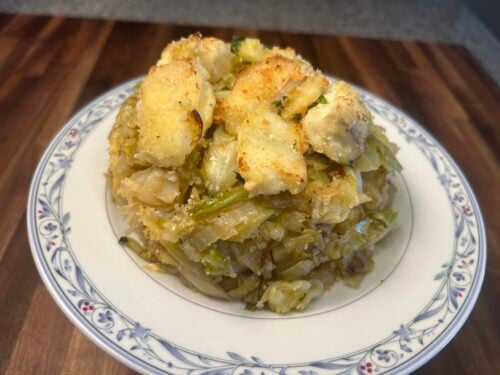
Rasputin’s Favorite Meal: Selianka d’Esturgeon

Don’t lose this one.
I’ll email it to you so it’s waiting when you’re ready to cook.
Ingredients
Instructions
Notes
- Fish Substitutes: If sturgeon is unavailable, cod, halibut, or even salmon work well as substitutes while maintaining a rich, firm texture.
- Cabbage Texture Tip: To get the best soft, melt-in-your-mouth cabbage, cook it low and slow, allowing the natural moisture to release and combine with the apples.
- Make-Ahead Option: The cabbage base and cream gravy can be made a day in advance for easier preparation. Just assemble and bake when ready to serve!