The turn of the 20th century was a time of great change and innovation, with culinary trends reflecting the era’s broader shifts.
Among the many dishes that gained popularity during the 1900s, Beef Stroganoff stands out as a symbol of the period’s fascination with international flavors and the blending of old-world traditions with new-world convenience.
This creamy, savory dish, with its roots in Russian aristocracy, became a favorite in households and restaurants across the globe. But how did this dish, once reserved for the Russian elite, find its way into the hearts (and stomachs) of the world during the early 1900s?
Let’s explore the story behind Beef Stroganoff and its rise to fame during this pivotal decade.
Next week
I cook these before I write them. Some of it never makes the post.
The failures, the source documents, the version that actually tasted good. That part goes out by email, and next week’s is already on the stove.
 Written and cooked by Donnie
The Era of Transformation
The dawn of the 20th century was a period of profound transformation across the globe, particularly in the United States and Europe. The 1900s, often referred to as the Edwardian era in Britain and the Progressive Era in the United States, were characterized by technological advancements, social reforms, and a growing middle class with newfound purchasing power.
These changes significantly influenced culinary practices, leading to the emergence of new food trends and the popularization of international dishes like Beef Stroganoff.
Technological Advancements and the Modern Kitchen
The industrial revolution of the late 19th century had paved the way for mass production and distribution of food products, making a wider variety of ingredients available to the average household.
For the first time, home cooks could easily access canned goods, pre-packaged foods, and fresh produce year-round, thanks to advances in refrigeration and transportation. This period also saw the rise of the modern kitchen, with gas stoves, ovens, and other appliances becoming more common, allowing for more sophisticated cooking techniques to be practiced at home.
Cultural Exchange and Globalization
In the social sphere, the 1900s were a time of increasing globalization and cultural exchange. The world’s fairs, such as the 1900 Paris Exposition and the 1904 St. Louis World’s Fair, showcased international cuisine to wide audiences, sparking interest in foreign dishes.
The influx of immigrants to the United States brought with them their culinary traditions, which began to blend with American cuisine. Russian immigrants, in particular, played a key role in introducing dishes like Beef Stroganoff to the American public.
The Influence of French Cuisine
Simultaneously, there was a growing fascination with French cuisine, which was considered the gold standard of culinary excellence. This was due in part to the influence of Auguste Escoffier, a renowned French chef who revolutionized restaurant kitchens and culinary practices.
Escoffier’s techniques and the emphasis on rich sauces and fine ingredients resonated with the upper classes and eventually trickled down to middle-class households eager to replicate these sophisticated dishes.
Dining Out and the Rise of International Dishes
During this time, dining out became increasingly popular, and restaurants began to cater to the tastes of a more diverse clientele.
Menus started featuring international dishes, and Beef Stroganoff, with its rich, creamy sauce and tender beef, was a natural fit for this era of indulgence and culinary exploration.
The dish’s appeal was further enhanced by its adaptability; it could be served in upscale settings or made at home with more affordable cuts of beef, making it accessible to a wide range of people.
The Modern Cookbook Era
The 1900s also marked the beginning of the modern cookbook era. Cookbooks became more widely available and affordable, offering home cooks step-by-step instructions for preparing dishes from around the world.
Beef Stroganoff began appearing in these cookbooks, further cementing its place in the culinary repertoire of the time. Its association with the Russian aristocracy and its luxurious flavor profile made it an aspirational dish for many families.
A Symbol of Blending Tradition and Modernity
As the decade progressed, Beef Stroganoff’s popularity continued to grow, not only in Europe and the United States but also in other parts of the world. It became a symbol of the era’s blending of tradition and modernity—a dish that was both rooted in history and reflective of the new culinary possibilities of the 20th century.
Beef Stroganoff Recipe:
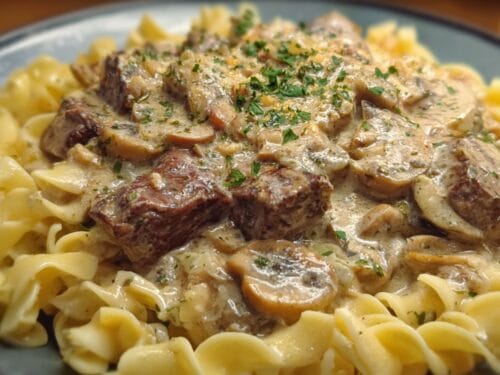
Beef Stroganoff

Don’t lose this one.
I’ll email it to you so it’s waiting when you’re ready to cook.
Ingredients
Instructions

Notes
- Cut Selection: For the most tender and flavorful Beef Stroganoff, choose high-quality cuts like sirloin or tenderloin. If using tougher cuts, consider slow cooking the beef to achieve tenderness.
- Sauce Consistency: To avoid curdling, make sure to add the sour cream at a low temperature and stir it in gradually. You can also temper the sour cream with a bit of warm sauce before mixing it into the dish.
- Serving Options: While traditionally served over egg noodles, Beef Stroganoff pairs well with rice, mashed potatoes, or even crusty bread to soak up the rich sauce.