Few dishes have a history as rich and hotly debated as the Scotch egg. Whether you picture it as a pub snack, a picnic favorite, or a pub grub classic, its roots run much deeper than the breadcrumbed sausage-wrapped versions we know today.
If you’re enjoying my recipes, all of my e-cookbooks are currently 40% Off!
The earliest written recipe for Scotch eggs dates back to the early 19th century, found in Maria Rundell’s A New System of Domestic Cookery (1806). Her instructions reveal a dish that was more refined and indulgent, wrapped not in breadcrumbs, but in a luxurious forcemeat of ham, veal, and anchovy, and fried to a golden “beautiful yellow brown.”
The Mystery of Its Origins
Ask where Scotch eggs came from, and you’ll find yourself in the middle of a centuries-old debate. Some claim that Fortnum & Mason invented the dish in 1738 as a portable meal for travelers heading north from London. Others argue that it may have been inspired by nargisi kofta, a Mughal dish from India that paired spiced minced meat with a boiled egg — a recipe that British colonials could easily have adapted during their time abroad. Whatever its true origin, by the early 1800s, the Scotch egg had become a fashionable dish served in British homes and inns alike.
Next week
I cook these before I write them. Some of it never makes the post.
The failures, the source documents, the version that actually tasted good. That part goes out by email, and next week’s is already on the stove.
 Written and cooked by Donnie
In its earliest form, this dish was less about convenience and more about luxury. Rundell’s recipe calls for fine meats, anchovies, and good gravy, ingredients that made it a centerpiece at Regency luncheons or cold suppers. These weren’t the breadcrumb-coated picnic eggs you’d grab at a petrol station; they were rich, salty, and elegant.
The Regency Table and Early Variations
Early 19th-century English cooking balanced indulgence with practicality. Meat was the measure of prosperity, and dishes like this represented abundance. Rundell’s Scotch eggs were made by wrapping hard-boiled eggs in a seasoned forcemeat — often ham, veal, and pork — and frying them in lard or dripping. There were no breadcrumbs, no runny yolks, and no shortcuts.
Instead, the dish focused on the richness of the meat. Anchovy and nutmeg provided depth and aroma, thyme and parsley added freshness, and the final fry in lard gave the egg a satisfying crispness. Served with a glossy brown gravy, this version was closer to a full meal than a snack. For the working class, it was the kind of food you might dream of but rarely afford.
The Evolution into a Modern Classic
As the 19th century progressed, Scotch eggs evolved into something more familiar. By the Victorian period, breadcrumbs were introduced for texture and presentation, and cold service became common for picnics and traveling meals. The recipe slowly shifted from ham and veal to sausage meat, which was cheaper and more widely available.
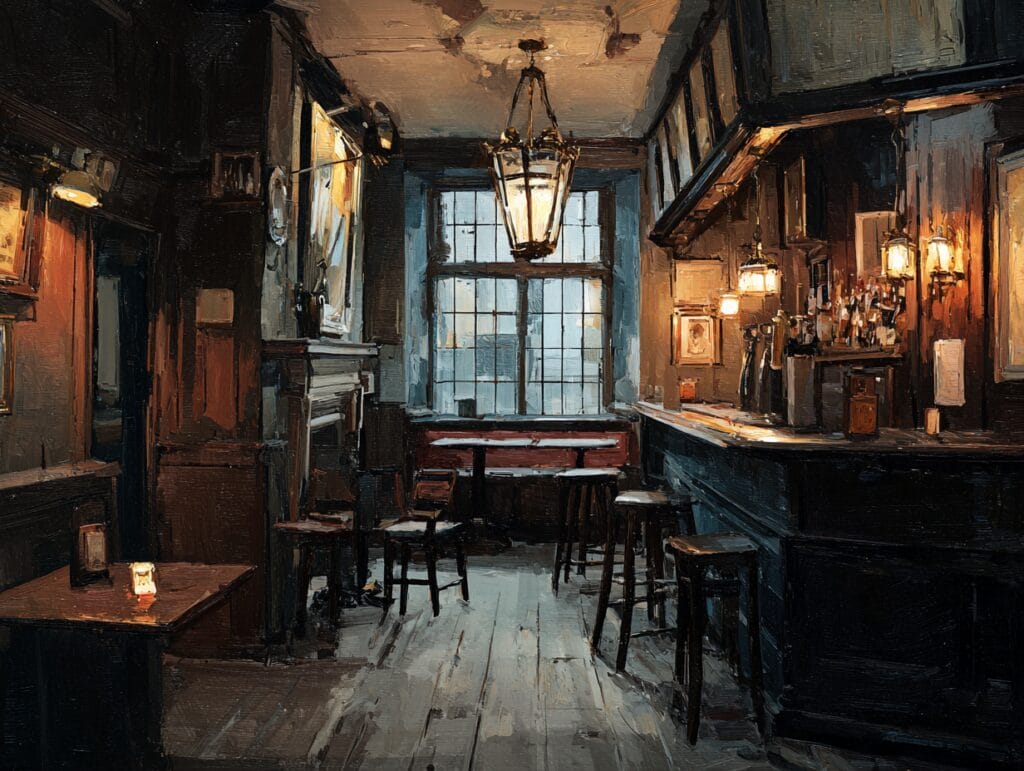
By the 20th century, Scotch eggs were a staple of pubs and corner shops across Britain, the dish was hearty, portable, and beloved. Yet, when you return to Rundell’s version, you can still see the elegance in its simplicity. It’s a reminder that the earliest Scotch eggs weren’t made for convenience, but for pleasure.
Cooking the Original 1805 Recipe
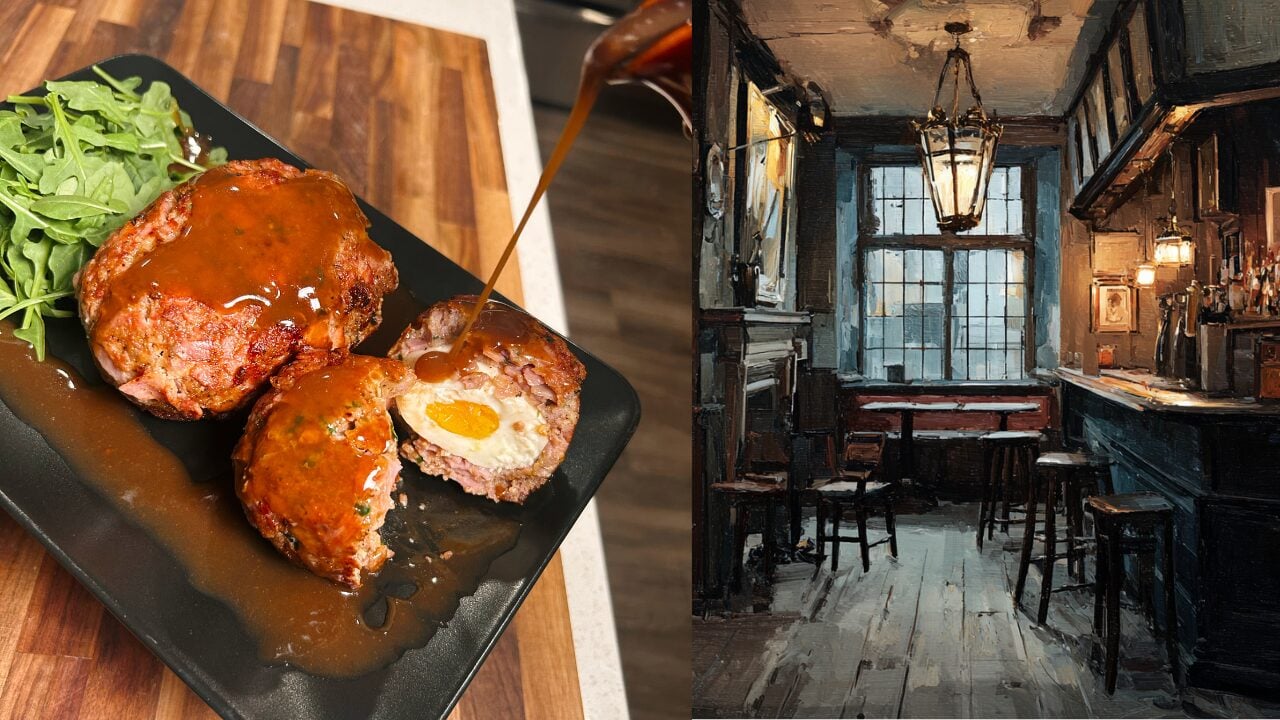
To recreate Rundell’s early 19th-century recipe, I followed her exact proportions: a mixture of minced ham and sausage meat, seasoned with parsley, thyme, shallot, and nutmeg. Each hard-boiled egg was encased in this rich forcemeat and fried until golden. There were no breadcrumbs, no soft yolks — just dense, savory flavor. Served with a ladle of hot brown gravy, it was every bit as hearty as it sounds.
The process itself feels timeless. The smell of frying meat, the sound of the sizzle, and the sight of golden brown eggs emerging from hot lard all evoke that old English kitchen scene. These were foods meant to fortify you, not dazzle you with presentation, humble, heavy, and proud.
A Dish of Indulgence and Survival
When I sat down to taste the finished dish, I could immediately tell why this was such a prized meal in its day. The salt from the ham and anchovy, the subtle spice from nutmeg, and the richness of the meat wrapped around the firm egg created a powerful, savory bite. But it’s dense — a true test of 19th-century fortitude. Halfway through one, I could feel the cholesterol leaping out of my veins. It’s indulgent, hearty, and deeply satisfying… for about five minutes before you need a long walk.
Still, as a culinary time capsule, it’s remarkable. Each bite connects you to the kitchens of the Georgian and Regency eras, when “fine cookery” meant richness, and nothing said comfort quite like meat, eggs, and hot gravy.
My Rating
For flavor and historical authenticity, I give it a 6.7 out of 10. It’s delicious, salty, and comforting — but definitely a dish best shared or saved for a rare indulgence. It’s not the sort of thing you eat every week, but rather one you make to understand how people truly ate two centuries ago.
Recipe: Authentic Early 19th-Century Scotch Eggs (c. 1805–1807)
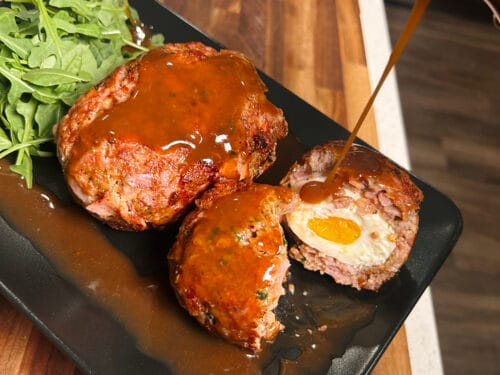
Authentic Early 19th-Century Scotch Eggs

Don’t lose this one.
I’ll email it to you so it’s waiting when you’re ready to cook.
Ingredients
Instructions
Notes
- Skip the breadcrumbs: Rundell’s version is fried directly, not breaded — this keeps it authentic to the early 1800s.
- Add anchovy for depth: Traditional Regency cooks used chopped anchovy for umami — it transforms the flavor.
- Don’t skip the gravy: It ties the whole dish together and reflects how it would have been served in its time.