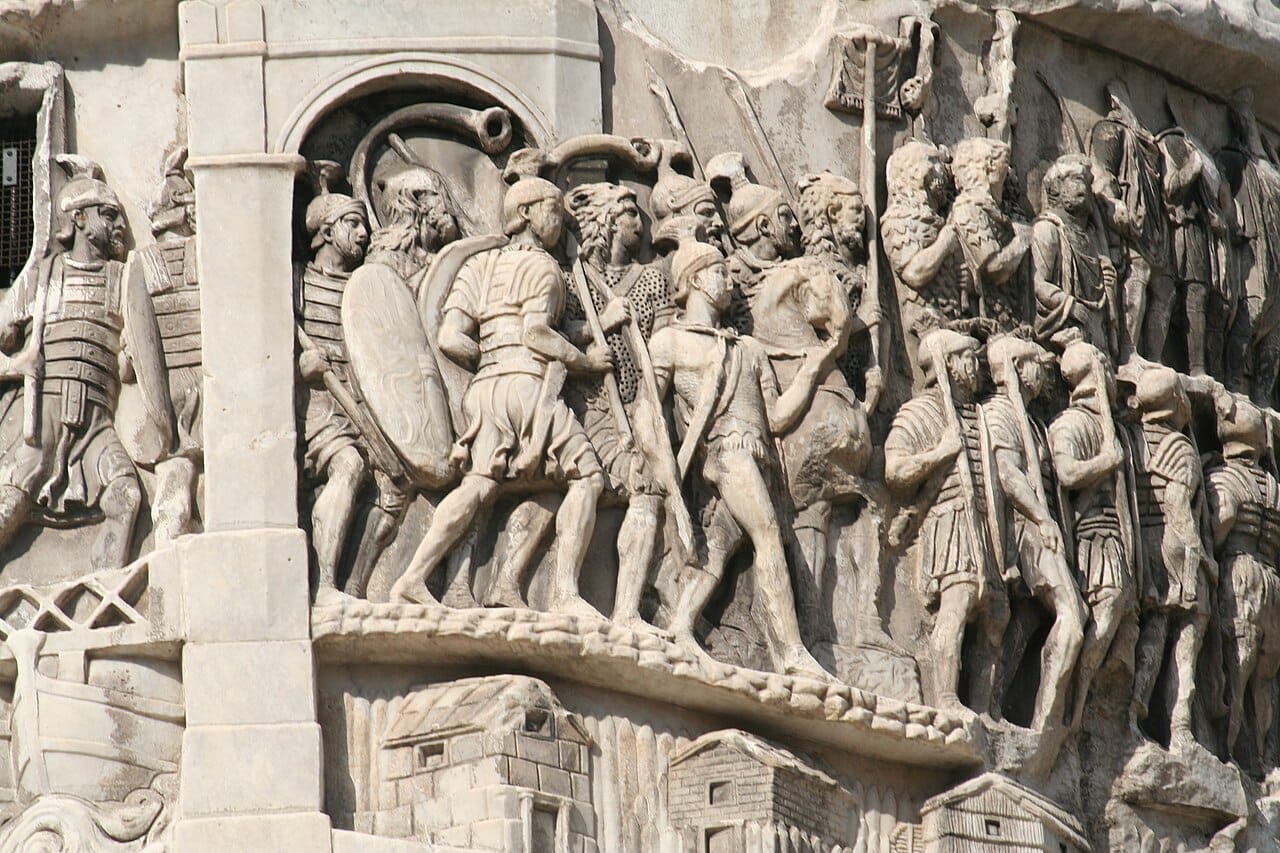
Imagine marching alongside the legions of ancient Rome, feeling the sun on your back and the weight of armor on your shoulders. The Roman soldiers were known for their discipline, endurance, and ability to march vast distances.
But what kept them fueled? Their diet was designed not just for sustenance but for the rigors of constant movement, long campaigns, and unpredictable supplies.
Join me as we recreate a Roman soldier’s snack board, complete with buccelatum (hardtack), salt pork, dried fruits, hard cheese, olives, posca and moretum—an ancient cheese spread that pairs perfectly with our hardtack.
Buccelatum: The Staple of the Roman Soldier
At the heart of the Roman soldier’s diet was buccelatum, or hardtack. Known for its nearly indestructible nature, hardtack was a dense, unleavened bread made from basic ingredients that could last for months if stored properly.
Next week
I cook these before I write them. Some of it never makes the post.
The failures, the source documents, the version that actually tasted good. That part goes out by email, and next week’s is already on the stove.
 Written and cooked by Donnie
This type of food was crucial for armies on the move, providing essential carbohydrates that Roman soldiers could rely on during long campaigns.
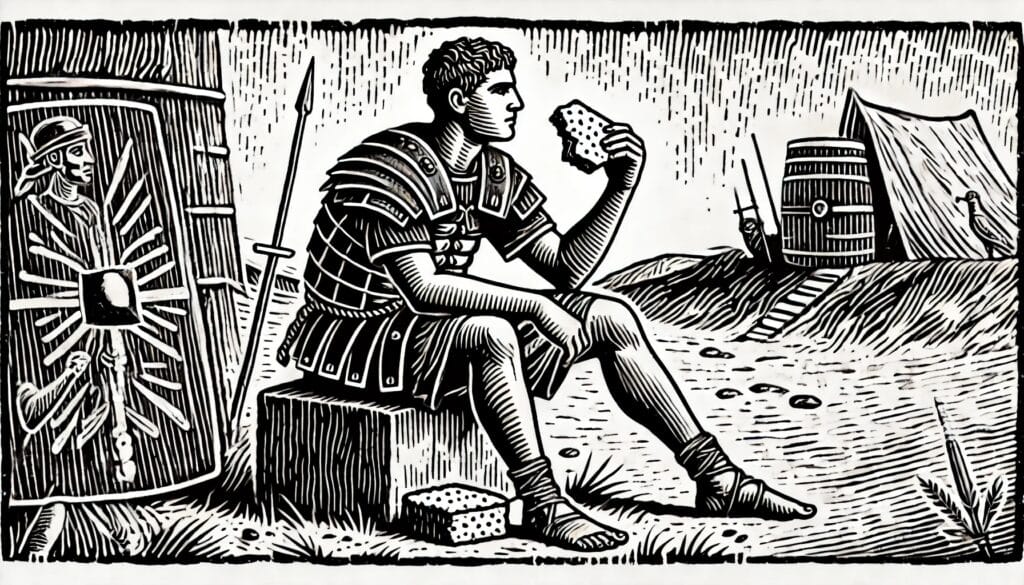
The mention of buccelatum appears in the Historia Augusta, which chronicled various aspects of Roman life, including the provisioning of the army.
Hardtack has held a special place in military history across different cultures and eras, from the Romans to 18th-century sailors and even soldiers in the American Civil War. The Roman version was basic and durable, intended to withstand the elements while still providing sustenance.
Mention of Roman Army Provisions from Roman Books:
Historia Augusta:
“Buccellatum ac panem, vinum quoque atque acetum, sed et laridum, carnem verbecinam…”
- This line from Historia Augusta describes a typical ration for Roman soldiers, including “hardtack and bread, wine and vinegar, along with bacon and mutton.” It highlights the staple foods that formed the basis of a soldier’s diet—dense, preserved items that provided sustenance during long campaigns.
“Milites pane et acetum contenti erant…”
- “The soldiers were content with bread and vinegar…” This passage emphasizes the simplicity of the Roman soldier’s diet, showing how even basic provisions such as bread and vinegar were considered sufficient to keep the legions sustained.
“Milites qui buccellatum et panem semper in castris habuerunt…”
- “Soldiers who always had hardtack and bread in camp…” Here, the text references the dependable provision of hardtack (buccellatum) and bread for soldiers stationed in camps, highlighting the importance of durable, storable food for sustaining military strength.
Codex Theodosianus:
“Buccellatum pro exercitu nostro praeparari…”
- “Hardtack shall be prepared for our army…” In this directive from the Codex Theodosianus, it’s clear that providing hardtack was an official requirement to maintain the readiness and resilience of the Roman army, underlining the importance of preserved provisions in the military supply chain.
“Legiones vinum ac acetum et laridum inter alia accipere debent…”
- “The legions must receive wine, vinegar, and bacon, among other provisions…” This quote details some of the items provided to the legions, ensuring that soldiers had access to both sustenance and morale-boosting staples like wine and bacon.
“Praesidium exercitus buccellatum ac vinum habebit…”
- “The garrison shall have hardtack and wine…” This line reinforces the necessity of hardtack and wine as part of the soldier’s provisions, indicative of the practical yet enduring nature of their food supplies.
Roman Army Provisions: Fueling the Legions
In addition to hardtack, Roman soldiers had a variety of other provisions to keep them going on grueling marches and during long periods away from civilization. Salt pork was another staple, offering protein and fat that could be stored for long periods.
Dried fruits like figs and grapes provided vitamins and a touch of natural sweetness, while hard cheese and olives contributed protein, fats, and flavor.
These rations were easy to carry, calorie-dense, and nutritionally balanced to support the rigorous physical demands of a soldier’s lifestyle. Roman soldiers needed food that could last, be prepared quickly, and sustain them in both energy and morale, especially during times of scarce resources.
A Nutritious, Portable Diet
The Roman army’s provisions weren’t luxurious, but they were effective. This diet was rich in essential nutrients and designed to provide long-lasting energy. Hardtack and salt pork could survive varied climates, while dried fruits, olives, and cheese helped fill nutritional gaps.
Additionally, these provisions could be easily portioned and rationed, ensuring soldiers always had a reliable supply of food that wouldn’t spoil on the road.
The addition of moretum, a garlic-and-herb cheese spread, was a delicious way for soldiers to add variety to otherwise simple meals, and we’ll be making a version with ricotta and parsley for our snack board.

Roman Soldier Snack Board

Don’t lose this one.
I’ll email it to you so it’s waiting when you’re ready to cook.
Ingredients
Instructions
Video
@eatshistory Snacking like a Roman Soldier #history #recipe #romanempire #spqr #ancientrome #rome #cooking #fyp #historybuff #historytok #historytime #historical #historytiktok #ancient
♬ original sound – Eats History
Notes
- Buccelatum Hardness: Roman hardtack was intentionally very hard, meant for long-term storage rather than immediate consumption. You can soak it in water or vinegar briefly to soften it for easier eating.
- Salt Pork Variations: If salt pork is unavailable, substitute with bacon, pancetta, or another cured pork product for a similar salty, savory flavor in the moretum.
- Serving Suggestions: To keep the board authentic, include figs, olives, and hard cheese. For a modern twist, add some fresh grapes or dried dates for extra sweetness and balance.