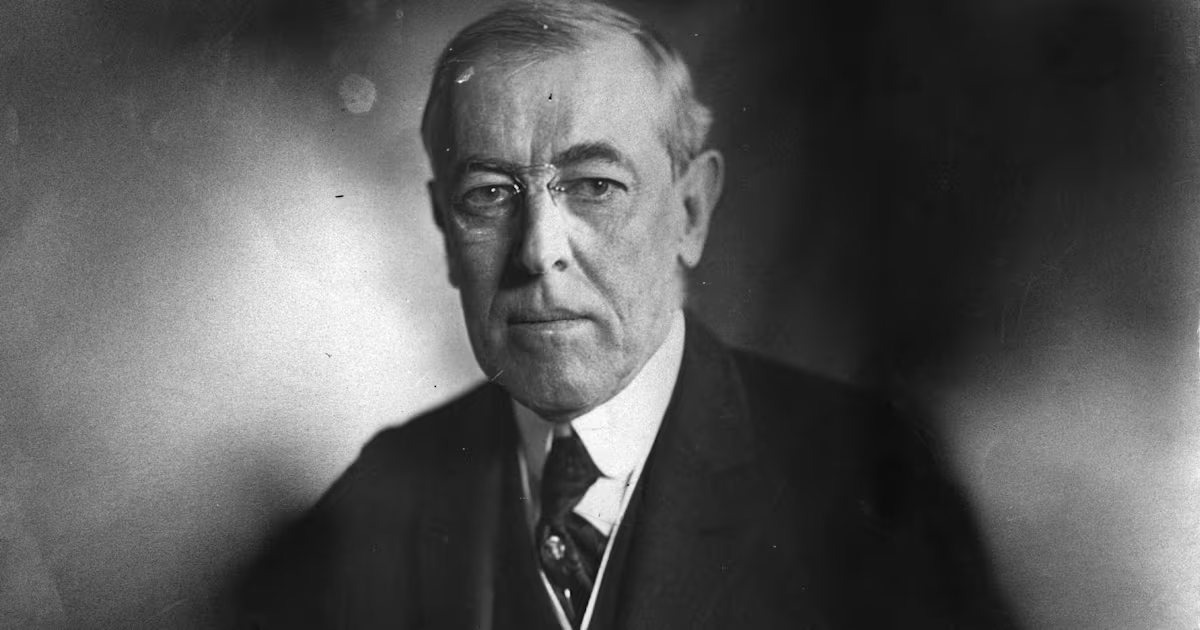
Woodrow Wilson, the 28th President of the United States, is remembered for his leadership during World War I and his role in shaping the post-war world order.
Known for his intellect and idealism, Wilson was a president who navigated the country through one of the most tumultuous periods in history.
Despite the weight of his responsibilities, Wilson appreciated the simple pleasures in life, including his favorite dish—chicken salad. This classic, versatile dish reflects the refinement and subtlety that characterized much of Wilson’s approach to both life and politics.
In this blog post, we’ll explore Wilson’s life, his presidency, and his connection to chicken salad. We’ll also share a recipe that allows you to enjoy this timeless dish.
Next week
I cook these before I write them. Some of it never makes the post.
The failures, the source documents, the version that actually tasted good. That part goes out by email, and next week’s is already on the stove.
 Written and cooked by Donnie
Early Life and Academic Career
Woodrow Wilson was born on December 28, 1856, in Staunton, Virginia, and raised in the South during the Civil War and Reconstruction. His early experiences shaped his views on leadership, governance, and morality.
Wilson pursued an academic career, earning a Ph.D. in political science from Johns Hopkins University and eventually becoming president of Princeton University. His scholarly work and reformist zeal in higher education laid the foundation for his later political career.
The Presidency: War and Peace
Elected as the 28th President of the United States in 1912, Wilson’s presidency was marked by significant domestic and international challenges.
Domestically, he implemented progressive reforms, including the establishment of the Federal Reserve System, the Federal Trade Commission, and the Clayton Antitrust Act. These efforts aimed to regulate big business and promote economic fairness.
Internationally, Wilson’s presidency is most remembered for World War I and its aftermath. Initially advocating for neutrality, Wilson eventually led the United States into the war in 1917, arguing that it was necessary to make the world “safe for democracy.”
Following the war, Wilson played a key role in the Paris Peace Conference and was instrumental in the creation of the League of Nations, an early precursor to the United Nations.
Despite his achievements, Wilson’s health declined during his second term, culminating in a severe stroke that left him partially incapacitated. His wife, Edith Wilson, took on an unprecedented role in managing his responsibilities during his recovery.
Legacy of Woodrow Wilson
Wilson’s legacy is complex, characterized by both significant achievements and controversial decisions. His advocacy for international cooperation and his vision for a peaceful world order have had a lasting impact on global diplomacy.
However, his domestic policies, particularly regarding race relations, have been widely criticized. Nevertheless, Wilson remains a pivotal figure in American history, whose ideas and leadership continue to influence the nation.
Woodrow Wilson’s Favorite Food: Chicken Salad
Chicken salad, a dish that combines tender chicken with a creamy dressing and a variety of flavorful ingredients, was a favorite of Woodrow Wilson. This dish, often served at luncheons and light meals, reflects the elegance and refinement that Wilson appreciated in both food and life.
Wilson’s love for chicken salad may have stemmed from its versatility and the way it could be adapted to suit different tastes and occasions. Whether prepared simply with mayonnaise, celery, and herbs, or elevated with the addition of fruits, nuts, and spices, chicken salad was a dish that offered both comfort and sophistication.
In the early 20th century, chicken salad was a popular dish among the upper classes, often featured at social gatherings and formal events.
For Wilson, who frequently hosted diplomats, politicians, and intellectuals at the White House, chicken salad would have been a fitting choice for entertaining, offering a light yet satisfying meal that could be enjoyed by a variety of guests.
Recipe for Classic Chicken Salad

Classic Chicken Salad

Don’t lose this one.
I’ll email it to you so it’s waiting when you’re ready to cook.
Ingredients
Instructions

Notes
- Using Rotisserie Chicken: For convenience, you can use rotisserie chicken or leftover roast chicken. The flavor and texture of rotisserie chicken add an extra depth to the salad.
- Lighten It Up: For a lighter version, substitute half of the mayonnaise with Greek yogurt or use a vinaigrette-based dressing instead.
- Creative Presentations: Serve the chicken salad in lettuce cups, as a filling for croissants, or on top of toasted bread for an open-faced sandwich. It’s also delicious when paired with fresh fruit or served alongside a crisp green salad.