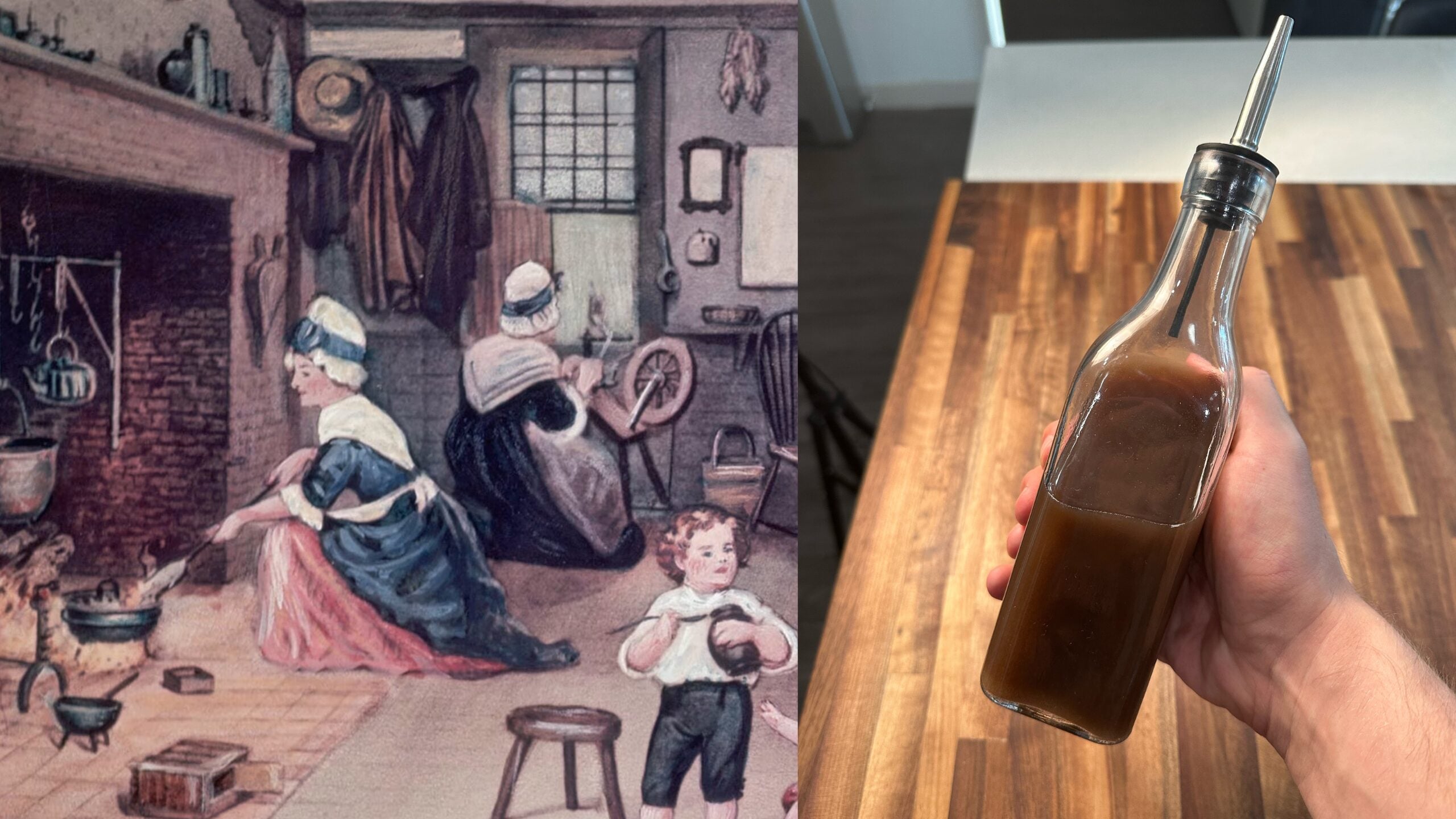
Most people assume ketchup has always been made from tomatoes; it has not. For most of American culinary history, the word ketchup referred to a completely different preparation entirely, and the tomato version that now dominates every refrigerator in the country did not become standard until well into the 19th century. Before that, the ketchup on colonial American tables was made from mushrooms.
I made it this week. I was genuinely not sure what to expect. The process is simple, the ingredients are minimal, and the result is something with no obvious modern equivalent. It is not ketchup in any sense most people would recognise. It is something considerably more interesting. I rated it 7.4 out of 10 and I was pleasantly surprised by how complex and useful it is. Here is the full story.
The Source: Hannah Glasse and The Art of Cookery
The recipe I made comes from Hannah Glasse’s The Art of Cookery, Made Plain and Easy, published in 1747. This is the most important cookbook in colonial American culinary history. It was the dominant reference for home cooks throughout the English-speaking world during the latter half of the 18th century, used in both British and colonial American households with equal authority. George Washington owned a copy. Thomas Jefferson owned a copy. It was to 18th century American cooking what The Joy of Cooking was to 20th century American cooking, the book that sat in virtually every kitchen of any pretension and was consulted for virtually every question about how food should be prepared.
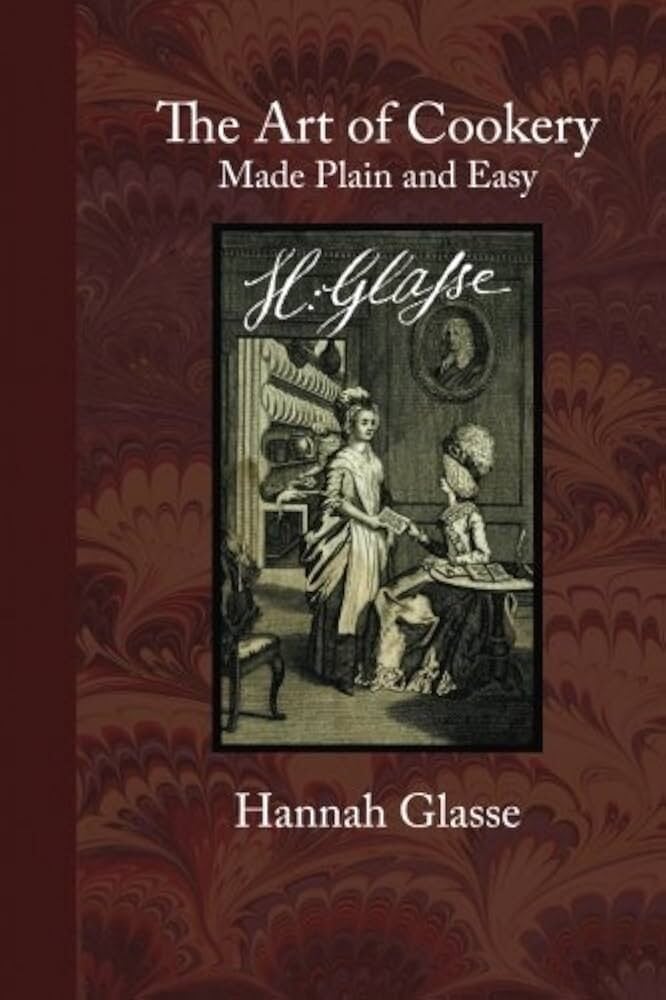
Glasse’s mushroom ketchup recipe, which she calls simply To make Ketchup, reads in her own words: Take the large Flaps of Mushrooms, pick nothing but the Straws and Dirt from it, then lay them in a broad earthern Pan, strow a good deal of Salt over them, let them lie till next Morning; then with your Hand brake them, put them into a Stew-pan, and let them boil a Minute or two, then strain them thro’ a coarse Cloth; and wring it hard. To take out all the Juice, let it stand to settle, then pour it off clear, and run it thro’ a thick Flannel Bag, then boil it, to a Quart of the Liquor put a quarter of an Ounce of whole Ginger, and half a quarter of an Ounce of whole Pepper, boil it briskly a quarter of an Hour, then strain it, and when it is cold, put it into Pint Bottles; in each Bottle put four or five Blades of Mace, and six Cloves, cork it tight, and it will keep two Years.
Next week
I cook these before I write them. Some of it never makes the post.
The failures, the source documents, the version that actually tasted good. That part goes out by email, and next week’s is already on the stove.
 Written and cooked by Donnie
The technique Glasse describes is almost identical to what I made. Salt the mushrooms, let them macerate overnight to draw out the liquid, cook briefly, strain, reduce, spice and bottle. The two-year shelf life claim reflects the preservative effect of the salt and the reduction, which concentrates the liquid to a point where it resists spoilage. This is not a fresh sauce. It is a pantry condiment designed to last.
The earliest documented American recipe is even older. A manuscript cookbook written in 1770 by Harriott Pinckney Horry of Charleston, South Carolina, contains a mushroom ketchup recipe that used two egg whites to clarify the mixture alongside a recipe for walnut ketchup. Both documents confirm that mushroom ketchup was a standard preparation in colonial American kitchens before the Revolution and years before any tomato-based version appeared in print.
Why Mushroom Ketchup Was King: The Case Against the Tomato
Understanding why mushroom ketchup dominated colonial American condiment culture requires understanding the specific historical moment and the reputation of the tomato in 18th century North America.
The tomato had arrived in Europe from the Americas in the 16th century but its adoption as a food was complicated across most of the English-speaking world. The tomato belongs to the nightshade family, which includes several genuinely toxic plants, and for over a century it was regarded with suspicion and classified primarily as ornamental by English botanists and herbalists. The belief that tomatoes were poisonous, or at minimum unhealthy, persisted in Britain and its colonies well into the 18th century. As the Revolutionary Pie historical food blog documents, many people in England and North America in the 18th century still believed tomatoes were poisonous, and tomato ketchup was not common until the mid-19th century.
Mushrooms, by contrast, were thoroughly familiar, widely foraged, and well established in British and colonial cooking. They were abundant, free for the gathering, and their intense umami flavour made them an ideal base for a concentrated condiment that could season a wide range of dishes. The word ketchup itself traces back to the Chinese ke-tsiap, a pickled fish sauce, suggesting that the concept of a fermented, umami-rich liquid condiment has ancient Asian origins that travelled westward through trade routes before being adapted in European kitchens with local ingredients.
Before tomato ketchup standardised the category in the 19th century, ketchups were prepared from a remarkable range of ingredients. The Greenwich Historical Society documents that most types of ketchup in the 1600s and 1700s were made from fish, oysters, mushrooms and walnuts. Each produced a distinctly different flavour profile and each was used as a seasoning agent rather than a table condiment in the modern sense. Mushroom ketchup was the most widely used of these variations in colonial America, appearing in virtually every significant cookbook of the period and in household accounts from the colonial period onward.
Why It Fell Out of Fashion
The decline of mushroom ketchup as a mainstream condiment in America tracks almost exactly with the rise of the tomato as an accepted food in the mid-19th century. As the tomato shed its reputation for toxicity and became widely cultivated and eaten across the country, tomato-based preparations began appearing in American cookbooks with increasing frequency. Tomato ketchup, which was sweeter, more shelf-stable in its commercial form and more palatable to a wider audience than the intensely savoury mushroom version, began displacing its predecessor on American tables from the 1840s onward.
The industrial production of tomato ketchup, standardised and mass-produced, made the home preparation of mushroom ketchup increasingly unnecessary and eventually unfamiliar. By the late 19th century most Americans had never tasted mushroom ketchup and had no particular reason to make it. By the 20th century the word ketchup was so thoroughly synonymous with the tomato version that the existence of any other kind was essentially forgotten outside of food history circles.
Mushroom ketchup never fully disappeared in Britain, where it remained a niche but continuous product. The British brand Geo. Watkins has been producing mushroom ketchup commercially since the 19th century and it is still available in British supermarkets today, used primarily as a seasoning agent in gravy, pie fillings and meat dishes in the tradition of its colonial-era antecedent.
The Process and Taste Profile
Making mushroom ketchup is one of the more revelatory processes I have undertaken for this channel in terms of what it reveals about pre-industrial food preservation and flavour concentration.
The salting and macerating step, leaving the crushed mushrooms overnight in the refrigerator under a heavy layer of salt, draws an extraordinary amount of liquid from the mushrooms through osmosis. The quantity of liquid produced from a pound of mushrooms overnight is significantly more than you would expect. This liquid is intensely concentrated with mushroom flavour compounds, primarily glutamates, the same compounds that give aged Parmesan, soy sauce and Worcestershire sauce their characteristic savoury depth.
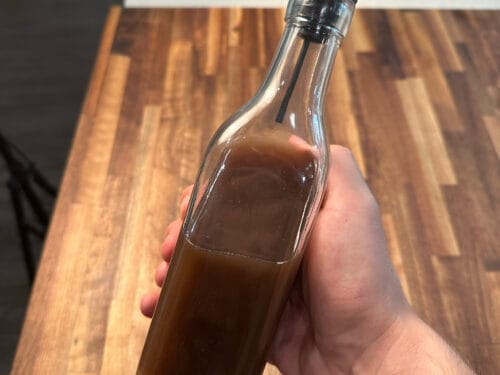
The reduction process concentrates this further. The spices, nutmeg, allspice and pepper in my version, add warmth and complexity that sits underneath the mushroom flavour rather than competing with it. The finished product is a dark, almost black liquid with the viscosity of a light syrup, deeply savoury, intensely umami, faintly spiced and with a complexity that is immediately apparent even in small quantities.
The taste profile has no direct modern equivalent. The closest comparison is Worcestershire sauce, which is not surprising since Worcestershire sauce, developed in the 1830s, is itself a descendant of the mushroom ketchup tradition combined with tamarind, anchovies and other ingredients. A drop of mushroom ketchup in a gravy, a soup or a braise adds exactly what Worcestershire sauce adds but with a cleaner, more directly mushroom-forward character. It is an extraordinary seasoning agent and the pleasantly surprised 7.4 out of 10 is genuine.
Rating: 7.4 / 10
The Recipe: Colonial American Mushroom Ketchup
Colonial American Mushroom Ketchup

Don’t lose this one.
I’ll email it to you so it’s waiting when you’re ready to cook.
Ingredients
Instructions
Notes
- The portobello or field mushroom produces the darkest, most intensely flavoured ketchup and is worth using if you want maximum depth. Button mushrooms produce a lighter result that is perfectly good but less complex.
- The spice combination is adaptable. Glasse’s original combination of ginger, whole pepper, mace and cloves is the historically documented version. My combination of nutmeg, allspice and black pepper produces a warmer, slightly sweeter spice note. Both are defensible. The spices should be present but subtle. If you can distinctly taste the nutmeg or the allspice above the mushroom flavour you have used too much.
- The salt quantity seems alarming but is correct and necessary. The salt is doing two jobs simultaneously: drawing the liquid from the mushrooms through osmosis and preserving the finished product. A properly salted mushroom ketchup will taste seasoned and savoury rather than aggressively salty in the finished product because the reduction concentrates the mushroom flavour to the same degree it concentrates the salt.